Views: 229
Campbell, in his interview entitled “The Road of Trials” (Pages 52-53) suggests that the things that cannot be talked about are easily misunderstood because they transcend the dialectical orientation of everyday language in which opposites are generated by the negation function of such language which is oriented to everyday circumstances. In such everyday circumstances it is the selfish “I” that is speaking about worldly experiences.
Campbell acknowledges that Psychology has an important role to play in the understanding of man, the rational anaimal capable of discourse, and, of course, his myths. In the context of this discussion Campbell articulate what he sees to be the fundamental difference between Jungain and Freudian Psychology. He obviously has a preference for Jungian archetypal patterns and its home in the collective unconscious which he claims is in contrast to the Freudian notion of a personal unconscious. Freud, in fact, speaks of both forms of the unconscious especially in the later phases of his work where he refers to the battle of the Giants, namely Eros and Thanatos fighting for the fate of our civlisation. Campbell claims that Jung aspouses a more biological universal form of the unconscious that is a function of the effect of our organs on our psychic activity, and this is a hylomorphic view of how the psychic representatives of the unconscious are formed, which Freud undoubtedly in some sense embraced. Freud, of course, also spoke of the personal impact of the traumas of childhood upon the psychological well being of the individual.
Eros and Thanatos are also represented in the artistic genres of Tragedy and Comedy which is a title of a chapter in Campbell’s “The Hero with a thousand faces”. Campbell refers to “amor fati” (the love of fate) which certainly recalls the Delphic proclamation: “Everything created by humans is destined for ruin and destruction”. This proclamation haunted Ancient Greek consciousness, especially in relation to its preoccupation with the powers of the mind and the task of harmonising the powers and their relation with the external world, which, we ought to recall was a central concern of Freudian Psychoanalysis. For Freud, the driving force of unconscious instincts could be both positive (eros) and negative (thanatos), and this together with the aganecy of the ego which was constituted by a precipitate of lost objects helped to create the impression Kant had of everyday life which he described in terms of being “Melancholically haphazard”.
Modernism which according to Arendt, stretches back to Descartes and Hobbes, stretches forward to what Arendt called “This terrible century” (20th century). During this centiry we saw the pendulum of values swing between good and evil, right and wrong, lawfulness and unlawfulness, and we saw moreover, how there was an inversion of these opposites where tyants for example took the right for the wrong and evil for what was good. Many historical events were produced by Arendt in evidence for her judgements on the origins of totalitarianism, but other Philosophers, e.g. Paul Ricoeur, also pointed to the disappearance of the discipline of rhetoric during this period. The event of the divorce between Psychology as a science and Philosophy in in 1870, also testified to the collapse of many traditional political and cultural structures and practices. Stanley Cavell, for example, points to the marginalisation of many aesthetic values during the beginning of the century when so-called modern art began challenging many historical beliefs and practices. Cavell speciifically also drew attention to the refusal to consider the history of the belief or practice of the activity one was engaging in or questioning. Heidegger too, entered the arena of the deabte over the presence of confusion over the translation of key Ancient Greek terms into Latin, claiming that the Latin translations of, for example, aletheia and phusis gave rise to a number of confusions. Wittgenstein, in the period under consideration, pointed to the prevalence of conceptual confusion in the discipline of Psycholgy. P M S Hacker a Wittgensteinian scholar, also pointed out a number of conceptual confusions in the field of neuroscience. Many of these problems can be traced back to a confusion over what can and what cannot be said about the Ancient Greek concept of psuché, the human form of life.
Modern Art of the early 20th century was enveloped by a vortex of controversy, with musical compositions containing no sound, in the name of music, weightless sculptures, in the name of sculpture , blank canvasses, in the name of painting. Wittgenstein claimed that in the classical music of Brahms he could hear the sound of engines. Our contention is that many of the above confusions arise not from local factual misunderstandings but from a fundamental misunderstanding of the principles and categories of thought that are appropriate to use in relation to the concept of psuché, rather than as Heidegger claimed a “forgetfulness of Being”, which, of course, is a more abstract and general characterisation of the problems under consideration. If one accepts this line of reasoning, then one see all the above problems, including the origins of totalitarianism, under the aspect of a systematic misunderstanding of a category of Being. Heidegger however, in his investigations of the human form of Being-in-the-world, highlights the confusions relating to death in everyday dscourse which he argues fails to confront the phenomenon of death meaningfully.
T S Eliot, one of Campbells favourite writers, postulates that our modern world has become a wasteland, which is represented in the mythical figure of the wounded, impotent, Grail King. All of the above indicates the nature of the value of the objects the Ego has been forced to abandon and mourn in a mood edging toward melancholia. What transpires, as a consequence, is a consciousness preoccupied with the events of the external world which evoke the power of the imagination more than the powers of understanding and reason: a state of mind that marginalises the realm of the sacred (Ricoeur) and the Metaphysics of Nature and Morals. What is also implied by the marginalisations of historically important domains of thought, is the following: when the attention of consciousness is constantly trained upon stimulating objects, the emotional and passionate states generated require a return to a state of homeostasis, which is this state edging toward melancholia. This is a passive state which Arendt captures in her characterisation of the masses “for whom nothing is possible anymore”.
God may either be dead, or merely deus absconditis, for the modern wastelanders, who see “fear in a handful of dust”. T S Eliot we know, in his later life, sought redemption in the Christian Faith. His poem “Four Quartets” is about Time and a Spiritual Journey that circles back upon itself, tofind itself back at the beginning of the journey, but wiser for the experience, possessing more knowledge of the world and oneself. Where we are currently on this journey was earlier characterised in terms of a “wasteland”, but this situation in the “Four Quartets” is nevertheless conceived of in more positive terms of a life which can understand how formless our lives in general has become.
The tragic pair of Pity and Fear are, of course, present in different ways in Eliot’s poetry but he does not embrace the conceptual framework of Ancient Greek thought, preferring the framework of Catholicism and its fixation upon the Grail King, sacraments, and visions of heaven and hell which Campbell believes is merely a local ethnographic perspectival vision of the realm of the sacred and the divine that he believes takes us no closer to the goal of providing humanity with a universally valid planetary myth or religion. Knowledge and Rationality does not play the central role it plays in Ancient Greek Philosophy which rests upon the ideas of areté, arché, diké logos, aletheia, psuché, phusis, phronesis and eudaimonia.
The Ancient Greek conception of techné presupposed epistemé, areté, logos, psuché and aletheia, but this conceptual framework has been abandoned by the modern world largely because our modern science has limited itself to the goal of the quantification of nature via the use of the method of observation in a context of exploration: a use which rejects many rational principles, e.g. the principle of sufficient reason. The spirit of Newtonain and Kantian science was one which embraced a set of first, rational principles that the scientist approached nature with, in the spirit of a judge who puts conceptual questions to nature and expects answers in accordance with those first principles. This modern spirit of science is so difficult to characterise because of its limited focus, and its increasing complexity. What can be said, is that it is certainly embedded in a technological network of Heideggerian instrumentalities that always seem to refer beyond themselves in the sense of being “for-the-sake-of”. For the Acient Greeks, techné was situated in the domain of the productive sciences which included sculpture, builders, carpentry and weaponry, but did not include medicine, mathematics and rhetoric, all of which had intimate relations to the rational basic ides of aletheia, eåistemé and logos.
Psychoanalysis would, then, on the above account, be a skill, a technique, and an intellectual discipline. Epistemé for the Ancient Greeks was certainly a higher intellectual power and a superior form of knowledge obeying intellectual rational principles. Knowledge does not belong in the same category of instrumentalities which are not ends-in-themselves but rather means to ends or, as Heidegger expressed the matter, that “for- the. sake-of”. Instrumentalities, in other words, are cause-effect relations and do not have a telos connected to the more categorical forms of arché that we find situated in the context of explanation/justification.
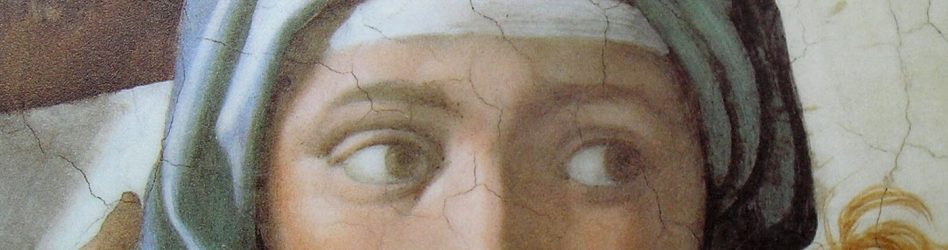
The Arts of Tragedy and Comedy, as practiced by Shakespeare, occurred over a century later than the “times of the troubadour”, and several centuries later than the age of chivalry, which initated for Campbell, the romantic form of individualism he believes is central to our Western identities. Shakespeare skillfully combined these themes with the themes of Ancient Greek tragedy and Philosophy, that were being reawakened during the Renaissance. God, during the time of Shakespeare, was still an important presence, but the star of Religion was waning in importance in the light of the Protestant Revolution. Many Renaissance artists, such as Michelangelo, remained intensely religious, but were becoming more courageous in their challenges to the authority of the Church insofar as the limitations imposed by the church upon what they may or may not represent was concerned.
Science, too, with the invention of the telescope, was making space for itself in our everyday life, which now knew we were actively exploring the heavens and the movement of the stars and planets. The space of infinity and the time of eternity, were now transforming the activity of observing the heavens with a discipline which would become the discipline of astronomy. We were challenging the magnitude of the physical universe and thereby becoming so much more than a handful of dust reminding us of the lost object of a life that was no more because its powers had been extinguished. The transcendental attitude was being restored, but at the same time narrative accounts relating to the the place of the heavens, where wandering souls were domiciled, became less plausible. The image of ghosts and one soul leaving a body and entering another, was, of course, an image of the imagination which was not connected to reality in the way in which the memory or consciousness was.
Heraclitus claimed that the logos of change was to understand that two phenomena such as the road leading up the hill and the road leading down the hill were to be thought of as in soem sense the same. Aristotle saw the principles of change to be manifested in kinds of change, principles, media and causes: e complex network of considerations which was in accordance with logos, epistemé, and aletheia, which three different domains of science could investigate. These domains of science of course concerned themselves with psuché in different ways given that they related to knowledge and skills of different kinds, and given that explanations and justifications. Such explanations and justifications occurred in relation to the many principles regulating all the changes in the natural world as well as the changes in the the world of psuché.
Campbell points out that the narratives of myth are about the changes the hero undergoes in the course of his/her heroic quest, and many of the events are dreamlike, because, presumably, the changes we are witnessing are being processed by the imagination and the emotions that are being evoked by outer changes. Dreams require interpretation because they too are products of inner psychic change in the medium of images which resemble in many respects the images of film that Stanley Cavell discussed in his work “The World Viewed:Reflections on the Ontology of Film”. The imges of film, in contrast to our dream images, are automated, and the objects photographed “participate” in “the photographic presence of themselves on film”: making them, in fact, more like memories than the images of dreams (which are inserted in a wish-fulfillment complex). The dreamlike quality of film is difficult to analyse, but they too, in some sense, relate to the imagination and passions of the creator of the plot of the film. This, added to the fact that there is a form of “technical intelligence”, involved in the automation process which relates to instrumental forms of reasoning connected to the instrumental notion of “for-the-sake-of”. The camera, moving over a landscape, from object to object is an imitation of sensory experience: an automated form of sensory experience which is very different to that form that occurs in relation to a human body (the human body, that is, possesses a sensori-motor unity based on a constellation of organs and limbs typical of the human form of life(psuché)). Cavell is suggesting here that the moving automated images and mechanically induced movement of the film camera, provide us with a sense of a Being-in-the-world which is not human. The lack of real depth in the movement of the photographic images also suggest the lack of the presence of many categories associated with the understanding of human movement, because as Brian O Shaughnessy suggests:
“concepts play a causal role in the genesis of visual depth experience.” (The Will: A Dual Aspect Theory”. Page 171)
Films imitate the depth of three dimensional space in two dimensional images, and everything viewed “participates” in the real forms of the world and this might partly explain the dreamlike quality of the film experience. There is no suggestion that Campbell believes that our modern art-form of film-making could be the basis for the Planetary mythology he is seeking.
We have questioned the metaphysical status Campbell attaches to the hero, equating as he does the hero with a God in his work “The Hero with a thousand faces”. Overcoming overwhleming forces and manifesting supernatural powers against terrifying monsters are certainly not as realistic as the Socratic responses to the overwhelming forces he was confronted with. Socrates of course was not a mythological figure and would have objected to be called a God in the way Buddha was. The Buddha narrative speaks of an unnantural birth and a figure who sits under a Bodi tree “fighting a dark army” led by Kama-Mara. There was not, for Socrates, as there was for Buddha, a King of the Serpents protecting him from various supernatural dangers.
Campbell also refers to Prometheus and his world-transcending deed of stealing fire from the Gods to give to humanity. There is here an allusion to the pre-history of humanity, and the importance of the role of fire in the early phases of the primitive hunting/gathering groups living in caves. The narrative surrounding Prometheus, however, was not a clinical historical account but rather a narrative driven by the passionate desires: a narrative that desired to metaphorically communicate the sacred meaning of certain events in man’s history. Campbell claims that Jungian archetypes were involved in the construction of the Pometheus narrative, in particular the archetype of the Hero:
“Whether the hero be ridiculous or sublime, Greek or barbarian, Gentile or Jew, his journey varies little in essential plan. Popular tales represent the heroic action as physical: the higher religions show the deed to be moral: neverthless there will be found astonishingly little variation in the morphology of the adventure, the character roles involved, the victories gained. If one or another of the basic elements of the archetypal pattern is omitted from a given fairy tale, legend, ritual, or myth, it is bound to be somehow or other implied–and the omission itself can speak volumes for the history and pathology of the example.” Page 30 “The Hero with the thousand faces “
Philosophical mythology would of course not be so concerned with physical world-historical deeds such as those attributed to Achilles , but more concerned with the moral deeds of world-philosophical characters such as Socrates, e.g. his activities in the agora and his relation to death as a consequence of his death sentence by the Athenian courts.