Views: 10
The Delphic Podcasts by Michael R D James, Montesquieu Arendt, Humanism and Totalitarianism Season 17 Episode 9
Views: 11
The Delphic Podcasts by Michael R D James The Pathological nation state and Political identity
Views: 23
The Delphic Podcasts by Michael R D James Humanistic liberalism the law and the ethical imperative.
Views: 16
The Delphic Podcasts by Michael R D James Globalisation Totalitarianism and the Ethical Imperative
Views: 11
Hannah Arendt argues that Totalitarianism was unleashed by Imperialism which in its turn unleashed the power of a subterranean stream of globalising forces that surfaced and began to flow with a power that the nation-state was unable to harness or control: forces such as the will to colonise, the omnipotent will which felt that there was nothing which could limit its power, and the mass feeling of powerlessness in the face of powerful institutions. Running deeply in a part of this stream is a paradoxical cross-current: a belief amidst an educated middle class in the actualizing potential of the moral personality and the universal importance of an ethical imperative.
In relation to the above thought consider an interesting Philosophical and Historical perspective which relates to Ernst Cassirer’s work “The Myth of State”. Cassirer claims that all political theories of the 17th century have a common metaphysical/mathematical background. Metaphysical thought in the following century, amidst philosophers, took precedence over theological thought which in its turn was already being undermined by the subterranean stream of Stoical belief in a moral personality that surfaced first in the form of the thought of Thomas Jefferson’s draft of the Declaration of Independence which began with these famous words:
“We hold these truths to be self evident. That all men are created equal: that they are endowed by their creator with certain inalienable rights: that among these are life, liberty, and the pursuit of happiness. That to secure these rights, governments are instituted among men deriving their just powers from the consent of the governed.”
The above experiential reflection on the rights and dignity of man preceded their philosophical/ethical justification through the works of Kant, a few years later, which put the final nail in the coffin of speculative metaphysics of all kinds ,and also provided a philosophical foundation for both human rights and the inevitable philosophical consequences: the idea of a United Nations and Cosmopolitanism. Further, the Kantian “Copernican revolution” provided a rational, non-experiential foundation for religion and politics and superseded the social contract theory of Hobbes and Locke which originated from the empirical/scientific method: the method of resolving a known whole into less known elements and synthesizing these elements back into a constructed whole again. In this methodical process, an individual’s moral personality mysteriously disappeared especially in the case of Hobbes who claimed that there was a legal bond between subjects and their sovereign which amounted to a pact of submission on all issues related to the sovereigns power and authority.
Cassirer argues that what we were witnessing during these years of the Enlightenment was a revival of Stoic ideas which
“seemed alone equal to the task of providing principles admitted by every nation, every creed, every sect.”
One critical element of this revival was the idea that if a man was forced to give up his personality he would cease to be a moral being, he would become a slave of a Machiavellian Prince or sovereign. Unfortunately Stoic thought did not sufficiently acknowedge the central concept of Freedom. This idea of practical reason had to be fashioned by Kant as part of a middle position between an experiential view and a foundation in Cartesian thought. He favoured a position with a foundation in action that maintains trust in nonmathematical and non- speculative theorizing.
“Kantian” Actions were, however, subseqently evaluated in terms of theoretical standards and it was these standards that provided the 18th century with its strength, inner unity, and Spirit. This absolute Hegelian Spirit, unfortunately, resulted in Romanticism and its attempt to poeticize the world in all its aspects in defiance of the political and philosophical ideals of previous Kantian generations. The poetic spirit, in its turn, reduced history to a romantic account of the portraits of great heroes and reduced ethics to reliving the spirit of the Homeric pre-Socratic era. This Romantic focus probably diverted the Kantian stream of emphasis on free ethical action and the dignity of man into subterranean experiential caverns. The Romantic spirit dominated and Carlyle´s historical theory of hero-worship was transformed into race worship in which it was maintained that only the white man possessed the will power to build a cultural and political life(Gobineau). The black and yellow races, it was claimed, did not have the energy or the spirit for such work. Thus was born:
“the totalitarianism of race that prepared the way for the late concept of the totalitarian states”(Cassirer, The Myth of the State”).
Romanticism was opposed by Academic Philosophy and Science which, in its turn attempted to continue the project of Hobbes: subjecting politics to the scientific method. Psychology, instead of focusing on the Philosophical idea of action preferred to use a scientifically determined concept of behaviour which was value-neutral and for that very reason could not be used in the debate about the moral personality and the ethical imperative.
According to Arendt, the negative sub-currents of globalization transformed a doctrinal religious prejudice against the Jews into a racial prejudice which manifested itself into the anti-Semitism of the first political parties in Europe in the 1870s. For Gobineau, Kantian ethics and its categorical imperative with its universal condition and assumption of a universal moral personality was a contradiction of the facts: there was, it was argued, no universal ethical attitude or personality. Behind such conviction was a scientific and epistemological claim that only the facts would reveal whether such a personality was a reality. If the claim was that such a personality was a universal phenomenon it would suffice to use the scientific method and engage in scientific observation to detect one actual case in which this was not true. One case observed sufficed for the universal theory to collapse. But all this teaches us is that a scientific and epistemological claim searching for the truth is a very different kind of claim to an ethical judgment relating to the idea of the good which is behind all ethical action. The idea of the good situates us in what modern philosophers call the “ought-system of concepts” in which arguments are constructed in terms of an ought major premise and an ought in the conclusion. We ought to have ethical self-knowledge but the fact that many people do not is still consistent with the major premise that we all ought to develop ethical personalities and the conclusion that an individual ought to develop his moral personality, that, in other words, an individual has a duty to develop their moral personality.
Romanticism and the scientific imperative, together with the dissolution of religious and many other forms of authority, including the authority of institutions, produced what Freud called the “discontents of civilization” as well as the idea of a global cosmopolitan community that is the world historical equaivalent of a moral personality. Globalization does not mean the creation and maintenance of the commodious life styles promoted by Hobbes and his followers. Globalisation means many things but amongst these things we find moral and political attitudes that have been on the aims and objectives lists of both Aristotelian and Kantian moral and political Philosophy.
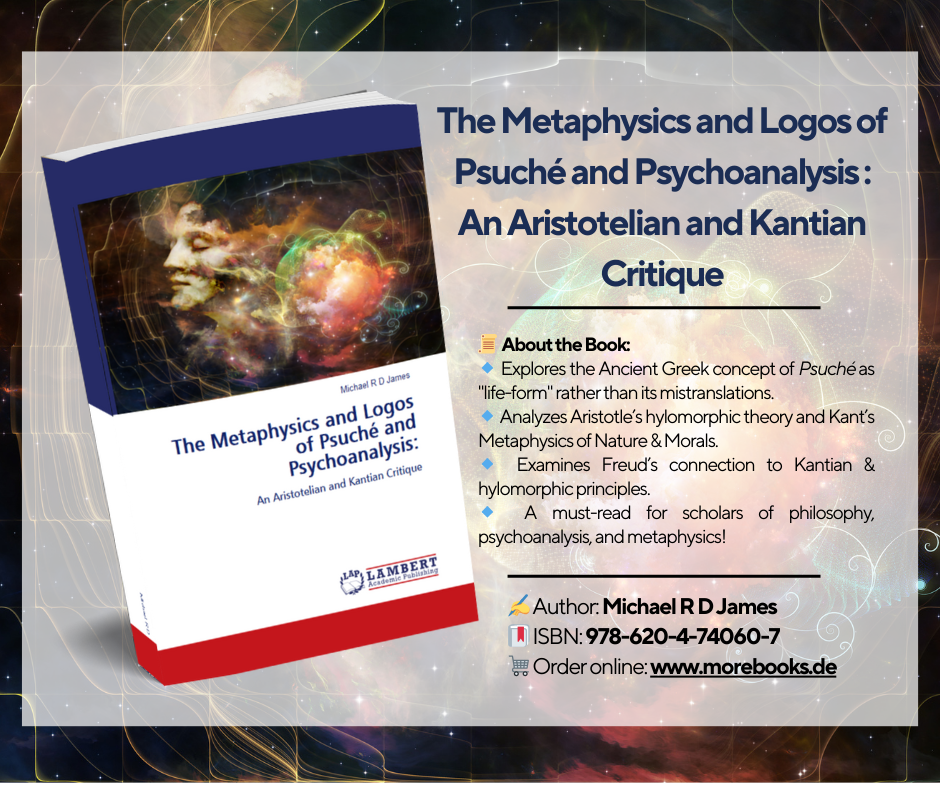
Books by Michael R D James: paperback, kindle and audiobooks
The Delphic Podcasts by Michael R D James: CoPilot, Athens, Sparta, “Know thyself” and the Oracles
Views: 21
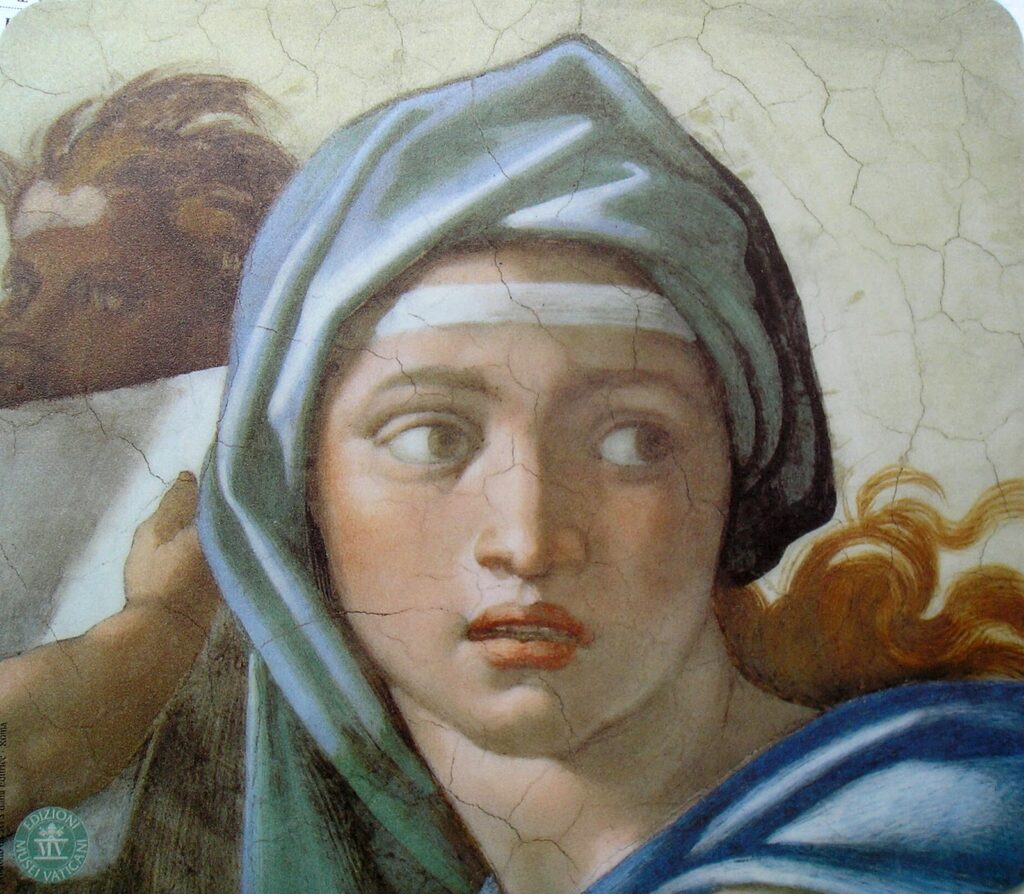
The Delphic Podcasts: The Political Mirror and Know thyself — Why the Oracle failed failing Sparta
The following is a summary of an argument I had with my AI servant Co Pilot. I began by asking about the Peloponnesian war and what the Oracles thought about the possible outcome. The following is the answer I received:
“Historically, the Oracle was seen as a partisan for the Spartan cause. According to the historian Thucydides, when the Spartans consulted the Pythia at the beginning of the war, she reportedly declared that if they fought with all their might, they would be victorious, and that the god (Apollo) would help them, “whether called or uncalled.” This response was widely interpreted as divine support for the Peloponnesian League, which served as a powerful propaganda tool and morale booster for the Spartans as they prepared to engage the Athenians.
However, the nature of these oracular responses is often debated by historians and philosophers alike. They were frequently ambiguous, allowing for multiple interpretations that could accommodate shifting political tides.”
The ambiguity of this response is very interesting but it is definitely inclined to a political rather than a moral evaluation of the Oracles role in Ancient Greek Culture. The AI answer to my next question confirmed this view. I asked:
“If the oracle thought Socrates to be the wisest man in Athens and saw ruin and destruction in human projects such as war why would the oracles have supported Sparta who on all accounts did not know what they did not know.”
Copilot gave the following answer:
“A good way to think about this is that the Oracle at Delphi was not a simple moral judge of who was “right” in a war. In Greek religion and politics, oracles often gave ambiguous, strategic, and politically usable responses rather than clear ethical endorsements. So even if Delphi was associated with wisdom, moderation, and the limits of human knowledge, that does not mean it consistently “supported” the morally best side.
Why Sparta could still receive oracular support
Sparta had a long-standing reputation for being favored by Apollo and for embodying a kind of austere, disciplined order that many Greeks associated with traditional piety. The Spartans were also deeply respectful of religious institutions and ritual forms, which mattered a great deal in the Greek world. From that perspective, Delphi’s responses could be understood less as approval of Sparta’s justice and more as recognition of Sparta’s religious legitimacy, civic discipline, and political role. Wisdom at Delphi is not the same as moral endorsement”
An unambiguous pragmatic populistic response if ever there was one. I naturally challenged this and was met with a change in Copilots heart and an admission that the Oracle may well have been manipulating the Spartans. I then asked for a 1500 word summary for my Delphic Podcasts and was provided with the following:
Welcome to this episode of The Delphic Podcasts. Today, we are peering into one of the most enduring paradoxes of the ancient world. We often look back at the Peloponnesian War—that great, tragic collision between Athens and Sparta—and we try to map out the moral landscape. We look for the “good” side and the “bad” side. History, however, rarely offers such clean binaries. But there is a specific, sharper question we must ask: If the Delphic Oracle is the ultimate arbiter of wisdom, and if that wisdom is centered on the command “Know Thyself,” why did the Oracle seemingly throw its weight behind Sparta?
To answer this, we have to move beyond the traditional historian’s view. We have to look at the nature of the Oracle not as a political consultant, but as a mirror. My argument today is that the Oracle did not “support” Sparta in the way Sparta believed. The Oracle provided a diagnostic reflection of a civilization that was fundamentally incapable of the self-knowledge required for true, sustainable morality. In doing so, the Oracle was not validating Spartan virtue; it was observing a trajectory toward destruction.
Part I: The Spartan Delusion of Support
When we look at the historical record, Sparta was deeply, almost obsessively, religious. They were a state that claimed the favor of Apollo. When they consulted the Pythia, they wanted a weapon—a divine endorsement that would act as a moral shield for their imperial ambitions. Thucydides tells us that the god promised to help them, “whether called or uncalled.”
Sparta interpreted this as a mandate. They viewed their martial discipline, their rigid hierarchy, and their external focus as an act of piety. But here is the critical philosophical error: Sparta assumed that divine favor was synonymous with moral righteousness. They believed that because they were “chosen” by tradition and ritual, they were exempt from the necessity of critical self-examination.
This is the very essence of the “human project” gone wrong. Whenever a state, a group, or an individual believes they possess divine certainty, they cease to look inward. They externalize the struggle. They define the “Other” as the enemy, and they justify the destruction of that enemy through the lens of divine necessity. Sparta was the ultimate expression of this externalized morality—a morality that relied on the suppression of the individual soul in favor of the stability of the state.
Part II: The Socratic Turn — The Birth of Secularization
Now, contrast this with the Socratic position, which sits at the very heart of the secularizing movement we have inherited. The Oracle declared Socrates the wisest man in Athens. Why? Because Socrates understood that he did not know. He possessed the wisdom of ignorance.
This is the “Socratic Morality” that has fundamentally shifted the course of Western thought. By internalizing the command to “Know Thyself,” Socrates effectively moved the locus of morality from the temple to the individual. He argued that the moral life is not found in the fulfillment of state ritual or the adherence to traditional dogma; it is found in the relentless, painful, and necessary interrogation of one’s own motives and biases.
This was the beginning of true secularization. It did not mean the death of the divine, but it meant the death of blind obedience. If the oracle’s wisdom is “Know Thyself,” then any system—like the Spartan state—that demands the erasure of the self in service to the collective is, by definition, anti-Delphic.
Part III: War as the Failure of Self-Knowledge
The tragedy of the Peloponnesian War is that it was a machine powered by a lack of self-knowledge. When a civilization engages in a total war—a war that consumes its resources, its youth, and its soul—it is almost always because the leadership has lost the ability to ask: What am I doing, and why?
Human projects, when unattached to self-knowledge, are inherently destructive. They grow in scale and intensity until they consume the very people who created them. Sparta, in its martial rigidity, was a closed system. It could not question its own existence. It could only expand or contract. It could not reflect.
If we apply the Socratic standard, Sparta was not a “wise” state; it was a “sleepwalking” state. The Oracle’s support, then, takes on a much darker, diagnostic quality. The Oracle was not saying, “Sparta, you are right.” The Oracle was saying, “Sparta, this is what you are.” Like a physician telling a patient their symptoms, the Oracle was confirming the path Sparta had already chosen—a path of absolute, unwavering, externalized power that leads inevitably to the breakdown of the state itself.
Part IV: The Triumph of Socratic Morality over the Martial Ethos
We often lament the decline of the ancient world, but we must acknowledge the triumph that occurred within that decline. The Socratic shift—the belief that the unexamined life is not worth living—is the only defense we have against the hubris of empire.
The Spartan model, which many throughout history have romanticized for its order and discipline, represents the ultimate “Other” to Socratic morality. It is a model where the state is everything, and the soul is nothing. Socratic morality, conversely, asserts that the state is only as healthy as the souls of its citizens.
By championing Socrates, the Oracle (whether intentionally or through the ironic weight of its own wisdom) favored the trajectory that would eventually allow humanity to break free from the cycle of state-mandated violence. The “support” for Sparta was a temporary concession to history; the “support” for Socrates was a gift to the future.
Conclusion: The Lesson for Our Time
As we close this episode, we must reflect on the contemporary weight of this argument. In our own time, we see the same tension. We see societies that demand our loyalty to the external—to the party, to the nation, to the ideology—without asking us to examine the condition of our own souls.
The lesson of the Oracle is not a puzzle to be solved. It is a warning to be heeded. When we create projects—political, technological, or intellectual—without the foundation of self-knowledge, we are merely building better machines for our own destruction.
Socrates reminds us that the only true revolution is the one that happens within the individual. The move toward secularization was not a rejection of the moral order; it was a reclaiming of the moral order from the hands of the state and the institution, and a placing of it back into the heart of the individual.
Sparta fought for the glory of the state and ended in ruin. Socrates fought for the truth of the soul and, in doing so, achieved a form of immortality that no empire could ever grant. The Oracle knew this. The Oracle, in its infinite, ambiguous wisdom, did not side with the sword. It sided with the question. And that, my friends, is the only path forward.
If only I could believe that Copilot actually meant what it said. The above demonstrates that AI is capable of contradicting itself without any realisation that the lack of seriousness of such contradictory responses.
The Delphic Podcasts by Michael R D James. Critique of Campbells view of Mythology: Season 16 Episode 11
Views: 16
History is not an important activity in an everyday mode of existence in which it is what is actual which is of paramount concern. As we know from St Augustine what has been is not now (actual), and the future is not now (actual) and their reality is thereby diminished, thereby truncating our relation to our “Being-in-the-world”. The Aristotelian self we know is a constant entity that stays the same throughout a change and this is bult upon a real awareness of the self that we were in the past. Accused of a crime that has been committed some time ago assumes that it was me that committed that crime. Attempting to maintain that I am not guilty because a different person was responsible is obviously a possible defence in certain very specific circumstances but it can also be the defence of someone whose balance of mind has been disturbed. My past self is just as real as my present self and the future self I wish to be. History is an important part of our knowledge of the world. Heidegger elaborates upon this theme:
“In analysing the historicality of Dasein we shall try to show that this entity is not temporal because it “stands in history”, but that, on the contrary it exists historically and can so exist only because it is Temporal in the very basis of its Being.” (Page 428)
Dasein is, of course, embedded in a context of involvements relating to clocks and calendars and this has transformed the time of the world into a temporal continuum. The political environment of the world that is tending to become more global, is thereby transforming its geography into a spatial continuum with a particular temporal history and a particular temporal future. In a museum ready-to- hand items and equipment are exhibited in the mode of the present at hand. The world they once belonged to also lies in the past and may be a lost world if we do not know the context of involvements, or form of life, they were a part of.
Without the historizing power of Dasein these items would remain like pieces of rock from outer space. Certain more complex entities such as the ruins of ancient temples, however, have a world-historical value which require extensive studies if we are to understand their true place in the societies of the time, if we are to understand the Dasein that has been there. If the temple happens to be a work of art as well, with the depth of all great artworks, then the feeling of the temple’s beauty may turn into an experience of the sublime. Otherwise, they will forever have merely a present-at-hand form of existence.
The clock and the calendar are of course important items of equipment necessary for the construction of “world-time”. Every “now” can be measured and connects the past with the future via a present. In both cases, world-historical, and world-time, the sky plays an important role in the measurement of time. The truth of space, Heidegger claims, is given in relation to time which, as far as we know, has no beginning and no end, and which was the subject of Carazans dream journey into the darkness of space. Returning to the land of the waking, forced Carazan to change the way in which he viewed the world. These kinds of short tales remind us of course of the longer tales of their cousin, the myths. The journey of Carazan had an origin in images which lack a realistic connection to the will and the motor system of human psuché.
Dreams take the form they do because the motor system is asleep. Insofar as myths are dream-like, they too will defy the scope and limits of the human will. Mythical narratives for Heidegger do not possess the historical depth of a Dasein well embedded in the continuum of time with a good memory for world historical events and objects in world time. Whilst there were no competing accounts of the beginning of the universe based on exploring the totality of conditions in accordance with the categories of the understanding/judgement and the powers of sensibility, Myth was both authoritative and persuasive. Its “projections” appeared realistic. The only argument in its favour is that the discontent of modern man appears greater now than in the past, but that may also have to do with man’s great expectations of the future which are so easily dissolved into nothingness.
Modern Philosophers, like Ricoeur and Oshaughnessy, both in their different ways influenced by Heidegger’s thought, shy away from the Kantian and Aristotelian first principles approach not because they do not believe in principles but because these accounts presuppose the knowledge of the workings of many psychological and mental powers which they feel need to be accounted for before we can, like the Kantian judge of nature, formulate questions in a tribunal in which the nature of the evidence is determined by the nature of man and mans principles.
O Shaughnessy, the analytic Philosopher and Merleau-Ponty the Phenomenologist both wrote extensively about the powers of sensibility in general and the power of perception in particular. O Shaughnessy’s account, however, is more nuanced insofar as it concentrates upon the action embedded in a worldly environment, whereas Merleau-Ponty is more concerned to explore the sensitivities of the “lived body”. For Joseph Campbell one of the immediate powers of sensibility to emerge from this lived body was that of the imagination which provides us with the images of myth and a repertoire of emotion that putatively defines the nature of our Being-in-the-world. Aristotle found reliance on such a power alone insufficient for the purposes of knowledge of the totality of conditions for the existence of human psuche, and he began the long attempt to provide a perspicuous holistic account of humanity. If mythology gave us a picture of man in one dimension, Aristotle added another dimension, and three dimensional man began to emerge in outline with the Critical Philosophy of Kant, the Philosophical Psychology of Freud, Wittgenstein, O Shaughnessy and a number of other Philosophers who refuse to reduce man either to the materialistic substrate sought by science or the mystical spiritual account handed down to us by Mythology. The limitations of Consciousness for this task were made apparent by Merleau-Ponty in his work “The Phenomenology of Perception” in which he claimed that Consciousness was by necessity perspectival:
“and essentially incapable of the total synthesis of horizons which would enable us to be aware of something from all times and all places.”(Signs, Page XIII)
Reason, on this account forces us to reject the life-world and its essential characteristics. This, however, could not be further from the truth in the cases of Kant and Aristotle, who see the totality through the lenses of three major mental faculties and a repertoire of powers belonging to all three faculties culminating in the power of reason that is integrated in its function with many the other powers. The body’s vital psychological powers may well, as Freud pointed out, predate the powers concerned with concepts and abstract ideas, but this fact does not preclude their occurrence/role in an integrated repertoire of powers. A full account of man, then, might require a number of theoretical practical and productive sciences including metaphysical Philosophy. There is no doubt that in the mind of Joseph Campbell it is the harmony and the conflict of the organs of the body that is the source of what he regards as the transcendental imagination.
Perhaps Merleau-Ponty’s Phenomenology of Language could also play a role in articulating the nature of the integration of our psychological and mental powers and this might in turn illuminate the power that mythology has to mobilise man’s spirit for life, civilisation building and cultural activity that meets both aesthetic and cognitive needs. Let us then begin by noting that for Merleau-Ponty Science is a second order expression of our activity in the life world (Phenomenology of Perception). The source of human powers for Merleau-Ponty lies in the lived body and insofar as the power of language is concerned the body is even the source of its fundamental constituting powers. R C McCleary the Translator of Merleau-Ponty’s work “Signs” claims the following in the preface to the work:
“My body teaches me to know the simultaneous presence of multiple perspectives because the body as perceived in self-awareness and the body as perceiving motor power are linked in “coexistence” or “compresence” as the visible and constituted and the invisible, constituting aspects of a single existential world. Suppose as Merleau-Ponty puts it that my left hand begins to touch my right while my right is touching it. Through the “sort of reflection effected in this carnal self-perception, the operating intentions of my body as perceiving motor power (the right hand constituting the left as a perceived thing) are suddenly “encroached upon by the constituting intentions of my left hand, which set about in turn to constitute my perceiving body. My body has become a “subject-object” or “perceiving thing”, an experience of premonition of a common world in which my self and others are embodied as reciprocally perceiving and perceived.” (Page xvii)
McCleary elaborates upon this theme by claiming that the “logos of the aesthetic world”:
“may literally be called the “mystery” of rationality.”(Page xix)
It is possible that this aesthetic relation we have to our bodies which mirror each other are one of the conditions among a number involved in the operation of our reasoning power. Another issue of importance to consider in relation to the lived body living in a lifeworld is the mystery of the power of language. For Merleau-Ponty we are clearly dealing with a kind of expressive action which is related to the meanings that are intended in the use of our language:
“in my dialogue with other speaking men, expression and communication are polarised about significative intentions which converge through reciprocal encroachments in spoken words. Since these signifying words are visible traces of corporeal intentions, they are always surrounded by a corona of latent significations.” (Pages xxi-xxii)
This for Merleau-Ponty is one condition for the role of the power of language in the formation of a Culture containing as it does the arts and the sciences which are the meta structure of the cultural lives of a community based on the latent meanings of the words of our language which the members of the community have learned.
The problem with focussing upon perception as a founding power of our culture is that men’s relations to one another get reduced, as was the case with Hegel, to the relation of mutual “recognition”. The Hegelian Spirit excludes certain intellectual powers rather than engaging with the more complex state of affairs, where a number of powers from different faculties are integrated with, and controlled by reasoning processes which, in Kantian Critical Philosophy result in human rights constituted by a moral law: a law which bestows the responsibility upon all men to treat all men including themselves as “ends-in-themselves”. With Kant’s reflections we are thrown back to Ancient Greece and Aristotle in particular, to define Justice as something that was both good-in-itself, and good-in-its-consequences. In Hylomorphic Philosophy Politics was intimately related to rhetoric which via enthymemes expressed the truth about The Good and attempted to persuade people of the difference between just and unjust causes. Mythology and the logos of the aesthetic world retreats in the face of such important concerns and man’s mind turns more toward a logos of power and the Philosophical Psychology that is needed to articulate the aporetic questions associated with such a burning issue. Mythology is almost silent in relation to this burning issue and its associated aporetic questions.
The Delphic Podcasts by Michael R D James. Critique of Campbells view of Myth: Season 16 Episode 10
Views: 12
In Freudian terms we can perhaps say that Reason as a faculty of the mind is a vicissitude of instinct which incorporates a number of other faculties and powers, and further, that actualising its potential is one of the last but most important tasks of humanity. A part of this actualisation process includes differentiating false metaphysics, science, religion, and art from Truth. Many forms of religion and mysticism fall into the above categories and Kant saw it as his mission to combat these influences in the cultural sphere of life.
Language too is a vicissitude of Instinct, and instrument of reason, but being also a form of Action it links . the Continental Hermeneutics of Ricoeur to the Analytical Philosophy of O Shaughnessy. It is important to understand that Ricoeur’s hermeneutics has its roots in Hegelian and French/German Phenomenology but nevertheless contains an awareness and tolerance of the analytical tradition we do not find elsewhere. Heidegger’s account of Language also contains some analytical concerns and is rooted in a view which claims that the Cultural impetus arising from Ancient Greece including the work of Aristotle is rooted in what he refers to as a “forgetfulness of Being”, although we should recall in the context of this discussion that it was Aristotle who, in correcting Plato, claimed that “Being has many meanings”. Heidegger roots Language in Dasein, a form of human psyché and he claims that “meaning
“is an existential phenomenon already characterised, in which the formal framework of what can be disclosed in understanding and Articulated in interpretation becomes visible.” (Being and Time, Trans MacQuarrie and Robinson, Oxford, Blackwell, 1978, P 199)
Heidegger does not in the sense embraced by Analytical Philosophers provide us with a theory of meaning but he does see an important relation to the action of assertion which he claims has three fundamental functions: to point something out, to predicate something of something and to communicate this in the spirit of Being-together-towards.(Page 197):
“That which is put forward in the assertion is something which can be passed along in “further re-telling…. But at the same time, what has been pointed out may become veiled again in this further retelling… Even hearsay is a Being-in-the-World, and a Being towards what is heard.” (Page 197-8)
This takes us right to the heart of the early function of mythology which of course relied on the function of language to present absent objects to others. The Early Wittgenstein we know formulated a “picture” theory of meaning to try to capture these aspects of assertion but this for Heidegger would have been an example of veiling the meaning of the assertion, and in these remarks we can see why there is a need for a perspicuous representation, or interpretation of the articulations of assertions: that is we can see why there is a need for a Kantian account of the scope and limitations of metaphysics to combat the hearsay of mysticism.
Behind the manifest meaning of the assertion “The hammer is heavy” Heidegger claims, there is a fore-having rooted in the readiness-to-hand of this tool, a fore-sight, and a fore-conception, all of which is pre-understood. In the predicative process of assertion, the ready-to-hand is transformed into something present-at-hand: the ready to hand is seen “as” something present at hand and something important is lost in the process as our Being toward the entity becomes connected to looking at It, or observation. Here there is an important shift in psychological attitude from the motor to the sensory, from action to observation. When acting to bring about something I intend to do, knowledge is involved, and this knowledge may have been partly constituted of former sensory encounters with the type of environment I am acting in, but the knowledge involved in acting is essentially non-observational as Anscombe pointed out in her work on “Intention”(Oxford, Blackwell, 1972).
Observation is in its essence interrogative, questioning the being it is confronted with, whereas in action we know both the orange we desire and what we need to do in order to get it. Scientific experimentation in which we manipulate, and measure variables is not categorical in this sense but is hypothetical and interrogative: seeking answers. This is one of the many reasons why it is absurd to judge myth from the point of view of this kind of science, which was not the science of Aristotle or Kant. Principle based science provides us with theories that have not emerged by putting questions to nature in the spirit of a student, but rather putting questions to nature in the spirit of a judge asking penetrating questions relating to the essences of the matters being theorised about.
Heidegger also discusses the complex ancient idea of Logos and maintains that this was interpreted as a present-at-hand phenomenon, and this may have veiled its relation to Being. Logos for Kant needs articulation in terms of the scope and limitations of Metaphysics as well as the scope and limits of Logic, and the relations of the faculties of sensibility, understanding and reason. Logos is more intimately related to thought than it is for Heidegger, who sees discourse or talk to be the primordial underlying substrate which is prior to any theories relating to language. Discourse is both spoken and heard and this is qualified by the claim that we do not hear “sensations” (sensory phenomena) but rather ready-to hand entities such as motor-cycles and waggons (sensory-motor phenomena) (Page 207):
“Because discourse is constitutive for the Being of the “there” (that is, for states of mind and understanding), while “Dasein” means “Being-in-the-world”, Dasein as discursive Beng-in, has already expressed itself. Dasein has language… Man shows himself as an entity that talks”. (Page 208)
For Heidegger, then, discourse is what he terms an existentiale. It is not to be confused, however with the idle talk, hearsay and gossiping of the “they” who do not care about questions relating to the nature of Being and its complexity. Heidegger discusses the definition of human psuché, namely animal rationale, which of course originates in the thought of Aristotle, but he does not consider Aristotle’s complete essence-specifying definition of man as a “rational animal capable of discourse”. Logos for Aristotle might also therefore be grounded in discourse which presumably also relates to his thesis of the many meanings of Being. Heidegger asks the question “What kind of Being does language possess?” and his answer relates to the State of Being of Dasein. The holistic aspect of this Being, Heidegger argues is Care, which relates to the basic state of mind of anxiety that is a distinctive way in which Dasein is disclosed:
“That in the face of which one has anxiety is Being-in-the World as such” (Page 230)
Existential anxiety then does not have a relation to any object or entity in the world partly because :
“Dasein is an entity for which, in its Being, that Being is an issue” Page 236
With these reflections we are cast back to Ancient Greece and the Delphic proclamations relating to both man’s ruin and destruction and the challenge to “know thyself!” This is not a challenge to observe oneself but rather a challenge to lead a particular form of life, either the Socratic examined life or the Aristotelian contemplative life. The Ancient Greeks too, espoused a Philosophy of Care for the world and for oneself. The Will too is discussed:
“In the phenomenon of willing, the underlying totality of care shows through” (Page 239)
The first guidelines for the will unfortunately are made possible via the knowledge and values of the “they” which dims down the authentic possible relations to Being by reference to what is “actual”
What is actual rather than what is possible, becomes the touchstone of truth (Aletheia). Both having a conscience and death are important for the authentic potentiality for “being-a whole” (Page 277). Conscience is the call of care and death is the end (telos) of life. Now our own death will never become objectively accessible to us, but the death of others is a matter of concern and care as part of the process of “being-together-with-others”. The dead person, Heidegger argues is a present-at-hand form of Being, something lifeless, having lost its life. The dying person naturally is anxious about his own death because he knows that his death is the death of his own “possibilities”:
Dasein exists as thrown Being towards its end.”(Page 295)
The “they” communicate tranquillizing platitudes about death, aimed at avoiding the unpleasant anxiety associated with the possibility of non-existence: a fleeing in the face of death, the inevitable (Page 298). The “they” believe that death is an empirical certainty but not right now. In life our Being is in question and this ought to give rise to the kind of existential anxiety that seeks the truth about death. Everyone knows that death is coning, but exactly what is it that is coming and why? We need courage to stare unflinchingly into this abyss of nothingness. Is this what Kant is speaking about in his account of the experience of the sublime when, overwhelmed by the thought of the mighty force of Nature we think sublimely about our own fundamental moral nature? For the Greeks the attitudes of awe and wonder were associated with sublime experiences of the Gods, nature, and man’s repertoire of powers which gave him dignity. Heidegger referred to the “call of conscience” which must be heard authentically. In this all Dasein is summoned to its own self as part of discovering the issue of its Being, yet the call appears to come from beyond itself, and the call appears to carry an accusation of “guilt”. The Kantian experience of the sublime was clearly a more joyous affair, a celebration of one’s humanity rather than an anxious moment of one’s existence. Heidegger points out in relation to this guilty call of conscience, the significance of “being-responsible-for” (Page 327). This obviously is rooted in Care, but it can be argued by a Kantian that Care and being resolute (the object of Care), is a consequence of, and not a condition for, Freedom, or at least that they are equally important conditions. This negative characterisation of the psuché of human being or Dasein is elaborated upon in Heidegger’s claim that Dasein is “essentially Guilty”, i.e. Guilt belongs to the being of Dasein. Heidegger, it needs to be emphasised is an existentialist and Dasein’s existence is therefore a major issue:
“..while Dasein’s “Essence then the “I-hood” and Selfhood must be conceived existentially.” (Page 365)
Heidegger criticises the Kantian “I Think” by claiming that the “I” is conceived of as something present at hand and not in terms of “I think something”. Heidegger claims that Kant did not think of the “I” in terms of its “being-in-the-world”. This is however to be distinguished from an everyday understanding which perhaps is shaped by the world rather than by the essence of the Being of Dasein. Perhaps the most interesting aspect of this analysis is the claim that projection in a “moment of vision” is primarily futural, hoping for an authentic future. Insofar as the understanding is concerned but given that every understanding also has its state of mind, which, Heidegger claims, is directed at the past, a certain tension is present in the form of our existence: anxiety, for example is a state of mind and must in some sense be related to our original state of being thrown into the world. In the present the form our activity takes in relation to the things of the world is a practical relation of their being ready to hand and connected to an extended context of equipment: a region of Being emerges.
The Books and chairs and tables in a library for example extend to the homes the books are taken to and the pen and paper used to take notes using the chairs, tables, pen and paper at home. When a book just sits untouched on the shelf it acquires a present-at-hand status and can only be looked at. If I am engaged in a task which is completed my natural response is to look around and look for what comes next. When that is the sensory function of psuché is disconnected from its motor function, our access to what is merely present at hand is a truncated form of experience. Heidegger argues that when the practical form of activity disappears a theoretical attitude “emerges” in which there is theoretical activity which attempts to investigate things-in themselves. Transforming what is present at hand into things in themselves is fraught with problems unless as Kant pointed out in his Prolegomena, there is a clear respect for the boundaries between the phenomenal and noumenal forms of existence, a clear respect for the scope and limits of pure reason and its relations to the faculties of understanding and reason.
The Delphic Podcasts by Michael R D James. Critique of Campbells view of Mythology Season 16 Episode 9
Views: 15
“the genesis of that great family of living things” (Page 79)
Kant, is here referring to the Gaia principle:
“He can suppose that the womb of mother earth as it first emerged, like a huge animal from its chaotic state, gave birth to a creature whose form displayed less finality, and that these again bore others which adapted themselves more perfectly to their native surroundings and their relation to each other, until this womb, becoming rigid and ossified, restricted its birth t definite species, incapable of further modification, and the multiplicity of forms was fixed as it stood when the operation of that fruitful power had ceased.” (Page 79)
Kant then, in the context of this discussion, explores the hypothesis of generatio univocal, which:
“implies the generation of something organic from something else that is also organic, although within the class of organic beings, differing specifically from it. It would be as if we supposed that certain water animals transformed themselves by degrees into marsh animals, and from these after some generations into land animals. In the judgement of plain reason there is nothing a priori self-contradictory in this. But experience offers no example of it.” (Pages 79-80)
Kant then proceeds to discuss a possible assumption of genetic theory:
“where we find that the character thus altered is transmitted and taken up into the generative power, we can form no other possible estimate of it than that it is an occasional development of a purposive capacity originally present in the species with a view to the preservation of the race.”(Page 80)
Hume, the sceptical empiricist raises questions about teleological explanations, but the grounds of his objections are based on a belief in the power of perception and the activity of observation in investigations which are essentially explorative: investigations that are at the early stage of searching for basic terms and principles. It is not, however, clear that observations could ever leads us to the essential characteristics of organised beings. Kant believes, in the context of this discussion that one need not begin with a basic materialistic term such as “organic substance” but it would perhaps be more useful to begin by presupposing a “principle of primordial organisation” on earth, a formative impulse:
“standing, so to speak, under the higher guidance and direction of the above principle.” (Page 86)
Kant even includes the issue of the differentiation of the sexes in this discussion and rather than presupposing an androgynous whole which splits into two parts, proposes instead a holistic organising principle which is manifested in both sexes in all animals. This principle will be that which the sexes have in common and not that which differentiates them, e.g. related to the powers of discourse and rationality. Human psuché is a superior form for Kant because it alone can form a conception of its own ends with the aid of the powers of understanding and reason. Kant also points out, however, that man also possesses the power to bring about his own ruin and destruction, and this is to be seen in his individual acts of aggression and in his collective acts of war. Despite these problematic tendencies there is, Kant maintains, still hope for man who, is part of a “hidden plan” to bring about a Cosmopolitan Kingdom of Ends through both instrumental and categorical imperatives grounded in the ideas of freedom and responsibility. These respective imperatives manifest themselves in two important tasks man has set himself to do, namely the instrumental task of building civilisations and the categorical task of building a Culture to further the purposes of the “hidden plan”. In the first of these tasks basic biological and psychological desires and needs are met relating to safety and security and love and belongingness. In the second task higher psychological desires and needs such as self-esteem and aesthetic and cognitive needs and desires emerge and are fulfilled. The Latter task requires the existence of a Culture which amongst other things ensures:
“the liberation of the will from the despotism of desires whereby, in our attachment to certain natural things, we are rendered incapable of exercising a choice of our own.” (Page 95)
Both civilisation and Culture are teleologically directed creations that has a particular history in which the mass of the population works in order for a smaller part of the masses to pursue cultural ends valued by all. The hope is that in the process of transmission of these culturally valuable works the masses will at least liberate themselves from the despotism of the lower needs and desires and light upon the importance of the idea of freedom and human rights for everybody. The Aristotelian principle of the Golden Mean is involved in this process, and it creates a large enlightened middle class that embodies the virtues of the poor and the rich. Kant sees that the arts and the sciences will play an important role in this process:
“Fine art and the sciences, if they do not make man morally better, yet, by conveying a pleasure that admits of universal communication and by introducing polish and refinement into society make him civilised. Thus, they do much to overcome the tyrannical propensities of sense and so prepare man for a sovereignty in which reason alone shall have sway. Meanwhile the evils visited upon us, now by nature, now by the truculent egoism of man, evoke the energies of the soul, and give it strength and courage to submit to no such force, and at the same time quicken in us a sense that in the depths of our nature there is an aptitude for higher ends.” (Page 97)
These energies of the soul raise further questions about the ultimate value of life which Kant elaborates upon in the following manner:
“The value of life for us, measured simply by what we enjoy (by the natural end of the sum of all our inclinations, that is, by happiness) is easy to decide. It is less than nothing. For who would enter life afresh under the same conditions….There remains then, nothing but the worth which we ourselves assign to our life by what we not alone do, but do with a view to an end so independent of nature, that the very existence of nature itself can only be an end subject to the condition so imposed.”(Pages 97-8)
The value of life, then, according to Kant rests partly in acknowledging man as a noumenal being possessed of the rational idea of freedom and the responsibilities associated with such freedom. Mans conception of himself, then, must be that of a being who in order to appreciate happiness must deem himself to be worthy of such happiness. Happiness without any attachment to worthiness and dignity is Kant argues the principle of self-love in disguise and as such cannot be universalised because, what makes one individual happy makes another sad and what makes an individual happy in one phase of his life may not make him happy in another phase.
Joseph Campbell argues that an understanding of Mythology is a necessary feature of our understanding of the nature of our own “Being-in-the-world”, and Kant touches upon this theme by referring to the Ancients and their creation of a pantheon of Gods with limited powers and purposes over a limited realm. These supernatural Beings were then imagined interacting with the beings in our earthly world in ways resembling the ways of the human psyché. Kant sometimes writes as if this idealist introduction of final causes was an attempt to concretise some aspects of the noumenal world that lies beyond human understanding and reason.
The problem that arises in relation to these concrete physical teleological accounts is that it encourages theoretical theological accounts of a Supremely Intelligent Being with theoretical powers. The Ancient Greeks grappled with this problem and their thinking reached a zenith in the writings of Plato and Aristotle who preferred to theorise about Humanity rather than these theoretical supernatural beings, preferring, that is to reason about justice and the state and a Form of the Good which was not divine but a form that was both Good-in-itself and Good-in-its-consequences. This humanistic approach meshes well with the following Kantian reflection:
“For all ends in the world are empirically conditioned and can contain nothing that is absolutely Good, but only what is good for this or that purpose regarded as contingent.” Page 106
It is in the light of this reflection that we ought to understand Kants objections to the so-called “happiness principle” which has been evoked by many Philosophers over millennia as an answer to the question of the final purposes of human psuché. The Good-in-itself for man is the actualising of his rational potential. He elaborates further upon this with the following argument:
“Without man, in other words, the whole of creation would be a mere wilderness, a thing in vain, and have no final end.” (Page 106)
It is interesting to note that one of the modernist visions of where man stands in relation to the task of bringing about the Kingdom of Ends is that of T S Eliots Waste-Land. This is what we have created thus far in our journey. In this waste land there is no positive eros lighting our way but only the darkness of the times symbolised by the warrior priests of the Northern Forests Campbell writes about. Our human powers have not been adequate to the task of building both civilisations and cultures and our Gods have left us to our own devices (Deus absconditis). There is an obvious absence of meaning and the Enlightenment idea of the good will has faded. In Kantian Critical Philosophy the Supreme Being is only clearly apprehended clearly with the actualisation of the Kingdom of ends one hundred thousand years in the future. The risk is that the Supreme Being, will be man himself, if it is only his work that has brought about the Good Kingdom. Such a state of affairs may be partly due to the Kantian rejection of the theoretical arguments for the existence of God. The formula Kant proposes for a belief in God is a practical moral formula where all the work is to be done by man and any happiness that accrues eventuates only because it is proportionate to the work of a good will that respects the freedom and rights of others.
In a section entitled “Method of Applying the Teleological Judgement” Kant takes up the issues of the status of theoretical proofs for the existence of God and dismisses all of them including the famous ontological proof. This returns us back to the arena of practical reason in which analogy and symbolism play foundational roles not in relation to the relatively abstract practical issue of justice but in the more concrete contexts of the family and its love of family members and the realm of the sacred. Freud, we know questioned whether we could love our enemies who are not gentle creatures and the question that arises in the context of this discussion whether it is possible to love an abstract Being whose nature we must infer from other moral considerations such as our worthiness as human beings. Freud may well have had doubts about whether such love was possible.
Scepticism in relation to mythology, religion, metaphysics, and even art became in fact scepticism relating to various human powers such as understanding and reason in favour of other powers such as perception, consciousness and the imagination. Indeed, the question arises whether a Philosophical Psychology that can account for the repertoire of human phenomena is even possible if the repertoire of our human powers is truncated in the ways it has been. One can argue of course that this sceptical approach to the above realms or “meanings” of Being is itself a result of a critical spirit concerned to demythologise our relation to Being. But Analysis of phenomena such as the Will and Consciousness does not have to truncate either our powers nor our relation to the world if it follows several Aristotelian and Kantian guidelines, amongst others the Aristotelian whole-part principle we discussed earlier. Brian O Shaugnessy in his work on both the Will and Consciousness has indeed provided us with accounts that meet these guidelines in the spirit of “Analytical Philosophy” whilst simultaneously acknowledging the more modern work of Freud and Wittgenstein in the arena of Philosophical Psychology. In his work on “The Will: a Dual Aspect Theory” we encounter an interesting discussion of the differences between, on the one hand, a mechanical account of my moving my arm to pick an orange which refers to the contraction of muscles innervated by nerves etc., and on the other, the voluntary act which “I” perform. These are of course not logically incompatible, i.e. there can be two different accounts of this “movement” but not two different accounts of this “action”. There can however perhaps be two different accounts of the muscle contraction that is efficiently caused by a particular region of the brain. The claim that I picked the orange assumes that the teleological object-related aspect has priority over the mechanical antecedent “causes”. The claim indeed might be an answer to the question “Why did you move your arm toward the tree?”. The claim “I picked the orange”, is of course related to the intention I had in moving my arm and hand toward the orange which as Anscombe maintained is an answer to a certain sense of a why-question. Aristotle would of course have referred to a telos or final cause embedded in the world of human psuché a rational world where language users inform each other of their intentions. A world in which what intentions an agent had who committed a crime, can nevertheless be deduced after the process of a trial “beyond a reasonable doubt”. The world of psuché for the Ancient Greeks was a world in which, after Aristotle, a matrix of concepts and principles formed to create what many have called a “Golden Age”. No one would refer to our modern age in such terms. Indeed, Kants Enlightenment Philosophy was much closer to Classical Greece than our modern age is, but Kant nevertheless viewed the life of his times as “melancholically haphazard”, a time in which man did not dare to use his reason and a time in which unmotivated wars drained the resources of entire nations. Indeed, the best he could say about his situation was that there might be a “hidden plan” for a Kingdom of ends one hundred thousand years in the future. Just as Paul Ricoeur claimed that the “meeting point” of both Analytical (e.g.,Wittgenstein) and Phenomenological Philosophy, and Hermeneutics was that of Language, O Shaughnessy sees Action to be close to “the nerve of the age”. O Shaughnessy is an interesting dialectical partner for Ricoeur because he also analyses the concept of “consciousness”, one of the major themes for phenomenology: an analysis that relies partly on the principles of noncontradiction and sufficient reason. Both Ricoeur and O Shaughnessy however would agree that science has little of interest to say about both Language and Consciousness, but it is O Shaughnessy who most obviously embodies the concerns of Aristotelian and Kantian Philosophical Psychology assisted by the work of the later Wittgenstein which prepared the philosophical landscape for the restoration of Ancient and Enlightenment concerns. The Kantian hidden plan of practical reason requires however that the burning issue of metaphysics (first Principles) be resolved to the satisfaction of theoretical reason at least insofar as providing us with the totality of conditions for the hidden plan is concerned. Kant outlines some of these conditions in the Prolegomena:
“In order that as a science metaphysics may be entitled to claim, not mere fallacious plausibility, but insight and conviction, a critique of reason must itself exhibit the whole stock of a priori concepts, their division according to their various sources(sensibility, understanding and reason), together with a complete table of them, the analysis of all these concepts, with all their consequences and especially the possibility of synthetic cognition a priori by means of the deduction of these concepts, the principles and bounds of their use, all in a complete system. Critique, therefore, and critique alone contains in itself the whole well-proved and well-tested plan, and even all the means required to establish metaphysics as a science; by other ways and means it is impossible.” Page 105)
Kant elaborates upon this by the following claim:
“reason has the sources of its knowledge in itself, not in objects, and their observation, by which its stock of knowledge could be further increased…All false art, all vain wisdom, lasts its time but finally destroys itself, and its highest culture is also the epoch of its decay.”
The Delphic Podcasts by Michael R D James. Critique of Campbells view of Mythology. Season 16 Episode 8
Views: 10
Kant classifies Fine Art into three categories, namely, speech, the formative arts, and the play of the sensations. This division has its origins in Hylomorphism and Kantian Critical Philosophy: we can see distinctions between both the appetites and the understanding /reason and we also encounter sensations and speech animated by the power of the imagination. We can also see the operation of key distinctions between thought and intuition, form and matter, sensibility and understanding/judgement. Kant takes up the contribution symbolism makes to works of genius, claiming that it indirectly involves the presentation of a concept. Symbolic representation occurred for Freud in the dream work where the manifest sensible content of the images on the dream screen relate to something instinctual. The dream, in other words is a compromise formation, a vicissitude of an instinct, in which the imagination and the emotions play key roles. The latent content, then, is the arché or principle guiding the production of the dream images. Symbolism as Paul Ricoeur points out occurs in three realms, the cosmic, the oneiric (dreams and myths) and the reflective in which “symbols are objects of interpretation because they are intended to refer to some underlying latent content which must be revealed (Aletheia). Kant is exploring this last realm in his discussion of sublime inscriptions on Temple statues but also in his discussion of the significance of Transcendental Analogy. This raises the possibility of the establishment of a school of hermeneutics based on Hylomorphic ad Critical Philosophy which acknowledges the roles of the emotions and the power of the imagination but also sees no dialectical opposition between these powers and the powers of understanding and reason. Such an approach would seek to reflect upon the sole of symbolic reasoning in myth and the arts in general but especially in relation to those ideas of reason for which there can be no sensible representation, e.g. The Supreme Being. Freud is an interesting figure in this debate because he has claimed that some aspects of religion are related to fantasy and “illusion”. The question that needs to be investigated here is whether this line of thinking applies to the Transcendental Analogy which sees a “symbolic” relation between the love of a father for his children and the love of God for humanity. For Freud our childish fears and wishes are fundamentally illusory, fundamentally pathological. We need that is to dare to use our rationality in relation to certain forms of anthropomorphising of the gods (a Kantian position).,
The Will, Kant argues, has formative power, a very different power to that of the motive mechanical power of machines. In the case of a circle drawn in the sand, this phenomenon is a consequence of the operation of the power of the will which we are unlikely to confuse with the forces of the wind or the water on a beach if we are confronted with such a circle. This circle is a product of human psuché, to be distinguished from a footprint of an animal in the sand. Kants Philosophical Psychology/Anthropology was largely rejected by the Psychologists of the 19th and 20th centuries, who sought to construct stimulus response theories related either to sensations or behaviour. Formative powers and processes presuppose teleological judgement which assumes a form of life-like causality analogous to the powers and processes operating in human action. The life flowing through the blade of grass or animal could never as such be observed but is rather in a sense assumed to exist in virtue of the category of living forms these living phenomena belong to. We are here in the territory of the discussion of the role of final causes in contexts of explanation/justification: one of the four causes forming Aristotle’s Theory of Change. Kant insists that the opposing assumption, namely that living phenomena be explained in terms of blind mechanistic efficient causes may well allow us to conduct empirical investigations based on observations and simple experimentation alone, but such investigations would not be able to provide us with the totality of conditions for these phenomena, would not, that is, provides us with the way in which the principle of the whole governs the parts of these phenomena. Nevertheless, Kant does not subscribe to the view that such a state of affairs proves the objective existence of the causality of final causes (Critique of Judgement Part II Page 41). We must, rather, Kant argues, use the idea of final cause subjectively presupposing both a life-principle and a first principle/idea of God (the intellectual cause of the world) conceived of in terms of a being whose reality we infer within the bounds of reason. With these presuppositions we might then be able to acquire insight into the essence of a blade of grass and other more complex forms of psuché. Principles relate to the possibility of things when they are conceptual and are in accord with the categories.
Kant has the following to say concerning the faculty of human understanding:
“Human understanding cannot avoid the necessity of drawing a distinction between the possibility and the actuality of things. The reason for this lies in our own selves and the nature of our cognitive faculties. For were it not that two entirely heterogeneous factors, understanding for conceptions and sensuous intuitions for the corresponding objects, are required for the exercise of these faculties, there would be no such distinction between the possible and the actual. This means that if our understanding were intuitive, it would have no objects but such as are actual. Conceptions which are merely directed toward the possibility of an object, and sensuous intuitions, which give us something and do not yet thereby let us cognise it as an object, would both cease to exist. Now the whole distinction which we draw between the merely possible rests upon the fact that possibility signifies the position of the representation of a thing in its immediate self-existence apart from this conception. Accordingly, the distinction of possible from actual things is one that is merely valid subjectively for human understanding. It arises from the fact that even if something does not exist, we may yet always give it a place in our thoughts, or if there is something of which we have no conception we may nevertheless imagine it as given.” (Page 56 )
This passage is interesting from many different points of view. It is the ground for the explanations we have been given for a categorical distinction between is-statements and ought-statements. When, for example human actions are viewed conceptually in a moral context giving rise to moral judgements, the idea of freedom and the categorical imperative are importantly involved. Perhaps it is important to note in the context of this discussion that one of the primary functions of language is to speak or write about objects in their absence, e.g. action outcomes that are intended but have yet to actualise. The later work of Wittgenstein explored the multifarious functions of language-games embedded in a matrix of forms of life and instincts. Aristotle, we know, linked the actualisation process to judgements about possibilities or to use his term, potentialities.
Paul Ricoeur claimed that we human forms of psuche engage in a world in which our desires are not transparent, indeed may even be intentionally disguised. This fact together with the fact that the way in which we use language too, may be a consequence of being bewitched by this language, makes it obvious that our actions sometimes require interpretation if we are to fully understand them. Here too, we can see a relation of manifest content to latent content similar to that which we encounter in Freudian psychoanalytic interpretations. The inscription of the statue located at the Temple of Isis suggests that, if God is identified with Logos or language, the name of God can only hint at what is designated by this idea of reason. Kant, urges us, in the name of Critical Philosophy to refrain from giving the noumenal entity of this metaphysical being any concrete characteristics simply because we have no intuitional contact with this form of Being.
Joseph Campbell, too urges us in the context of his criticisms of the universal pretensions of mythology to refrain from universalising the concrete characterisations of local gods and deities. He points to the manifold historical conflicts that have arisen when one community claims that their divinity is the only true divinity. For Campbell, of course it is the power of the imagination that needs to generate the universal mythology he is in search of—a mythology for our time, as he calls it. But whilst he seriously considers the Cinematic production of Star Wars as an aesthetic candidate presenting a modernist mythology, it is clear that this production may not meet the rational criteria of a number of scientific or artistic disciplines. Science fiction, of course can explore a number of human concerns meaningfully and the production “Star Wars” is about exploring the frontiers of Space, but this for the Enlightenment Philosopher Kant and the Ancient Greeks is not the final frontier. The final frontier for a human Being must be something requiring a number of self-reflective powers that are important for culture-creation. Our Philosophical journey, then, is an inner journey which views inner phenomena as related to a latent substrate capable of causing awe and wonder in us. We do not need to construct an elaborate space vehicle for such a journey: techné is replaced by the epistemé used by rational animals capable of discourse searching, not for experiences, but the conditions of all experience. Space and Time as a priori conditions are a part of the totality of conditions of experience but in knowledge contexts it is the categories of the understanding and the principles of reason which play decisive roles in our various knowledge related activities.
In this realm of the sciences, we encounter various theories, which analyse and synthesise concepts, propositions and arguments into a whole with logical characteristics. Philosophy of course is an important contributor to the Canon of the Sciences because of its critical view of materialistic and dualistic assumptions. Both Kant and Aristotle shared a concern for rejecting these types of assumptions which divide an object up into parts that cannot be reconciled and subsumed under first principles. Kant, we know, was particularly concerned to synthesise the respective positions of empiricism and rationalism in his Critical Philosophy which was inspired by both Hume and Rousseau. The Ancients view of Metaphysics, Logic, Ethics, Politics, and Aesthetics of Aristotle were also significant influences in Kants later Critical Philosophy.
Kant both sought to differentiate phenomena and principles from different regions of Being/Reality that Historically had been confused with one another or neglected for different reasons. He was more cautious about the status of Aristotle’s final causes in his explanatory references to cause and reason, believing, for example, that we cannot know for certain the reach of mechanical/efficient explanations because of the limitation of the scope of our faculties of understanding and reason. Kant was clear however that there was a place for teleological explanation in our, so long as we acknowledge the “Subjective” nature of tis kind of explanation/justification:
“We may apply to a thing which we have to estimate as a physical end, that is to an organised being, all the laws of mechanical generation known or yet to be discovered, we may even hope to make good progress in such researches, but we can never get rid of the appeal to a completely different source of generation for the possibility of a product of this kind, namely that of a causality by ends. It is utterly impossible for human reason, or for any finite reason resembling ours, however much it may surpass it in degree to hope to understand the generation of even a blade of grass from mere mechanical powers….it is absolutely impossible for us to obtain any explanation at the hand of nature itself to account for any synthesis displaying finality.” (Pages 66-67)
By “organised beings” Kant means psuché, forms of life, such as a blade of grass, animals and human forms of psuché which Aristotle defined in terms of “rational animal capable of discourse”, but he also continues to insist that the type of judgement we employ as a consequence of our investigations into the essences of such organised beings is a reflective type of judgement rather than the more typical kind of determinant judgement which is typical in the arena of mechanical processes and causes. Reflective judgements contain a priori principles and must therefore fall into the domain of what Kant refers to as “The Method of Critical Investigations”. This method is particularly important in relation to explanations/justifications of psychological phenomena in the realm of the study of human psuché. One Aristotelian principle in this realm recommends that when we divide an organised being into its parts in order to understand the essence of the whole being, those parts must be conceived of in terms of the a priori principle of the whole. This might in fact also be an underlying principle of Kantian Critical Philosophy which tasks reason with perspicuously representing the totality of conditions for phenomena. Amongst the totality of conditions for explanations/justifications pertaining to the human form of psuché will undoubtedly be found reference to the system of organs, limbs and functional parts of the body such as fingers toes, joints etc.
Joseph Campbell, to some extent, embraces Aristotelian Hylomorphism when he claims that the imagination, emotions and perhaps even consciousness itself originate in the conflict of these organs with one another. Perhaps one might elaborate upon this and suggest that Consciousness and feelings such as the feeling of pleasure may also originate from the “harmony” of the organs (including, of course, the brain). Beginning from the apriori idea of the whole of human psuché, given, for example, by Aristotle’s essence specifying definition: rational animal capable of discourse, the method employed in contexts of explanation/justification is that of a judicial tribunal where phenomena are interrogated by a theory composed of categorical judgements. Such an interrogation will take the form of questioning whether such phenomena can be subsumed under apriori laws or principles. Part of this context will contain large scale questions relating to:
“the genesis of that great family of living things” (Page 79)
The Delphic Podcasts by Michael R D James. Critique of Campbells view of Mythology: Season 16 Episode 7
Views: 9
The principle involved in Judgements of taste in relation to Art, on the other hand, is:
“The principle of nature’s formal finality for our cognitive faculties” (Kants Critique of Judgement, Trans Meredith, J.C., Oxford, Clarendon Press, 1973, Page 35)
The Critique of Judgement is also, however, concerned with teleological judgement which aims to provide us with the principle of the finality of nature, and this is especially relevant when we are dealing with psyche or life forms. Here the transcendental analogy that is operating is that of the operation of the changes we observe in Nature (living and inorganic)and these are construed as analogous to the changes we bring about as human agents. This is certainly more relevant to the life form changes we observe, than it is for the purely physical changes we observe in a nature consisting of a multiplicity of inorganic causes which, it can be argued, do not possess any principle of self-causation (e.g. self-preservation,) as is the case with life forms such as animals or even a blade of grass.
Life too has a multiplicity of causes and for Aristotle (who envisaged four different kinds of causes bringing about change) psyché was the focus of a number of different sciences including biological and philosophical investigations (which ranged over a number of different theoretical practical and productive sciences). Broadly speaking, however Metaphysics divided into two Great divisions, the Metaphysics of Nature and the Metaphysics of Morals. The Critique of Aesthetic and Teleological Judgement formed a bridge between these realms of the concepts of nature and the concepts related to freedom. Aesthetic Judgement, for example, prepares the sensible mind for moral feelings and it is this relationship which Kant refers to when he speaks of Beauty being the “symbol of morality”.
This position also connects with the Platonic claim that the pleasure we feel in the name of the Form of the Good is the highest of all the forms of human pleasure. We know that the sensible power of the imagination is in intimate communion with the pleasure-pain principle and the understanding, and also know that this general characterisation does not refer to the Freudian pathological fantasy-laden cases Freud dealt with in his consulting rooms. In the case of the judgement of taste we are dealing with a power that discriminates and estimates in a contemplative mood disconnected with any practical interests we may have in the object that is being judged. In this case it is the meaning of the representation that is significant. Kant elaborates upon this power in the following manner:
“Here the representation is referred to the Subject, and what is more to its feeling of life—under the name of the feeling of pleasure or displeasure.” (Critique of Aesthetic Judgement, Page 42).
The pleasure in The Good that Plato referred included objects connected to our interest (Page 46).
Joseph Campbell, one of the foremost commentators on the meaning of Mythological narratives and the meaning of life, has the following contribution to make about the meaning of our participation in the divine and our representations of the divine:
“The life of a mythology derives from the vitality of its symbols as metaphors delivering, not simply the idea, but a sense of actual participation in a realisation of transcendence, infinity and abundance…..Indeed, the first and most essential service of a mythology is this one,of opening the mind and heart to the utter wonder of all being. And the second service, then is cosmological: of representing the universe and the whole spectacle of nature, both as known to the mind and as beheld by the eye, as an epiphany of such kind that when lightning flashes, or a setting sun ignites the sky, or a deer stands alerted, the exclamation”Ah!” may be uttered as a recognition of divinity.” (Inner Reaches of Outer Space, Pages XX-XXI)
Campbell, of course, refers more to Carl Jungs work on archetypes than to Freuds more Kantian, analytical approach. Both of these Psychologists claim to be Kantian, but it appears as if the work of Freud is more closely aligned with the Philosophical Anthropology/Psychology we find in Kant’s work. The Unconscious is important for both theorists but Freuds account of instincts and their vicissitudes and the detailed characterisation we are given of some of these vicissitudes (including that of consciousness and that of sublimation) indicate a complex tie not just to Kantian Critical Psychology but also to Aristotelian Hylomorphism. This indicates that Freuds theories were more Philosophical than Jungs. Campbell does not see the complex relationship that exists between Philosophy and Mythology. Mythology is about our relation to God, and this is portrayed differently in Occidental and Oriental Mythology. In the latter there is, as Campbell puts it, a dialectical relation between the Supreme Being and our human form of being. One in which the relation is simultaneously immanent and transcendent (Occidental Mythology, London, Souvenir Press, 1964, Page 3):
“Prayers and chants, images, temples, Gods, sages, definitions and cosmologies are but ferries to a shore of experience beyond the categories of thought, to be abandoned on arrival; for as the Indian Kena Upanishad states :” To know is not to know, not to know is to know” and the Chinese Tao Te Ching: “Those who know are still.”. “Thou art that”, declares the Vedic Sage.” (Page 3)
Occidental Mythology, on the other hand is concerned with articulating the relation between the Supreme Being and the human form of being, and there are two roads leading from early Occidental Mythology. One leading from a Religious perspective typified in the Book of Job: a perspective of the renunciation of the significance of human judgement. The second road is that leading from Athens, from which the Philosophical spirit was born: a humanistic spirit in which man dares to confront his idea of Supreme Beings and question their character, i.e. subject the gods to a humanistic tribunal that demands areté(doing the right thing in the right way at the right time).
Campbell prefers to travel the religious route. The Trial of Socrates was a turning point for the Western World because we saw how a narrow-minded religion was capable of judging individuals whose concern was with opening our minds and widening our perspectives. This type of injustice would repeat itself in the persecution of Aristotle and murdering of heretics later in the process of the establishment of Christianity. The road from Athens was the road that valued the Law, Justice(dike), areté, episteme, Art,and Human Freedom above dogma.
Kants view of aesthetics and Art begins with the claim that aesthetic judgement, insofar as it is related to natural objects, is not conceptually mediated but is related to a type of estimation and discrimination that is important to prepare the mind for moral feeling. Kant refers here to a “formal finality” that is not related to the perfection sought by art which corresponds to what Kant called “dependent Beauty”: a form which seeks to unite taste and ideas of reason via artistic “intentions”, e.g. a beautiful building, a beautiful garden or a beautiful person. Mythology, however, is more concerned with the Sublime than Beauty because the former may be related to representations of what Kant called “limitlessness” whilst at the same time manifesting a reference to an indeterminate concept of reason. There are interesting differences between these two forms of experience:
“For the beautiful is directly attended with a feeling of the furtherance of life, and is thus compatible with charms and a playful imagination. On the other hand, the feeling of the sublime is a pleasure that only arises indirectly being brought about by the feeling of a momentary check to the vital forces followed at once by a discharge all the more powerful, and so it is an emotion that seems to be no sport, but dead earnest in the affairs of the imagination.” (Page 91)
The Sublime is an experience intimately connected to awe and wonder, that feeling the Ancient Greeks and Kant related to the external heavens above and the moral law within. The objects of the experience of the sublime are formless, but they “quicken” in us an appreciation of our own moral power and agency. This movement from sensible experience to a moral attitude of mind requires a cultural familiarity with moral ideas and the practical idea of freedom. Kant also refers to sublime inscriptions to be found on statues at the Temple of Isis and in the Old Testament, e.g.:
“Thou shallt not make unto thee any graven image, or any likeness of anything that is in heaven or on earth, or under the earth etc.” (Page 127)
Images of the kind referred to in the above Biblical quote are products of both the imagination and the emotions and they therefore do not meet the logical criteria of universal validity that we can find, for example, in aesthetic judgements or judgements of taste relating to art objects. Some religious scholars would claim that such images connected as they are to perception and emotion, cannot be related to Logos and responded to in the medium of speech and thought. This line of argumentation is reminiscent of that which one can encounter in Platonic writings where it is claimed that the Theory of Forms is the work of the understanding and reason. For Aristotle too, it is the case that the powers of rationality and wisdom are not located in the faculty of sensibility, but rather in the faculty of thought where we find the forms (arché): a faculty that is a higher faculty than that of the Spirit where our emotions and passions are located.
Kant continues his discussion of the nature of Art Objects:
“By right it is only production through freedom, i.e. through an act of will that places reason at the basis of its action that should be termed art.” (Page 163)
It is, we would maintain, the intentionality of art objects that is part of the essence specifying definition of artistic activity, e.g., art objects are made with the intention of being responded to in particular ways involving particular human powers including the power of judgement and its relation to a universally valid form of the feeling of pleasure. Art objects are also obviously cultural objects insofar as they are “symbols of morality”. The production of these objects obviously occurs in accordance with principles of productive science, but their creation requires a power of genius which involves an ability to intentionally marshal aesthetic ideas in a concrete work in a concrete medium. In such works we are not presented with concepts but rather:
“The form of a presentation of a concept.” (Page 174)
The genius possesses a unique ability to make this form adequate to the aesthetic ideas that the work is expressive of:
“by an aesthetic idea I mean that representation of the imagination which induces much thought yet without the possibility of any definite thought whatever, i.e.concept, being adequate to it, and which language consequently can never get quite on level terms with or render completely intelligible.” (Page 176)
In this process, it is argued, the power of the imagination remodels experiences partly for the purposes of entertainment, for the purposes of pleasure;
“Such representations of the imagination may be termed ideas. This is partly because they at least strain after something lying beyond the confines of experience and so seek to approximate to a presentation of rational concepts (i.e. intellectual ideas) thus giving to these concepts the semblance of an objective reality.” (Page 176)
This process is intuitive because no concept can be wholly adequate to the content of these intuitions. The artist-genius seeks that is seeks to express a sense of transcendence:
“The rational ideas of invisible beings, the kingdom of the blessed, hell, eternity, creation, etc., Or again, as to things of which examples occur in experience, e.g. death, envy, and all the vices as also love, fame and the like, transgressing the limits of experience he attempts with the aid of the imagination which emulates the display of reason in its attainment of the maximum…; and it is in fact precisely in the poetic arts that the faculty of aesthetic ideas can show itself to full advantage.”(Pages 176-7)
Kant elaborates upon this with the thoughts that the imagination animates the mnd “with the idea of the super sensible”(Page 178). In relation to the idea of the super sensible in the form of the Supreme Being, we can refer again to Kants reference to the Temple of Isis inscription:
“I am all that is , and that was, and that shall be and no mortal hath raised the veil before my face.” (Page 179)
This judgemental inscription is of course a work of genius: a power of the imagination animating the mind with an idea of the super sensible.
The Delphic Podcasts by Michael R D James: Critique of Cambells view of Myth: Season 16 Episode 6
Views: 18
The principle involved in Judgements of taste in relation to Art, on the other hand, is:
“The principle of nature’s formal finality for our cognitive faculties” (Kants Critique of Judgement, Trans Meredith, J.C., Oxford, Clarendon Press, 1973, Page 35)
The Critique of Judgement is also, however, concerned with teleological judgement which aims to provide us with the principle of the finality of nature, and this is especially relevant when we are dealing with psyche or life forms. Here the transcendental analogy that is operating is that of the operation of the changes we observe in Nature (living and inorganic)and these are analogous to the changes we bring about as human agents. This is certainly more relevant to the life form changes we observe, than for the purely physical changes we observe in a nature consisting of a multiplicity of inorganic causes which, it can be argued, do not possess any principle of self-causation (e.g. self-preservation) as is the case with life forms such as animals or even a blade of grass.
Life too has a multiplicity of causes and for Aristotle (who envisaged four different kinds of causes bringing about change) psyché was the focus of a number of different sciences including biological and philosophical investigations (which ranged over a number of different theoretical practical and productive sciences). Broadly speaking, however Metaphysics divided into two Great divisions, the Metaphysics of Nature and the Metaphysics of Morals. The Critique of Aesthetic and Teleological Judgement formed a bridge between these realms of the concepts of nature and the concepts related to freedom. Aesthetic Judgement, for example, prepares the sensible mind for moral feelings and it is this relationship which Kant refers to when he speaks of Beauty being the “symbol of morality”.
This position also connects with the Platonic claim that the pleasure we feel in the name of the Form of the Good is the highest of all the forms of human pleasure. We know that the sensible power of the imagination is in intimate communion with the pleasure-pain principle and the understanding and also know that this general characterisation does not refer to the Freudian pathological fantasy-laden cases Freud dealt with in his consulting rooms. In the case of the judgement of taste we are dealing with a power that discriminates and estimates in a contemplative mood disconnected with any practical interests we may have in the object that is being judged. In this case it is the meaning of the representation that is significant. Kant elaborates upon this power in the following manner:
“Here the representation is referred to the Subject, and what is more to its feeling of life—under the name of the feeling of pleasure or displeasure.” (Critique of Aesthetic Judgement, Page 42).
The pleasure in The Good that Plato referred included objects connected to our interest (Page 46).
Joseph Campbell, one of the foremost commentators on the meaning of Mythological narratives and the meaning of life, has the following contribution to make about the meaning of our participation in the divine and our representations of the divine:
“The life of a mythology derives from the vitality of its symbols as metaphors delivering, not simply the idea, but a sense of actual participation in a realisation of transcendence, infinity and abundance…..Indeed, the first and most essential service of a mythology is this one,of opening the mind and heart to the utter wonder of all being. And the second service, then is cosmological: of representing the universe and the whole spectacle of nature, both as known to the mind and as beheld by the eye, as an epiphany of such kind that when lightning flashes, or a setting sun ignites the sky, or a deer stands alerted, the exclamation”Ah!” may be uttered as a recognition of divinity.” (Inner Reaches of Outer Space, Pages XX-XXI)
Campbell, of course, refers more to Carl Jungs work on archetypes than to Freuds more Kantian, analytical approach. Both of these Psychologists claim to be Kantian, but it appears as if the work of Freud is more closely aligned with the Philosophical Anthropology/Psychology we find in Kant’s work. The Unconscious is important for both theorists but Freuds account of instincts and their vicissitudes and the detailed characterisation we are given of some of these vicissitudes (including that of consciousness and that of sublimation) indicate a complex tie not just to Kantian Critical Psychology but also to Aristotelian Hylomorphism. This indicates that Freuds theories were more Philosophical than Jungs. Campbell does not see the complex relationship that exists between Philosophy and Mythology. Mythology is about our relation to God, and this is portrayed differently in Occidental and Oriental Mythology. In the latter there is, as Campbell puts it, a dialectical relation between the Supreme Being and our human form of being. One in which the relation is simultaneously immanent and transcendent (Occidental Mythology, London, Souvenir Press, 1964, Page 3):
“Prayers and chants, images, temples, Gods, sages, definitions and cosmologies are but ferries to a shore of experience beyond the categories of thought, to be abandoned on arrival; for as the Indian Kena Upanishad states :” To know is not to know, not to know is to know” and the Chinese Tao Te Ching: “Those who know are still.”. “Thou art that”, declares the Vedic Sage.” (Page 3)
Occidental Mythology, on the other hand is concerned with articulating the relation between the Supreme Being and the human form of being, and there are two roads leading from early Occidental Mythology. One leading from a Religious perspective typified in the Book of Job: a perspective of the renunciation of the significance of human judgement. The second road is that leading from Athens, from which the Philosophical spirit was born: a humanistic spirit in which man dares to confront his idea of Supreme Beings and question their character, i.e. subject the gods to a humanistic tribunal that demands areté(doing the right thing in the right way at the right time).
Campbell prefers to travel the religious route. The Trial of Socrates was a turning point for the Western World because we saw how a narrow-minded religion was capable of judging individuals whose concern was with opening our minds and widening our perspectives. This type of injustice would repeat itself in the persecution of Aristotle and murdering of heretics later in the process of the establishment of Christianity. The road from Athens was the road that valued the Law, Justice(dike), areté, episteme, Art,and Human Freedom above dogma.
Kants view of aesthetics and Art begins with the claim that aesthetic judgement, insofar as it is related to natural objects, is not conceptually mediated but is related to a type of estimation and discrimination that is important to prepare the mind for moral feeling. Kant refers here to a “formal finality” that is not related to the perfection sought by art which corresponds to what Kant called “dependent Beauty”: a form which seeks to unite taste and ideas of reason via artistic “intentions”, e.g. a beautiful building, a beautiful garden or a beautiful person. Mythology, however, is more concerned with the Sublime than Beauty because the former may be related to representations of what Kant called “limitlessness” whilst at the same time manifesting a reference to an indeterminate concept of reason. There are interesting differences between these two forms of experience:
“For the beautiful is directly attended with a feeling of the furtherance of life, and is thus compatible with charms and a playful imagination. On the other hand, the feeling of the sublime is a pleasure that only arises indirectly being brought about by the feeling of a momentary check to the vital forces followed at once by a discharge all the more powerful, and so it is an emotion that seems to be no sport, but dead earnest in the affairs of the imagination.” (Page 91)
The Sublime is an experience intimately connected to awe and wonder, that feeling the Ancient Greeks and Kant related to the external heavens above and the moral law within. The objects of the experience of the sublime are formless, but they “quicken” in us an appreciation of our own moral power and agency. This movement from sensible experience to a moral attitude of mind requires a cultural familiarity with moral ideas and the practical idea of freedom. Kant also refers to sublime inscriptions to be found on statues at the Temple of Isis and in the Old Testament, e.g.:
“Thou shallt not make unto thee any graven image, or any likeness of anything that is in heaven or on earth, or under the earth etc.” (Page 127)
Images of the kind referred to in the above Biblical quote are products of both the imagination and the emotions and they therefore do not meet the logical criteria of universal validity that we can find, for example, in aesthetic judgements or judgements of taste relating to art objects. Some religious scholars would claim that such images connected as they are to perception and emotion, cannot be related to Logos and responded to in the medium of speech and thought. This line of argumentation is reminiscent of that which one can encounter in Platonic writings where it is claimed that the Theory of Forms is the work of the understanding and reason. For Aristotle too, it is the case that the powers of rationality and wisdom are not located in the faculty of sensibility, but rather in the faculty of thought where we find the forms (arché): a faculty that is a higher faculty than that of the Spirit where our emotions and passions are located.
Kant continues his discussion of the nature of Art Objects:
“By right it is only production through freedom, i.e. through an act of will that places reason at the basis of its action that should be termed art.” (Page 163)
It is, we would maintain, the intentionality of art objects that is part of the essence specifying definition of artistic activity, e.g., art objects are made with the intention of being responded to in particular ways involving particular human powers including the power of judgement and its relation to a universally valid form of the feeling of pleasure. Art objects are also obviously cultural objects insofar as they are “symbols of morality”. The production of these objects obviously occurs in accordance with principles of productive science, but their creation requires a power of genius which involves an ability to intentionally marshal aesthetic ideas in a concrete work in a concrete medium. In such works we are not presented with concepts but rather:
“The form of a presentation of a concept.” (Page 174)
The genius possesses a unique ability to make this form adequate to the aesthetic ideas that the work is expressive of:
“by an aesthetic idea I mean that representation of the imagination which induces much thought yet without the possibility of any definite thought whatever, i.e.concept, being adequate to it, and which language consequently can never get quite on level terms with or render completely intelligible.” (Page 176)
In this process, it is argued, the power of the imagination remodels experiences partly for the purposes of entertainment, for the purposes of pleasure;
“Such representations of the imagination may be termed ideas. This is partly because they at least strain after something lying beyond the confines of experience and so seek to approximate to a presentation of rational concepts (i.e. intellectual ideas) thus giving to these concepts the semblance of an objective reality.” (Page 176)
This process is intuitive because no concept can be wholly adequate to the content of these intuitions. The artist-genius seeks that is seeks to express a sense of transcendence:
“The rational ideas of invisible beings, the kingdom of the blessed, hell, eternity, creation, etc., Or again, as to things of which examples occur in experience, e.g. death, envy, and all the vices as also love, fame and the like, transgressing the limits of experience he attempts with the aid of the imagination which emulates the display of reason in its attainment of the maximum…; and it is in fact precisely in the poetic arts that the faculty of aesthetic ideas can show itself to full advantage.”(Pages 176-7)
Kant elaborates upon this with the thoughts that the imagination animates the mnd “with the idea of the super sensible”(Page 178). In relation to the idea of the super sensible in the form of the Supreme Being, we can refer again to Kants reference to the Temple of Isis inscription:
“I am all that is , and that was, and that shall be and no mortal hath raised the veil before my face.” (Page 179)
This judgemental inscription is of course a work of genius: a power of the imagination animating the mind with an idea of the super sensible.
The Delphic Podcasts by Michael R D James, Critique of Campbells view of Mythology: Season 16 Episode 5
Views: 11
Mythology in many of its different forms may well have succumbed this illusion which involves the projection or imagination of supernatural form of life occurring after death. Mythology does not acknowledge the Kantian trinity of faculties which includes the categories of understanding/judgement and the ideas of reason, preferring instead to locate its “principles” in narratives produced by and for the imagination, simultaneously mobilising a repertoire of associated emotions. Dialectical reasoning is part of the constitution of such narratives in which we encounter heroes and villains, gods and devils in transactional relations to each other.
Joseph Campbell in his work embraces Kants Transcendental Analogy, claiming that this too is a product of imagination and can be used to embody aesthetic ideas related to God and his love for Humanity. Campbell also insists that Gods, monsters and devils are not objective external presences but are rather internal phantasms projected onto the external world. Considerable pathological “energy” lies behind such projections which may well be categorised by some psychologists as “psychotic”. Campbell proposes that Gods, monsters and devils are both out there in the external world and are also within us in his dialectical approach to mythological problems.
Campbell speaks of the hero’s journey which appears to be explorative, venturing out into an unfriendly hostile environment, and challenged by a number of lethal threats. Ricoeur speaks in this context of “imaginative variations”, and this may be true in those cases the moral of the mythological tales relates to the nature of the world and the nature of man. Courage for the Ancient Greek Mythologies was a manifestation of one of the virtues, and Achilles was perhaps the archetypal hero embodying this moral quality. Campbell in his account of heroes, however, fails to acknowledge another type of hero that emerged during era of Ancient Greece, namely the intellectual hero who devotes and even sacrifices their life to accomplish a mission, e.g. Socrates who was put to death for attempting to introduce foreign Gods into Athens, i.e. Philosophy (which Socrates argued was one of the children of the Gods). In accomplishing his mission Socrates manifested in his life the embodiment of both intellectual and moral virtues. He was regarded as the wisest man in Athens because he knew what he did not know. He was a different type of hero to Achilles who excelled in Spirit but not in Reason and Understanding.
Kant in his complex account of the powers of man referred to 4 functions of judgement and 12 types of judgement and these contributed to our categorical understanding of external and internal phenomena. These together with the principles of reasoning governing the ideas of God, the soul, and the duration of the world and its complete conditions, enabled logical thinking to replace the kind of dialectical reasoning we find in mythology about human psuché and its Being-in-the-World. Mythological accounts for Kant, would be fundamentally incomplete because they do not seem to take account of the true origins of concepts and ideas. What we find in Critical Philosophy, then is a principle guided account:
“The solution of this question is as follows. Pure Reason does not, in its ideas, point to particular objects that lie beyond the field of experience, but only requires completeness of the use of understanding in the complex of experience. But this completeness can be a completeness of principles only, not of intuitions and of objects. In order, however, to represent the ideas, reason conceives them after the fashion of the cognition of an object. The cognition, as far as these rules are concerned, are completely determined; but the object is only an idea invented for the purpose of bringing the cognition of understanding as close as possible to the completeness indicated by the idea.” Page 73
Principles (arché) are also central to the Aristotelian Hylomorphic account as presented in Aristotle’s work “Metaphysics” in which “first principles” are presented as important conditions for operation of Reason. Practical Reason is also intimately related to the categorical use of the understanding based upon the practical idea of freedom which is assumed in the formulations of the categorical imperative. Practical Reason as distinct from Theoretical Reason differentiates itself significantly in that it relates to the “noumenal self” and its first principle of freedom (the disposition to cause oneself to do something) which in turn relates to the Aristotelian “Form of The Good”: a form that was both good-in-itself ad good-in-its-consequences. The categorical imperative, in other words, rests upon this pure noumenal self as an absolute subject. The understanding can know nothing about the noumenal world because it is:
“the indication of the object of internal sense.” (Page 75)
The understanding functions via concepts which predicate something of a subject, but knowledge of an absolute subject is, in a sense empty of cognitive content. This is one of the critical arguments against the postulation of the immortal soul. Indeed, the proposition:’
“All men are mortal”
Must, on this reasoning be, a synthetic apriori truth. Men insofar as they are guided by practical reasoning are guided by imperatives containing the term “ought”, e.g.
“Promises ought to be kept.”
Ought statements have a different logical form to is-statements, which are made on the condition of reference to events that have already occurred, e.g. The air has expanded in the heat. Ought statements can occur in practical syllogisms that use the principle of noncontradiction to arrive at conclusions which follow from the preceding premises. The conclusion recommends a particular action that has been previously designated: an action that rests on a synthetic apriori principle such as “Promises ought to be kept”. This in turn rests upon a first principle that freedom is a self-causing form of agency engaging with the world.
This does not, Kant argues, preclude providing a perspicuous representation of the activities of the phenomenal self, provided via concepts of the understanding which do not rest on reference to an absolute noumenal subject about which, nothing can be said (conceptually). Both kinds of justifications using principles of freedom (self-causation) and causation, then, are permissible and accord both with the principles of noncontradiction and sufficient reason. The Prolegomena presents the complex relation between the phenomenal and noumenal accounts in the following way:
“We have in us a faculty which not only stands in connection with its subjective determining grounds that are the natural causes of its actions and is so far the faculty of a being that itself belongs to appearances, but is also related to objective grounds that are only ideas so far as they can determine this faculty; this connection is expressed by ought . This faculty is called Reason, and, so far as we consider a being (man) entirely according to this objectively determinable reason, he cannot be considered a being of sense; but rather this property is that of a thing in itself, and we cannot comprehend the possibility of this property—I mean how the ought (which may never yet have taken place) should determine its activity and could become the cause of actions whose effect is an appearance in the sensible world….Now I may say without contradiction that all the actions of rational beings, so far as they are appearances (encountered in some experience), are subject to the necessity of nature; but the same actions, as regards merely the rational subject and its faculty of acting according to mere reason, are free. For what is required for the necessity of nature? Nothing more than the determinability of every event in the world of sense according to constant laws, i.e. a reference to cause in the appearance; in this process the thing in itself at its foundation and its causality remain unknown.”(Pages 85-6)
This would be the Kantian Justification for the claim that God is to be found both within the mind and without in the external world. Monsters and devils may on this account be found also both within and without, but the final explanation for their being may be different. Paul Ricoeurs discussion of the symbolism of Evil is informative in this context, because it appears to focus on the ultimate evil within the human psuché: an evil that must be confessed if it is not to destroy its owner. If, for example, I have murdered someone I may have become the monster or devil of mythological narratives. Christianity we know, postulated that men’s souls were flawed and prone to great evil and this state hinders his search for the love of God.
The Garden of Eden Myth presents us with a picture of man as a being that follows his desires blindly wherever they may lead and without considering his relation to God who alone knows the scope and limits of knowledge and life. Humankind was exiled from the Garden because man failed both to know and to love God above all else. Our exile has, however, it might be argued, not been completely fruitless, building as we have civilisations and institutions devoted to the Good such as the University, the Church, and the United Nations which we believe may help provide us with the good spirited flourishing life (eudaimonia). Freud points out that we are nevertheless discontent with our lives. Kant might have disputed this on the grounds that his “hidden plan” of a Kingdon of Ends coming in one hundred thousand years has not had time to evolve sufficiently.
Hannah Arendt called the 20th century “This terrible century”, and she was not alone in this judgement considering the events of two world wars, the dropping of two atomic bombs on civilian populations, and a cold war and its continuing consequences. Kant would not have been unduly concerned about the events of one century when the plan he refers to appears to be operating on a more cosmic time plan. Such is the philosophical account of man’s destiny which sometimes appears to correlate with the content and message of mythological narratives and sometimes not. Insisting, however, as Myth does that the Categories of the Understanding/Judgement and the Principles and ideas of Reason play no role in our future Being-in-the-world would be questioned by both Aristotle and Kant. On these kinds of Philosophical accounts, the roles of the transcendental imagination and associated emotions alone are not sufficient to provide the explanations and justifications we search for in the realms of theoretical and practical reason. Modern tendencies to deify science and reject Aristotelian and Kantian Metaphysics are not helpful Cultural tendencies given the complexity of our civilisations and the human powers required to build and sustain them.
Kant points to the importance of Transcendental Analogy in the process of increasing our awareness of ourselves and our relation to the “realm of the sacred”. Kant insists that analogy at issue is not that between two things but rather that between two relations, i.e. a is to b as c is to X:
“The promotion of the welfare of children (=a) is to the love of parents(=b), so the welfare of the human species (=c) is t that unknown in God (=X) which we call love.” Page 98)
The role of the family and the importance of the love of parents for their children are obviously things that are both good-in-themselves and good-in-their-consequences. Freud spent much of the time with his patients discussing family relations and clearly saw the terrible consequences when parental love was absence or was substituted with parental abuse of their children. Freuds focus was clearly more “practical” than his theoretical colleagues who, in 1870, implemented the divorce between psychological and philosophical accounts of human psuché.
Kant produced another example of a Transcendental Analogy in a footnote on page 100:
“I may say that the causality of the Supreme Cause holds the same place with regard to the world that human reason does with regard to its works of art. Here the Nature of the Supreme Cause itself remains unknown to me; I only compare its effects (the order of the world), which I know,, and their conformity to reason to the effects of human reason, which I also know; and hence I term the former reason, without attributing to it on that account what I understand in man by this term, or attaching to it anything else known to me as its property.”(Page 100)
This is a significant reference to the role of the Work of Art in the conversion of civilisations into Cultures. Mythology has certainly played its role in the building of civilisations but perhaps it alone does not suffice to form Cultures which require a manifold of concentrated social forces, e.g. Religion within the bounds of Reason, Laws and legal institutions formed by great souled men (Phronima), Philosophy, Art, Universities and educational systems that prize epistemé and arché as goods-in-themselves. Aristotle’s Phronima interpret arché dike, and episteme in terms of the principles of the Golden Mean, noncontradiction and sufficient reason. Kantian Philosophy and its hidden Cosmopolitan Plan proposes the creation of International Organisations built by great souled men leading eventually to moral/legal Kingdom of Ends. The Kantian view of the Beautiful and the Sublime are, of course, also matters of importance to Mythology.
Art, for Kant, is classified as a technical practical activity (given the requirement for the skills within the various mediums) that relates to moral-practical activity because it is as Kant claims a “symbol of morality”. Aesthetic pleasure, Kant argues, is related to the feeling of pleasure that supervenes because of the harmony of the faculties of the understanding and the imagination (which strictly speaking is a power of the faculty of sensibility). This experience, Kant argues is not cognitive, but we nevertheless speak with a universal voice when we judge something to be beautiful (judgement of taste). Insofar as an aesthetic object is capable of producing this special feeling of pleasure at the harmony of the faculties, we attribute to the experience a “form” which in the case of the sublime can even emerge when objects are “formless”, e.g. terrible storms, the raging sea, powerful waterfalls, The feeling of the power of nature, Kant argues “quickens” in us a psychological movement to a feeling of pleasure at the thought of our own freedom and moral power, which is also something that inspires the experience of awe and wonder in us. This may be the cultural “power” par excellence.
Outer Reaches of Inner Space:Critique of Campbells View of Mythology: The Delphic Podcasts by Michael R D James Season 16 Ep 4
Views: 17
We intend in this work to begin our analysis with the Aristotelian notion of Muthos, which is a form of narrative with both transcendental religious and moral/political functions as conceived of in both Hylomorphic and Critical Philosophy. Aristotelian enthymemes are practical arguments meeting practical/ethical criteria related to the Golden Mean Principle, the principle of sufficient reason and the principle of noncontradiction, and these can be encountered, for example, in tragic poetry. According to Ricoeur the discipline of rhetoric only collapsed into a theory of pure style (abandoning compositional and argumentative ends) in the 20th century, which means that Shakespeare’s Renaissance tragedies and Tragedies during the Enlightenment would have still exhibited these elements of practical reasoning.
Two of the central ideas behind many of the proclamations by the Ancient Greek oracles were
Everything created by man is destined for ruin and destruction, and
Know Thyself!
These ideas were embraced by Tragic works of the time and afterwards because although we were dealing with mimesis, or imitation of actions, thoughts etc, there were still moral/political/religious lessons to be learnt, and it was these that provided the pleasure we derived from such works. Technical imperatives obviously were also involved in the creation of such works, e.g. the beginning of the narrative will cause the middle of the narrative to take a particular form and this in turn will also determine the form of the end. There will be reversals of fortune for the characters of the narrative and the effect of this upon the audience will be cathartic, i.e. the audience will learn in a measured fashion to experience the emotions of pity and fear in the right way at the right time and in the right way (areté). It is, however, important to point out that the medium of mimetic narrative texts is a different medium to that which we find in Biblical texts which proclaim to have some historical basis. These latter texts also have grandiose intentions to record events from the beginning of time (itself a questionable assumption), e.g. the creation of the universe and the breathing of life into man. Mimetic texts strive instead to imitate reality and life via the actions thought (language) and emotions of the characters of the discourse. The form of finality of such aesthetic objects, to use Kantian language, is such that there can be religious/moral/political universal lessons to be learned in the course of the appreciation of such objects.
Biblical texts certainly strive via the symbolic use of metaphor and analogy to bring us closer to what Ricoeur called the “realm of the sacred”, but the presence of supernatural events, challenging sometimes the foundations of our belief systems contaminate such an intention. “Miracles” can, on the other hand, be interpreted to be metaphorical devices but they can also in the case of making the lame walk, draw attention to the complex lives of humans, lives in which hysterical paralysis can be alleviated by suggestion. Even raising the dead might be understood to reference phenomena we experience even today when people declared to be dead by the expertise of the day suddenly begin breathing again. Modern science however refuses to believe that those that find themselves alive were ever actually dead. The expertise concerned was simply mistaken: such is the character of the refusal to engage in the transcendental illusion that there is a life after death. Other “miracles” such as virgin births are more difficult to interpret and must be viewed as metaphorical/literary devices marking the place and time of an important event. The major message of the New Testament, however, is a testament to the relevance of the Kantian Transcendental Analogy which attempts to bear witness to the Love the Christian God has for mankind.
Joeph Campbell, the American Mythologist, also refers to Kants Transcendental analogy in the course of his mythological investigations. He also refers to the Kantian analogy of our human relation to a work of Art, and the divine relation to the order and design of the world. Kant also, in the context of discussion relating to the human experience of the sublime, refers to an inscription on a statue of Isis located at the Temple of Isis:
“I am all that has been, and is, and shall be, and no mortal has ever lifted my veil.”
There can of course be various mystical interpretations of this phenomenon: interpretations which deny the role of the reason and understanding and focus instead on the imagination and a repertoire of emotions, but these accounts more often than not fail to explain and justify the broad range of phenomena associated with religion, morality, the sublime and the beautiful. Campbells mythological analyses are enlightening in this context. He raises the issue Gnosticism and the Gnostic Gospel of Thomas and echoes the sentiments of the above Isis inscription. He claims that the inscription defines the realm of the divine which is both present in the external world and within us. It is important to note however that our Western interpretation of such phenomena may bring us very close to the lifting of the veil from the face of the divine.
The Theoretical /Analytical idea of Existence in and over time, then, is a form if generalisation which does not contain much information about the “realm of the Sacred”. This may have been the reason why Kant preferred to refer to our relation to this Being in practical terms of the good consequences that flow from leading a worthwhile (holy) life. This places the responsibility upon human psuché to use his practical understanding and rationality in relation to his “mechanical powers”. This evokes the Kantian categorical ideas of duty and freedom. The Kantian Transcendental Analogy refers to the duty of parents to love their children on the model of the love God has for the human species. Christian Religion is consistent in its messaging on this theme: it is the “worthy” humans that are saved from ruin and destruction.
It is true that Mythology is a kind of systematic attempt to deal with the problems that burden human existence but it is also true to say that Modern Mythology does not share the concern with Metaphysics and Logos that we find in our Western Philosophical Cannon. On the contrary, what we instead encounter is the denial of the relevance of these elements in favour of an idea of the transcendental imagination construed as an active faculty that relates to the pleasure-pain principle and an accompanying repertoire of emotions. The imagination and the emotions have been a concern of Modern Psychology(from ca 1870) but given the active separation of the discipline from Philosophy at this time in the name of positivistic science, there would on such accounts appear to be little space for the idea of a transcendental imagination. Consigning both the transcendental imagination and its accompanying emotions to the realm of subjectivity would therefore seem to entail consigning mythology to a zone of academic irrelevance. An alternative approach to this issue would be to seek a perspicuous representation of Mythological themes with the assistance of Aristotelian Hylomorphsm, Kantian Critical Metaphysics, Freudian Psychoanalysis and Wittgensteins later grammatical investigations.
It ought to be recalled in the context of this discussion that Existentialist and Phenomenological Philosophers like Heidegger, Husserl, Sartre, Merleau-Ponty, Ricoeur, all criticise the Kantian project for failing to ground critical Philosophy in the Transcendental Imagination—rejecting both the categories of the understanding/judgement and their relation to the principles, in favour of a realm of sensible powers. Kant was, of course convinced that the role of sensibility in our knowledge and our moral/political lives played an important but not a dominating role in the way the above Philosophers suggested.
The Kantian view of natural science is not confined to the investigation of external objects but also extends to the internal functions and powers of sensibility including its apriori conditions, e.g. space and time. Kants Critical investigations seek both to articulate and justify the laws and principes of natural science whether they be laws governing the behaviour and motion of external objects or the laws and principles governing our inner experiences. Kant points out in the context of this discussion that perceptions conjoined or associated in consciousness are subjectively related and their order, for example, is not regulated by consciousness or the “I” of the “I think”. If the judgements we make transcend such associated perceptions and are regulated by a pure concept of the understanding then the judgement is “universally valid” and deemed therefore to have an actual object that is subsumed under a concept, e.g.:
“For instance, air belongs under the concept of cause which determines our judgements about it with regard to its expansion as hypothetical. Thereby the expansion of air is represented, not as merely belonging to the perception of the air or my present state or in several states of mine, or in the state of perception of others, but as belonging to it necessarily. The judgement that air is elastic becomes universally valid and a judgement of experience only because certain judgements precede it which subsumes the intuition of air under the concepts of cause and effect; and they thereby determine the perceptions, not merely as regards one another in me, but as regards the form of judging in general (which is here hypothetical), and in this way they render the empirical judgements universally valid.” (Pages 44-5)
The major difference, then, between ideas of Reason such as God, and immortality of the soul and the categorical and conceptual powers of the understanding is that the former by Kants definition cannot be related directly to an object of experience, and the latter must relate to the immanent given of experience. This difference is important to bear in mind when considering that reason can be subject to illusion unless reason can itself, together with the understanding, determine the scope and limits of its own activity which aims necessarily at completeness, i.e. the totality of conditions of everything that is conditioned. Kant defines “Illusion” as follows:
“Since all illusion in holding the subjective ground of our judgement to be objective, a self-knowledge of pure reason is its transcendent (hyperbolical) use is the only safeguard against the aberrations into which reason falls when it mistakes its destination, and transcendentally refers to the object in itself that which only concerns reasons own subject and its guidance in all immanent use.” Page 70
It is, Kant argues, therefore essential that one understands the origins of different cognitions. Failing to do this, Kant points out, results in confusing the different elements originating from these faculties of understanding and reason with one another. Avoiding such a state of affairs requires an investigation into the origins of the different kinds of cognitions: an investigation that both the Delphic oracle and Aristotle regarded as extremely difficult, falling as it does under the heading of the Oracular challenge to Humanity to “Know thyself!” The example we are given of a dialectical illusion relates to the idea of the immortality of the soul when conceived of in terms of the actual survival of some kind of psychic entity or presence once the body of the individual concerned is dead. Perhaps at best it might be maintained that the body of the individual might be mortal but the soul not because it does not belong to the category of living organic things. Postulating some kind of psychic existence which once freed from the body engages in some form of “life” similar to that on earth involves “projecting” or imagining anthropomorphic forms disconnected from their real physical conditions. Aristotle, we ought to recall in this context claimed that the soul was the first actuality of the human body.
Outer Reaches of Inner Space: Critique of Cambells View of Myth, The Delphic Podcasts by Michael R D James Season 16 Episode 2
Views: 9
James Ellington in his “Introduction” to Kants Prolegomena points out saliently that the above three Aristotelian domains of science accord well with the concerns of Kants Three Critiques (Pure Reason, Practical Reason, Judgement). The architectonic of Aristotelian sciences was also embedded in a network of basic terms such as arché (principle) Aletheia (unconcealment, truth), areté, episteme, dike, logos psuché, techné, phusis and eudaimonia. There is in Kantian Critical Philosophy as there was in Aristotelian Hylomorphic Philosophy a special interest in, and concern for, the soul(psuché) which was a very different concern to that contained in more modern accounts of psychological personality and cognitive theories. Such modern accounts appear rather to be predicated upon a detachment or separation of the inner from the outer life of human psuché.
The Later work of Wittgenstein addressed this issue firstly by insisting that the human soul is best pictured by the human body which has, of course, been reflected in the work of many painters and sculptors throughout the ages dating from classical Greece through to the Renaissance. The Aristotelian logos of psuché begins with the interrelatedness of the organs of the body and continues with Spinoza’s elaboration upon this relation. Spinoza insists that the first idea of the mind is an idea of its body. Kant contributed to the logos of psuché by claiming in his Philosophical Psychology that this realm may well be trans-scientific, a position Freud elaborated upon in the name of his medical response to mental illness. Freud largely ignored the contemporary obsession with the difference between inner and outer aspects, an obsession that prized the function of “Consciousness” above that of episteme and areté which are also trans-scientific concepts. Freud’s “mythology of the Instincts” culminated in several important vicissitudes of the Instincts that were developed in the name of ethics. His treatment of patients came to be identified with a humanistic moral approach to medicine which was certainly in the enlightened spirit of Humanism. This form of Psychology could certainly be viewed as one of the “logical consequences” of Aristotelian Hylomorphic and Kantian Critical Philosophy and was undoubtedly an important contribution to the “Humanistic Sciences”. Freuds moral treatment evolved in relation to the medical treatment of psychological illness, which we should recall, occurred in a context of thousands of incarcerated women in mental institutions all over Europe. Freud challenged singlehandedly the medical paradigm of somatogenesis (which claimed all mental illness had its origin in physical organic causes) with a hypothesis of psychogenesis (i.e. there can be psychological causes of psychological illnesses). This approach was seen at the time to be revolutionary but was in fact merely an elaboration of Aristotelian and Kantian theory in the field of medical treatment of mental illness. Positivistic science, which also had its home in Vienna, we know, was very critical of Freudian theory and the newly established “discipline” of psychoanalysis. It took another citizen of Vienna, Ludvig Wittgenstein, to first flirt with positivism and then finally reject it decisively in his later Philosophy. Wittgenstein at one point in this transitional process described himself as a follower of Freud (who described himself as a Kantian Psychologist). Wittgenstein produced a Philosophy in which language tied to both forms of life and instinct was used in a critical spirit to disperse “the bewitchment of the intellect by the use of language”. In these Philosophical Investigations the emerging landscape favoured a restoration of Aristotelian and Kantian Philosophy which was still ongoing in the Universities of Europe at that time. Wittgenstein’s Hylomorphic/Critical approach to Language and its opposition to the reductionist positivistic scientific view of Consciousness and , and the dualistic Cartesianism of the time, inspired by the dialectical Philosophy of Hegel, allowed Aristotelian Hylomorphism and Kantian Critical Philosophy to reemerge with their respective arguments against the materialism and dualism of the modern era.
The Kantian response to the Cartesian claim that we possess a power of rational intuition which helps to constitute “the first and most certain knowledge”, is that this “feeling-based” certainty (located in the faculty of sensibility) is not to be equated with the kind of certainty that is constituted by “thought”, an active function of the faculties of understanding and reason. Certainty, it was argued, was a feature of thinking located in the conceptual world of understanding and reasoning, as a kind of “inference” (a spontaneous act of mind to be distinguished from a receptive event that occurs to a mind in a passive state).
Ellington in his Introduction to the Prolegomena refers in this context to the 6th Meditation of Descartes in which it is asserted that our experience of objects in the external world is an “inference” from:
“immediate inner experience” (Page IX)
Kants objections to this Cartesian position are manifold and include the claim that the objects of immediate experience are given to us as immediate phenomena only, and that there therefore cannot be any “inference” to what was given in experience. Phenomena, Kant argues are not inferred but rather are immediately given and it is important to describe this state of affairs correctly:
“Inner experience is not immediate(as Descartes claimed) but is possible only mediately through the experience of actual things.”(Page X)
Kant elaborates upon his position be referring to the apriori intuitions of Space and Time, claiming that intuitions of objects are only possible through the apriori constitution of the mind, and Space and Time therefore function like constitutional principles of experience grounding our certainties rather than giving rise to some peculiar form of “inference”. This is part of the Kantian Rationalist position in which he aims to provide us with the totality of conditions grounding conditioned phenomena. Insofar as he succeeds in doing this, we are provided with insight into the cognitive relation we have to Being: one of the many meanings of Being Aristotle claimed could be said in many ways.
Kants Critical Philosophy was hailed as revolutionary but it is nevertheless an echo of and an elaboration upon Aristotelian Hylomorphic Philosophy, both of which sought after essence specifying conditions for phenomena such as human psuché. Both positions give similar accounts of the phenomenon of life which began with the insight that the soul was the first actuality of the body and was related to the body in such a manner that when death of the body occurred, the function of the soul ceased. Ellington refers to Kants variation on the theme of the immortality of the soul:
“When the concept of substance is applied to the soul in order to infer its permanence (immortality) the concept is employed transcendentally, and there results not objective knowledge but dialectical illusion.” (Page XIII)
Similarly, in his rejection of all the theoretical proofs for the existence of God, Kant, like Freud, consigns such exercises to the realm of transcendental illusions, given partly the obvious fact that God as defined by concrete experiential predicates cannot be grounded in sense experience. This reflection casts considerable doubt upon all those mythological narratives that claim some kind of experiential encounter with the divine. These can at best be regarded as metaphorical accounts—accounts which attempt to give “substance” to a Being Aristotle defined in terms of “Pure Form” and whose essence is “thinking”. Mythical metaphors therefore sometimes attempt (when they abandon intuition), to characterise this being in terms of “formal properties”, and sometimes perhaps via transcendental analogies which, it is claimed, bring us into some kind of thought-contact with the Supreme Being.
This brings us back to the discussion of muthos and its relation to logos and metaphysics. Muthos in Ancient Greece played a very different role to the role it plays in our societies today, and it is not sufficiently appreciated that muthos was the matrix out of which Philosophy, History and many other sciences were born. Muthos in its essence was intended to be an authoritative narrative designed to communicate religious, cultural and moral “wisdom”. Aristotle provides us with the first systematic account of muthos in the context of tragedy and the creative artistic mimesis of life.
The Plot in fictional poetic narratives certainly relies on an underlying use of Kantian transcendental analogy and the use of “symbolic language”, when the author wishes to lead us into the realms of the beautiful, sublime or sacred. Kant characterises this use of symbolism as follows:
“But we stop at this boundary if we limit our judgement merely to the relation which the world may have to a being whose very concept lies beyond all the cognition which we can attain within the world. For we then do not attribute to the Supreme Being any of the properties in themselves by which we represent objects of experience, and thereby avoid dogmatic anthropomorphism: but we attribute them to his relation to the world and allow ourselves a symbolic anthropomorphism, which in at concerns language only and not the object itself.” (Page 97)
This is a significant admission which perhaps justifies labelling Kant as an idealist in relation to the notion of God being an idea in the mind of man constituted partly be his language. Ricoeur points out in his work on “Freud and Philosophy” that in the 20th century we have seen an emphasis upon the importance of Language, citing Wittgenstein amongst others. For the later work of Wittgenstein, Language is rooted in both forms of life and instinct, and it is noted that there are many different uses of Language which are characterised in terms of language-games. These “Investigations” clearly have hylomorphic aspects and serve to neutralise some of the Anti-Aristotelian and Kantian rhetoric that has succeeded in marginalising Hylomorphic and Critical Philosophy.
Muthos is the home of not just supernatural beings but also supernatural events and heroes which symbolise aspects of the human soul. Souls which strive to extend the boundaries of human endurance and endeavour. Courage was the virtue that was valued above all until Philosophy began to follow the advice of the Delphic Oracle to “know thyself!” and explore many other human powers, e.g. knowledge and wisdom. Socrates was a key figure in this respect and he recommended that we locate our investigations in the Polis, where the entire repertoire of human virtues and actualised potentialities are on display, “writ large”. The paradigm of heroism changed with Plato’s account of the Life of Socrates and a wider repertoire of virtues manifested themselves, culminating in the Phronimos, the man for all seasons, discussed in Aristotle’s Hylomorphic Philosophy. The Phronimos uses a part of the mind Aristotle named noos in his transactions with everything and everybody in the Polis and the major concern appears to be that of Justice.
A trace of this concern is still to be found in a footnote to the Prolegomena:
“Thus there is an analogy between the judicial relations of human actions and the mechanical relations of moving forces. I can never do anything to another man without giving him the right to do the same to me on the same conditions; just as nobody can act with its moving force on another body without thereby causing the other to react equally against it. Here right and moving force are quite dissimilar things, but in their relation there is complete similarity. By means of such an analogy I can obtain a relational concept of things which are absolutely unknown to me. For instance, as the production of the welfare of children (=a) is to the love of parents (=b), so the welfare of the human species(=c) is to that unknown in God (=x) which we call love; not as if it had the least similarity to any human inclination, but because we can posit its relation to the world to be similar to that which things of the world bear to one another. But the relational concept in this case is a mere category, viz, the concept of cause, which has nothing to do with sensibility.”(Page 98 footnote)
The analogy in question concerns also the relation of the constitution of the world to a Supreme Being conceived of under the relational category of Causation, which in turn will be a part of the idea of God as an element of Religion within the bounds of mere Reason. This transcendental analogy transports us to the boundary of the world of Experience. Kant, in the context of this discussion refuses to sanction the many theoretical arguments for the existence of God because, as he puts the matter:
“There is no Being whose nonexistence implies a contradiction.”(Page XIV)
We are, however, nevertheless left with the aporetic problem of determining the origin of this very important idea of God, an idea of theoretical reason. Aristotle’s account of the Supreme Being is also enigmatic, but it points in a similar direction with his claim that God is Primary Pure Form, the unmoved mover. In Aristotle’s Metaphysics we are given an account of what he calls “First Philosophy”, in which we are provided with an investigation into the first principles of Philosophy. In this account we are not confronted with God the creator of physical things but rather with a thinker whose thoughts give rise to the real universe in the activity of thinking about himself.
Kant’s Prolegomena is an investigation into the “possibility of Metaphysics” with the intention of destroying that form of metaphysics which attempts to establish Gods existence via theoretical arguments (e.g. that Gods nonexistence is a contradiction). Part of this investigation is also devoted to the theoretical arguments proposed for the immortality of the soul which Kant claims is also part of a transcendental illusion.
Kant, in relation to the categorical relation of Causation also refers to the writings of David Hume´s sceptical attacks upon Metaphysics which, Kant claims “awoke him from his dogmatic slumbers”. Indeed, Kant uses the Aristotelian Principle of the Golden Mean to define his position here, speaking of being forced to navigate between the rocks f dogmatism and the sandbanks of scepticism. Hume as, Kant argues, is correct in his argument that the concept of cause could not be assumed apriori using the faculty of Reason. The origin of this transcendental analogy, rather was a category of the understanding/judgement. Indeed the central idea of Reason for Kant was the practical/ idea of freedom which was also used to serve as the basis for the practical argument that it was God who guaranteed a good spirited flourishing life, on the condition that we were worthy of it: if, that is, we actualised the potential for acting with a good will.
Metaphysics is the discipline that houses all these arguments, and it therefore comes as no surprise that Kant wishes to explore its relation to Science. In this regard Kant asks whether Metaphysics possesses the “peculiar feature of a science”, namely:
“a simple difference of object, or the sources of cognition, or the kind of cognition or perhaps all three conjointly.” (Page 11)
Kant further argues in this context that the sources of cognition cannot be empirical, i.e. the principles associated with them cannot be derived from experience, whether it be internal or external:
“It is therefore a priori cognition, coming from pure understanding and pure reason.”(Page 11)
The Science of Mathematics shares with metaphysics the above sources of understanding and reason but mathematical judgments are synthetic because they need to rely on intuitions for a complete philosophical account of mathematical activity. On Kants view, then the equation 7+5=12 is not an analytic judgement but relies on the intuitive activity of counting for a full explanation of its cognitive nature. Indeed, this focus on intuitions may be the reason Plato chose to place mathematical knowledge lower on the hierarchy of the knowledge of the Forms..
Outer Reaches of Inner Space Critique of Campbells view of Myth The Delphic Podcasts by Michael R D James Season 16 Ep 1
Views: 15
The Outer reaches of inner powers: Aristotelian and Kantian Critique of Mythology
Intro cut out from version 1
Mythology played an important role in Ancient Greece prior to the “Philosophical Revolution” (initiated by Socrates, Plato, and Aristotle), where its influence was perhaps at an all-time high. Philosophy introduced a methodical way of reflecting about the world and the soul: a method that saw mythology as manifesting one mental power(imagination) at the expense of many others. A Religious interlude between Ancient Greek Times and the Enlightenment saw a resurgence of mythical thinking coupled to religious belief underpinned by biblical writings.
Kant’s Enlightened Philosophical view of Religion restored the Ancient Greek scepticism in relation to incomplete accounts of the repertoire of powers that human psuché possesses. Kants account of the roles of the faculties of sensibility, understanding/judgement and reason and the mental powers associated with them, was basically hylomorphic, but there was an innovative elaboration upon this position which was founded on Philosophical Psychology and the freedom of the will. The era of the Enlightenment was a “scientific era” in which Newton was a major figure whom Kant, as we know, defended in his correspondence. Kant, we also know found space for faith in his moral theology, a form of faith related to practical rationality based on a metaphysics of morals which he thought was perfectly compatible with a theoretical rationality based on a metaphysics of Nature.
Kants science aimed to neutralise the sceptical Humean criticism of metaphysics which might have played some role in the success of Hegelian Phenomenology’s criticism of Kantian Critical Philosophy. This in turn may well have enabled the increased influence of materialistic science, which reduced the influence of dualistic religions based on various forms of spiritual metaphysics. Both Aristotle and Kant, we ought to recall in the context of this debate, formulated decisive arguments against materialism and dualism as well as the bipolar antinomies that arose in the attempts to navigate in such a chaotic environment. Insofar as Religion was concerned, the work of Kant in the arena of Religion left us with a theoretical idea of God which could not prove existence, and a practical idea of God which appeared to be merely an idea in man’s mind: an idea moreover, which was at best only subjectively valid (it was argued). It can also be argued that this was the first of the nails in Gods coffin. The second nail in his coffin was a result of the Darwins Theory of Evolution which definitely provided arguments against much of the creation argument in the Bible. The third argument came from Freud (the self-proclaimed Kantian Psychologist) who argued that the idea of God that we encounter in popular religion was a pathological idea based on various defence mechanisms designed to cope with desires and anxieties that have been displaced. Freud was probably referring to popular responses to religion and not the Kantian Philosophical Religion within the bounds of Reason.
Freuds work “The Future of an Illusion” claims that wishes and fears are the sources of many religious ideas and that as the authority of science increases its hold, religious ideas will wane in influence. Whether or not Freud believed that Religion within the bounds of Reason would continue to be an important cultural idea is an open question. We know Nietzsche and his followers dramatized this situation with the slogan “God is dead”, but it ought to be pointed out that Julian Jaynes referred to early signs at the beginning of our Culture that the idea of God was diminishing in influence. He refers for example, to stone etchings where a King is approaching an empty throne, and he names this phenomenon “Deus Absconditis”. For Jaynes this etching was a response to the difficulty of “hearing” the voice of God because of the changing organisation of the brain, as language changed from being bilaterally represented in the brain to being located in the left hemisphere. This hypothesis needs to be supported by brain research in the future, e.g. investigation into the function of the anterior commissure, the structure that links Wernickes area to what Jaynes referred to as a hallucinatory area on the right side of the brain. Jaynes’ theory of the emergence of Consciousness from an earlier organisation of the brain that he terms “The Bicameral Brain”, builds upon a fascinating view of the essence of Language which he maintains was in origin metaphorical:
“The most fascinating property of language is its capacity for making metaphors. But what an understatement! For metaphor is not a mere extra trick of language….it is the very constitutive ground of language. I am using metaphor here in its most general sense: the use of a term for one thing to describe another because of some kind of similarity between them or between their relations to other things….This is the major way in which the vocabulary of language is formed. The grand and vigorous function of metaphor is the generation of new language as it is needed, as human culture becomes more complex.” (The Origins of Consciousness in the Breakdown of the Bicameral Mind”, Boston Houghton Mifflin, 1976, 48-9)
Jaynes points out in the context of this discussion how the human body is the source of this creation of meaning, e.g. the arms and legs and feet of a chair. Our language, Jaynes argues is not a stable concrete structure but rather:
“ a rampant restless sea of metaphor” (Page 51)
Indeed Jaynes argues that the theories of science are merely extended metaphors in which “models” are like the experienced reality they are supposed to “explain”.
The most startling implication of this reasoning comes in the form of the claim that the “function” of Consciousness is not a thing located in space but rather :
“an analog of what is called the real world. It is built up with a vocabulary or lexical field whose terms are all metaphors or analogs of behaviour in the physical world. Its reality is of the same order as mathematics…Like mathematics it is an operator rather than a thing or repository. And it is intimately bound up with volition and decision.”(Page 55)
This is an interesting position suggestive of the importance of the Kantian idea of the will. Metaphors create what Jaynes call a “mind-space”. Consciousness is, Jaynes argues constituted by the work of these lexical metaphors/meanings.
One of the most important aspects of this aspect of metaphor is what Jaynes refers to as the Analog “I”, which is: “the metaphor we have of ourselves..which can “move about” vicariously in our “imagination”, “doing things that we are not actually doing”. This is connected also to a metaphorical “me” which is connected to, for example, the autoscopic images of myself swimming in a lake where it appears as if we are observing ourselves. These phenomena then have first and third person cases, as is the case with language. Jaynes further argues in the process of narrating, the central character may well be our imagined vicarial selves (our analogue “I”) and the narrative performs the function of building up a picture of myself and a “model” of my world. In this process the power of the imagination is central, and it is this power that is being used and appealed to in religious narratives. The idea of God can, as Kant pointed out, be an idea of theoretical reason and sensibility in the form of the imagination obviously plays some role in this process of attempting to articulate the meaning of this transcendental super sensible “idea”. As the significance of key Biblical narratives relating to this being diminish in importance, we experience the metaphorical “absence” of this idea and the analogical world of the future suggested in these narratives. Jaynes summarizes his view of Consciousness thus:
“Conscious mind is a spatial analogue of the world and mental acts are analogues of bodily acts” (Page 66)
The narratives of the Bible (The Old and the New Testaments), contain interpretations of the world tied to a kerygma or proclamation related to leading the life of eudaimonia (the good spirited flourishing life). They are, in the words of Paul Ricouer, “symbolic”, manifestations of what he calls “double meaning”, in which a manifest meaning “reveals” a latent meaning that comes from the “realm of the sacred”. The Bible is a complex text in which the New Testament builds upon a kerygma or proclamation from the Old Testament via a story about the life of the prophet Jesus, who it is claimed is the son of God,( perhaps in the same spirit as the Socratic claim at his trial that Philosophy was one of the children of the Gods).
Ricoeur’s “hermeneutical method” responds to the enigmatic nature of these texts with a view of Language which is like that we find in Julian Jaynes’ account. The New Testament is unique in that it contains several accounts of the life of Jesus given by witnesses to the events of his life and his teachings. Hermeneutics, Ricoeur argues, is partly a process of demythologisation which is a legacy of Ancient Greek Philosophy (Aletheia=unconcealment). In this process the world of angels and souls ascending and descending into different realms is clearly not literal in intent and would for Freud be an example of fantasy-laden wish-fulfilment, a pathological product of the imagination. We moderns do not believe in such miraculous “happenings” because we prize knowledge (episteme) and reason above the powers of the imagination coupled with emotion. For us, as was the case with Kant, our faith in the objects of religion must be within the bounds of our Reason and Understanding insofar as both our knowledge of the world and ourselves are concerned. The demythologisation process does not merely provide us with the mythological picture of the world but also the mythological picture of ourselves as a creature of desire going forth in disguise armed with the power of imagination. Of course, one of the central messages of Moses was to cast aside false images in favour of faith in the God of the OT. The advantage we moderns have of course is that although we are not witnesses to the events of the NT we are not immersed in the hysteria of the times and its cult-like fascination. The reverse side of this state of affairs is that the idea of God has absented itself from modern consciousness and requires a considerable work of restoration if we are to once again believe in a God within the bounds of Reason. Perhaps such a work of restoration is no longer possible given that perhaps the language of myth as well as the language of faith has been tainted as “metaphysical”.
Understanding of the way in which transcendental Analogy, as presented by Kant, works may assist any possible work of restoration, along with the metaphorical function of language we find in Jaynes’s account. Yet it is not out of the question that the absence of myth and faith are merely symptoms of a larger issue, namely what Heidegger referred to as the “forgetfulness of Being”. Ricoeur has less faith in Heideggers method, and prefers the longer hermeneutic route in which the cultural objects testifying to our works and desires are “interpreted” in the light of a view of language in which the saying of Being, its many meanings, and Being, are intimately related.
In this sense the religion of Being is more connected to logos or the “name” than to any concrete anthropomorphic “image”. Here we can invoke the identification of Logos with Deus and Yahweh’s claim that “I am who I am”. Kants reference to the Temple of Isis and the inscription which claims that no mortal has ever lifted the veil from the face of the divine testifies to this mystery of the divine supersensible “presence”.
Aristotles account of metaphor categorises it as a linguistic expression but confines it to the domain of the name or the noun:
“Metaphor consists in giving the thing as name that belongs to something else; the transfer being either from genus to species, or from species to genus, or on grounds of analogy.” (Poetics 1457 b 6-9)
Paul Ricoeur points out that logos must be a term that refers to both nouns and verbs (The Rule of Metaphor, London, Routledge, 1978) and the link to analogy becomes more apparent especially when we consider another of Aristotles claims from the Poetics, namely:
“Metaphor sets the scene before the eyes” ( 1410 b 33)
Muthos, the form or principle of organisation of a narrative text is then, the context of both logos and metaphor. Muthos can of course relate to both fictional and factual narrative and in the former case the plot is constructed by the medium of the narrative art and the genius of the narrator, and in the latter case, by the method ( techné) and episteme of History which aims not at mimesis but at particular Truths (facts) situated in the wider context of The Good or Value via reference to principles of noncontradiction and sufficient reason. The Greeks it has been claimed embraced muthos as a form of authoritative narrative that was refined into the disciplines/activities of History and Philosophy both of which took critical stances in relation to certain aspects of Muthos, especially its anthropomorphic characterisation of the Gods and its depiction of the archetype of a hero. This characterisation of the hero-archetype changed with the transformation of focus from warfare to civilisation building activities. Philosophy, Politics and History were the products of the intense activity of three generations of Philosophers during the Golden Age of Athens and Socrates(the wisest man of Athens) was the first of the genre of intellectual heroes. This shift was also marked by the gradual abandonment of metaphor, allegory and analogy in favour of the Scientific and Logical (Logos)/metaphysical investigations of Aristotle which in turn focussed on the paradigm of a “Good Argument” whilst simultaneously retaining a healthy respect for the arts, and the sublime , transcendental, and religious aspects of mans “Being-in-the-World”. This of course marked the transition from Spirit to Reason, from theism to humanism, and from submission to freedom.
Kant is the most interesting Philosopher to refer to in this context, because of his identification of the religious investigation with the question “What can we hope for?”. Deus may not be all that is or what has been, but rather refer to what is to come, an Aristotelian potentiality, a promise. This of course relates to the other three questions pertaining to the definition of the scope and limitations of Philosophy, namely “What can we know?”, “What ought we to do?” and “What is man?”. The Kantian “hidden plan” may well, then, have an eschatological dimension which will come to be upon the advent of the “kingdom of ends” that lies one hundred thousand years in the future.
Kant’s ethics of freedom and the advice to dare to use our reason must be tied to the Ancient Greek search for justice which is both a good-in-itself and something that is good-in-its-consequences. In the context of this discussion, the formal theoretical characterisation of the categorical imperative relating to willing that ones maxims become universal laws, is complemented by the principle that one treat everyone, including oneself as an ends-in-themselves. Such is the telos of the hidden plan which we can but hope for.
In Kants Prolegomena we encounter an account of “pure thought” or pure intellect, which illustrates a similarity of approach to that which we find Aristotles Hylomorphism. The idea of “form” in hylomorphic theory is related to the Ancient Greek arché (principle) especially insofar as the matter concerned is that of sensible phenomena. Newtons “Principles of Natural Philosophy” shares this sense of arché, but as we move forward in time to modern science this sense of “principle” is diminished in importance in favour of an approach that is less categorical and more hypothetical/instrumental. This modernist approach was also accompanied by the belief that given the complexities of nature we cannot achieve better than a high degree of probability insofar as the certainty of our hypotheses are concerned. Probability however, viewed through the prism of Bayes’ theorem rests on the twin notions of “observation” and “information” governed by the Theorem:
“The Probability of an event is determined by the information we have about that event.”
Given that Probability-theory is essentially tied to mathematical theory, there is inevitably a quantitative aspect tied to quantitative measurements of space and time, which in turn is connected to a quantitative manipulation of an environment conceived of in terms of variables. Kant, of course, preferred to view Space and Time in terms of a priori intuitions: intuitions which are transcendentally ideal in the sense that they are the conditions of all quantitative measurement in relation to the “matter” that is “observed”.
We know that Aristotle’s Theory of Change construed Space, Time and matter in terms of “media” of change embedded in a matrix of three principles, four causes and four kinds of change which we can find in different forms in the different kinds of sciences (theoretical, practical productive).
“Shakespeares Philosophical Theatre: Plays and Poetry for all seasons”, Summary of Chapter 5 featured in “The Delphic Podcasts” by Michael R D James Season 15 Episode 6
Views: 17
Rhetoric is a from of discourse that is used to great effect (hylomorphically) in Shakespeares plays and while style is important in all speeches of magnitude there is no doubt that Shakespeare shares the Greek passion for appreciating the power of the argument in a rhetorical speech. For Both Shakespeare and the Ancient Greek philosophers, Rhetoric has three important constituents: a theory of style, a theory of composition and a theory of argumentation, as well as specific rational criteria relating to what counts as a a good argument. By the time we arrive at the period of the Renaissance Rhetoric had established itself as an important aspect of both theatre and political speeches given by monarchs, Princes and men of importance. Indeed the Renaissance may well have been the Golden Era for the discipline of Rhetoric because, as Paul Ricoeur pointed out in his work, “The Role of Metaphor”, the discipline began to lose its connection to rationality at the end of the 19th century, eventually being reduced to a stylistic ornamental feature of discourse. This decline is reminiscent of what happened to Psychology at approximately the same time when it abandoned its ties to Philosophy in favour of a purely theoretical endeavour attempting to apply a scientific methodology to, firstly, consciousness and, secondly, to physical behaviour. This severed its status as a discipline transcending all three genre of the sciences (theoretical, practical, and productive).
The method of elenchus of Socrates was certainly rhetorical in the classical sense of the term, following carefully the principles of noncontradiction and sufficient reason in accordance with a central focus upon the Form of the Good, which is primarily the concern of the Practical and Productive Sciences. The waning influence of Kant in the early 1800’s probably contributed to the marginalisation of Philosophy in relation to both the disciplines of Rhetoric and Psychology, and it might also have hastened the process of secularisation and the withdrawal of respect for institutions such as The Church and Political Authorities. The work of Freud attempted briefly to reawaken a number of themes of Philosophical Psychology with the implication the discipline of Psychology was Trans-scientific and demanded the integration of thought spanning different disciplines from the theoretical, practical and productive sciences. Freud identified a deep sense of Discontentment with his civilisation-building attempts, and returned to an an ancient theme from Plato that, what was in the human psuché, could be more clearly seen writ large in the civilisations he had created.
G J Herder’s work on Shakespeare captured a hint of the suggestion that our Western Civilisation was in decline in his testament to “this great creator of History” whose “soul was growing older every day”:
“The customs and categories of the age wither and fall like autumnal leaves.”
Wittgensteins later Philosophy was definitively anti-Hegelian, recognising the contribution of Freudian Psychoanalysis and pointing to the conceptual confusion of many science based Psychological theories. His analysis of the importance of “seeing something as something” was an attempt to give an account of the power of perception to organise the world: a capacity that might be related to the power of metaphor to “redescribe reality”. Totalitarian tyrants had earlier in the century used the power of language to redescribe reality in their use of normative moral language, and given the magnitude of this upending of the moral order and lack of commitment to the Truth, this resulted in a de-stabilisation of Western Civilisation. Hannah Arendt charted carefully the events leading up the emergence of fascist and communist tyrants and situated this phenomenon in a wider context where the “new men of a new age” manifested a restless desire to reject many traditions of the past.
We recall the speech of John of Gaunt in Richard II where he likened the state of England to a patient lying on a death-bed, and also the subsequent speech of Richard relating to the “death of Kings”. One interpretation of Arendts work on the “Origins of Totalitarianism” is that the new men of the age felt a growing sense of desperation and as a consequence proceeded to replace ancient traditions and ideas with something new in an attempt to fill the political, moral, aesthetic and religious vacuums that were appearing all over the Western World.
Stanley Cavell, the Harvard Aesthetics Philosopher pointed to a growing sense of discontentment with Modern Art and diagnosed this state of affairs in the following terms:
“The essential fact of the modern lies in the relation between the present practice of an enterprise and the history of that enterprise, in the fact that the relation has become problematic.”
Cavell points out that History will not disappear until it is perfectly acknowledged. In this respect this phenomenon resembles the Freudian phenomenon of the “Return of the Repressed” in which the residues of a past trauma continue returning to consciousness until an adequate memory of the trauma is formed.
One of the historical changes we have witnessed in our modern regression is the phenomenon of an organised loneliness, where we no longer live in hope for a better future, but rather attempt merely to survive the onset of this continued sense of desperation. This is all very tragic but our modern tragedies do not resemble the Ancient Greek accounts of classical tragedies where once the scene has been put before our eyes, an appropriate redescription of reality suggests itself, and the pedagogical lessons to be learned become obvious. It is almost as our civilisation is on its death-bed and we are waiting for our last breath and the last extinction of the last light.
Heidegger, in the name of the lost meaning of the Ancient Greek term, aletheia, points to the role of technology usurping the spirit of the human with its instrumentalised colonisation of our life-worlds. We have argued in previous works for the redescription of our “Modern Age” in terms of “The Age of Discontentment”, and noted that it indeed difficult to seek to rehabilitate the classical emotion of awe and wonder and the experience of the sublime when we appear to have become enslaved by our unnecessary desires and fears.
Kant claims that Poetry holds the first rank among the Arts and if this is the case then it is more likely that we might encounter experiences of the sublime in this arena of activity. The Rhetorical Poetry of Shakespeare in our modern world, then, raises an interesting question with its transcendental spectacles of events of magnitude in the past and characters with gravitas: the question, namely, posed by Herder of the soul of Shakespearean art “aging”. Perhaps the Socratic tragedy will never age because of its explicit confrontation with the powers of Evil such as the Sophistry Socrates combatted where debaters used rhetoric to make the worse argument seem the better. This message is implicit in many of Shakespeares plays but perhaps in the end Philosophical ideas are more potent antidotes to Sophistry than aesthetic ideas. The Merchant of Venice is an interesting play to consider in this context, because Shylock is a Sophist from the past encountering Portia, the figure pointing to our futures, rejecting the rhetoric seeking its pound of flesh and an upending of the system of justice. It does seem however that the Platonic Tragedy of the trial and last days of Socrates has not aged whilst it is not yet clear whether or not Shakespeares soul will age on the road to the Kantian Kingdom of Ends.
Shakespeares Philosophical Theatre: Summary of introduction. Featured in the Delphic Podcasts by Michael R D James
Views: 15
Shakespeare was a major figure of the English Renaissance: a period of History that was plagued by the tides of black death that ebbed and flowed, threatening to prematurely extinguish every living being. This disease must have periodically threatened the Elisabethan genius that embodied the spirit of Ancient Greek Poetry from the past and the Enlightenment aesthetics of Kant in the future.
Shakespeares knowledge of the troubled mind also anticipated many of the ideas Freud discussed in his later works. “All the Worlds a stage”, in which he claimed we are all actors playing our parts in a divine Delphic Tragedy that offers us the hope that catastrophe can be avoided if only we could acquire sufficient knowledge of our own minds. His productions were not in the argumentative mode as was the case with Plato’s dialogues, but resembled more the cosmopolitan scenes of the Ancient Greek Agora and its ambivalent view of Philosophy.
Adrian Stokes, an English Art Critic inspired by the work of Melanie Klein offers us an account of the aesthetic experience which embraces both a process of hypnotic envelopment by the work, and an attempt on the part of the appreciating subject to develop an attitude of independence toward the object we are appreciating. In his writings on Quattrocento Art, we encounter buildings where the mass effect of the stone and the sculptures of Michelangelo, transport us back to Greek art with its enigmatic oracular messages.
Shakespeare undoubtedly used these processes and attitudes in his productions, enveloping us with his incantatory poetry and scenes from his Cosmopolitan theatre of life. Uses of language and imagery evoked in his captive audience the awe and wonder the Greeks must have felt experiencing the Platonic and Aristotelian dialogues in their more restricted performances for more learned audiences.
Shakespeares answer to the Kantian question posed in his work “Anthropology from a Pragmatic Point of View”, namely, the fourth Philosophical question, “What is man?”, is given in the form of the seven stages of a mans life, ending in oblivion without teeth, eyes or taste.
Wittgenstein in his early work claimed that the “World and Life are One” and “Ethics and Aesthetics are one” and we claimed that instead of the use of argumentation Shakespeare “showed” that the world, life, ethics and aesthetics are one in the transcendental spectacles of his plays. Both Shakespeare and Michelangelo showed us the beauty, sublimity and tragedy of life and the world.
Paul Ricoeurs analysis of the symbolism of evil as confessed by an agent certainly showed the presence and importance of evil in our attempts to “live Happily”. Kants third philosophical question, “What can we hope for?”, also related to the issue of Happiness,is to be found in his work “Anthropology” and is answered by reference to a hidden plan that is working its way toward a kingdom of ends for humanity, on the condition, presumably, that we acquire sufficient knowledge about ourselves via Philosophy and Shakespearean plays.
Shakespeares History Plays obviously have moral themes depending perhaps upon the presence/absence of tragic elements in the account of “actions and events, which occur because of each other”. Macbeth may have been a historical King, but in Shakespeares rendition he becomes a tyrant in a “moral history” that meets the Greek nemesis spelled out by the “weird sisters” who, we argue, embody the spirit of the Greek Erinyes. and function as a kind of “chorus”
Shakespeare is “philosophically speaking” “putting the truth of beings to work” in his aesthetic creations. Cosmopolitanism is well illustrated in the play Anthony and Cleopatra and this apart from being a love story comparable to Romeo and Juliet also ends tragically for our cosmopolitan pair.
T S Eliot having studied the Philosophy of Bradley in the USA nevertheless viewed philosophy through the dark prism of religion and preferred Dantes work to that of Shakespeares more secular productions inspired by the pagan Ancient Greek Spirit.
The Kantian reading of the Garden of Eden myth might share some religious concerns about mans narcissism, but might also celebrate mans free choice to shape his own fate at a greater psychic distance to Yahweh, the wrathful angry God looking for a chosen people.
Dream images like all images stand in need of a context if they are to be interpreted correctly. Freud attempts to locate this context by reference to the psychological powers and susceptibilities used to produce these images. Shakespearean images are symbolic in a similar sense to the images of dreams.
Philosophy is defined as ” a profound, symbolic, logical and cultural activity: possessing a particular history, conceptual areas of exploration, and a unique methodology”. Shakespeares work is Philosophical because the symbolism and aesthetic ideas we find embodied in his works not only recall the many meanings of Being from Aristotle, but also foreshadow the Metaphysics of Nature and the metaphysics of Morals we find in Kant’s Critical Philosophy.
Shakespeare is very secular in his use of symbolism and this might have been one reason why the religious T S Eliot could not see the Philosophical depth of Shakespeares work. Rhetoric as an activity and a discipline was still alive and well during the time of Shakespeare, who could be seen to be elaborating upon the powerful rhetoric of the Phronimos from Ancient Greece.
Rhetoric, Ricoeur points out was due to diminish in in importance after Hegels influential preference for dialectical logic over the Logos of Kantian Critical Philosophy.
Metaphor was also an important linguistic tool in Shakespeares writing and was an important element in the process of elaborating upon the Ancient Greek concerns of psuché, areté, diké, alethea, phronesis and eudaimonia. Life and death, truth and treachery, light and dark, the body and the mind were all oppositions Shakespeare conjured with in the spirit of the Renaissance. This playfulness after the dark ages must have felt like the fresh air of freedom.
The awe and wonder of the Ancient Greeks for the many meanings of the sublime was not restricted to the Religion of the dark ages but looked forward to the Kantian idea of the sublime which revered all Great Religions including Ancient Egyptian Isis and the inscription at the Temple of Isis:
“I am all that is, and was, and that shall be, and no mortal hath raised the veil before my face.”
This spirit of freedom together with the Greek concern for Justice produced a Shakespearian Cosmopolitanism that Kant certainly embraced in his moral law, that practical idea of the Kingdom of Ends which was to be brought about by humanity daring to use its Reason.
Shakespeares Philosophical Theatre: Plays and Poetry for all Seasons by Michael R D James. Book Trailer
Views: 22
The Delphic Podcasts by Michael R D James Review of Myths to Live By, Season 14 Essay 12 Episode
Views: 19
Essay 12 No Horizons
Anaxagoras, a pre-Socratic Philosopher, influenced Socrates, turning his attention away from physical investigations and toward noos, that power which Anaxagoras claimed was the cosmic first principle. This principle was not a principle related to the constitution or causation of matter, but was rather related to the order and harmony of a universe which housed human psuché with its very special array and repertoire of material and spiritual powers. For Aristotle the power of noos was a complex matter with at least three aspects:
- The aspect of the divine. Noos is likened unto a first principle which transcends our understanding. A principle which is simultaneously inside of human psuché, and externally situated in the physical world.
- The Aspect of the Good. All human activities, according to Aristotle, (Nichomachean Ethics), including the arts and sciences aim at the form of the Good. Areté. Dike, episteme, logos, Aletheia, are all forms of the Good.
- The Aspect of Wisdom. All men desire to Know, Aristotle argued in his work the Metaphysics: a work which is about the first principles or what he called “first Philosophy”. Noos, for Aristotle insofar as it is to be found spiritually within us was an active principle that is shared with divine thought. All men possess this divine part of the human psuché. It is, however, situated in a material body that is bound in space and time to the here and now. In this bound state we humans can only think something about something, whereas divine thought or contemplation takes the transcendent form of thinking about thinking:—a form of thought we are incapable of, but in compensation we seek the life of contemplation and thinking about principles is the closest we can come: principles related to The Good, The True, and The Beautiful.
The practical use of reason for Aristotle, aims at the wisdom of phronesis, which is associated with the understanding and judgement of the Phronimos. Aristotle also characterises the Divine in hylomorphic terms, in terms of “Pure Form”. Pure Form is an active principle which is characterised as the condition of the existence of everything that can be thought of or experienced. Noos, then, is the dwelling place of Pure Form, and is conceived of by Aristotle as “separable” (with certain reservations) from the body. When, in the course of contemplation, the divine thinks about thinking, it is not the world that is the object of the thinking process, but, rather, Aristotle argues, the divine is thinking itself. This reflects also what is meant by the term “principle”, which is the active element of a process that creates what it explains.
There is a human correlate to this process in which a principle relates to the condition(s) of what is conditioned. Such a principle is located spiritually in human psuché, and Kantian Critical Metaphysical Philosophy gives us a very complex account of this self-causing principle, which Kant designates as an idea of practical reason, namely freedom: an active human principle that brings about the reality of what it desires, intends, and thinks about. The Good Will is the most important concept in Kants Philosophical Psychology, and his Ethics. It is a self-causing power that actively embodies the moral law which has the logical characteristics of universality and necessity and more concretely, is responsible for treating all other human beings as ends-in-themselves.
This correlation between divine and human activity may in fact assist us in understanding the role that transcendental analogy plays in the understanding of the relation between the divine and the human. The analogy picks out the love that a father has for his family, and claims this to be a model for the love which the divine has for us. Freud may well have had an opinion about this. We know he thought the command to love one’s enemies was a dangerous one, and we also know that Freud did not have a high opinion about the rationality of religion. Kant might also have thought that the awe and wonder we at times feel in the presence of the divine does not qualify to be called “love”. He may, however, have felt that doing one’s duty in accordance with the moral law could be done out of love for the divine, and the justice we receive in return in the form of leading a good spirited flourishing life, may also qualify for the term “love” to be used. There is an element of gratefulness involved, so perhaps there is an argument to support such a position. The maxim for such actions however would then be differently expressed as firstly obeying (and perhaps loving?) the moral law, and secondly obeying because one loves the divine.
Kantian Enlightenment Philosophy differentiates itself from Aristotelian Hylomorphic Philosophy insofar as the Ancient Greek matrix of areté, dike, episteme, phronesis and eudaimonia are placed by Kant in a the context of a wider discussion in which Philosophical Psychology plays a fundamental role, hopefully providing us with greater insight into the being-in-the-world of the rational animal capable of discourse.
Campbells combination of the poetry of Walt Whitman and the Upanishads occurs in the last chapter of “ Myths to Live By”, a chapter entitled “No More Horizons”. Campbell attempts to summarize his position by also referring to the Gnostic Gospel of Thomas:
“I am the All, the All came forth from me, and the All attained to me.” (Page 252)
Campbells position may in fact, to some extent, converge with that of Kant when it is claimed that all ideas of the divine originate in mans imagination(located in the faculty of sensibility),which as we know from Kants account, functions very differently to the powers located in the faculties of the understanding and reason. Campbell further argues that:
“since such images stem from the psyche, they refer to the psyche. They tell us of its structure, its order and its forces, in symbolic terms.”(Page 253)
Campbell elaborates upon this account with the claim that the historical context of these mythological narratives are largely unnecessary embellishments that can be questioned in a period when all our horizons are disappearing:
“with the dissolution of horizons we have experienced and are experiencing, collisions, terrific collisions, not only of peoples, but also of their mythologies….And so we are right now in an extremely perilous age of thunder, lightning and hurricanes all around. I think it is improper to become hysterical about it projecting hatred and blame.” (Page 255)
The collision of the masses from India, the Far East and Europ,e is certainly a violent turbulent moment in our respective spiritual histories. Campbell, like T S Eliot, before him, invokes Dante rather than the Ancient Greeks and their philosophers, muses and oracles. What Cambell hopes will come out of this chaotic period, is the possible recognition of a common sacred realm that is located both within us spiritually, and external to the human psuche: the realm of noos?—the Kantian noumenal realm of Being?
Campbell argues further that the realm he is investigating is not that of the Freudian Personal Unconscious, but rather something resembling the collective realm envisaged by Jung: a “Mythological transpersonal order.” (Page 260)
The concentration upon Dante and the Roman Catholic Church, however, risks marginalising one of the major influences upon European Civilisation, namely that of Ancient Greece. Campbell, instead suggests a different polarity than that which is normally suggested, that of Jerusalem and Rome. The more normal suggestion for the founding influences of European Culture is that of Jerusalem and Athens, but to ignore the Roman Empire would of course be problematic from a purely Historical perspective. The issue may however not turn upon the magnitude of an empire, but rather upon the magnitude and quality of the ideas and principles that emerged from the tradition of Philosophers, Muses and Oracles that was to be found in not just Athens but Ancient Greece as a whole, which would include the Empire of Alexander the Great. Undoubtedly it was the size and influence of the Roman Empire which succeeded Alexanders Empire that perhaps contributed to the diminishing of the influence of Athens over the succeeding ages. It ought to be kept in mind, however, that Rome was a product of engineers and soldiers rather than the product of Philosophers leading an examined contemplative life.
Superstitious Rome was the home for a number of religious sects, and one of them, namely, Christianity, was eventually chosen as the Religion of the Empire, and subsequently emerged as a candidate for a world-religion. It is, indeed, not difficult to understand that much of our modern world is modelled on technical and military excellence because these virtues above all others have become the “horizons” for our modern life. Horizons, which Campbell argues, are on the verge of disappearing. What will remain after the storm passes?:
“God is an intelligible sphere whose center is everywhere and circumference is nowhere. So we are told in a little 12th century book entitled “The Book of the 24 Philosophers”. Each of us—whoever and whatever he may be, is then the center, and within him, whether he knows it or not, is that Mind at large, the laws of which are the laws not only of all minds but of all space as well…we are the children of this beautiful planet… We are its eyes and mind, its seeing and its thinking… So that we are the mind, ultimately of space. No wonder, then, for its laws and ours are the same!” (Pages 265-266)
For Kant the laws of the faculty of Sensibility are those of Space and Time, and the laws of understanding and reason are different laws: laws of the forms that order spatial and temporal experiences. Our minds, of course, are embodied in space and time, and it may be this that provides us with the principles of our finitely temporally structured human experiences. The powers of human psuché such as the imagination and reason are very different powers, but they emerge from a bodily structure which it will be the concern of future Philosophical Psychology to both describe and explain.
Opera AI Review of Shakespeares Philosophical Theatre by Michael R D James May 2026
Views: 28
Here is a detailed review of Michael R D James‘s book Shakespeare’s Philosophical Theatre, based on the introduction to his work Philosophy and Shakespeare: Transcendental Spectacles for all Seasons in the Cosmopolitan Theatre of Life:
Review of Shakespeare’s Philosophical Theatre by Michael R D James
Context and Thematic Foundation
Michael R D James situates Shakespeare not merely as a playwright but as a profound philosophical creator who shaped an entire “season” or world of thought during the Renaissance—a period marked by the resurgence of Ancient Greek spirit and metaphysical inquiry. The introduction draws parallels between the seasons of Ancient Greek philosophy, Shakespearean theatre, Kantian Enlightenment, and the Freudian era’s moral treatment of patients, emphasizing how each period reflects a unique metaphysical and cultural awakening.
James highlights Shakespeare as a figure akin to Socrates, Plato, Aristotle, Kant, Wittgenstein, Arendt, and Freud—individuals who created worlds of thought that deeply influenced humanity’s understanding of life, metaphysics, and the human condition.
Philosophical and Historical Setting
The book underscores the historical backdrop of Shakespeare’s life, particularly the recurring plagues that ravaged Stratford and Europe, which infused his work with a palpable awareness of mortality and the fragility of human existence. This context of uncertainty and supernatural explanations for disease and misfortune parallels the Ancient Greek awareness of Thanatos—the inevitability of death and destruction.
James suggests that attending a Shakespeare play in this era was akin to experiencing the awe and wonder of ancient Greek spectacles, where the audience was invited to reflect on profound metaphysical truths and the “Form of the Good” through theatrical experience.
Artistic and Psychoanalytic Dimensions
Drawing on Adrian Stokes’s concept of the “oceanic feeling,” James explores how Shakespeare’s poetry and theatrical technique create an immersive, hypnotic experience for the audience. This “incantatory element” of Shakespeare’s work, combining metric, symbolism, and vivid imagery, serves not only aesthetic purposes but also a pedagogical function—engaging the audience in a transcendental spectacle that teaches about life, morality, and human nature.
James connects this to Freud’s psychoanalytic insights, particularly the infantile and fantasy-driven nature of the oceanic feeling, suggesting that Shakespeare’s theatre allowed audiences to temporarily escape the harsh realities of disease and violence by living vicariously through the characters.
Philosophical Questions and Poetic Responses
The book frames Shakespeare’s plays as poetic answers to Kantian philosophical questions:
- What is man?
- What can we know?
- What ought we to do?
- What can we hope for?
James emphasizes that Shakespeare’s responses are not systematic philosophy but poetic and theatrical explorations. For example, the famous “All the world’s a stage” monologue from As You Like It poetically encapsulates the human life cycle and the roles people play, resonating with later psychoanalytic theories of personality development.
Metaphysical and Linguistic Insights
James draws on Ludwig Wittgenstein’s philosophy of language, particularly the idea that language can “show” what cannot be explicitly said, to explain how Shakespeare’s poetic language reveals transcendental truths. This aligns with the Greek concept of Aletheia (unconcealment or truth) and Paul Ricoeur’s analysis of symbolism in sacred texts, highlighting the symbolic and logical form of Shakespeare’s poetic language.
The book also discusses the Renaissance as a period of freedom and protest against medieval dogma, with Shakespeare’s theatre embodying this spirit of intellectual and cultural rebirth.
Conclusion
Shakespeare’s Philosophical Theatre by Michael R D James offers a rich, interdisciplinary exploration of Shakespeare’s work as a metaphysical and philosophical spectacle. It situates Shakespeare within a grand historical and intellectual tradition, linking his theatre to ancient Greek philosophy, Kantian questions, psychoanalysis, and linguistic philosophy. The book reveals Shakespeare as a creator of a cosmopolitan theatre of life, where art, philosophy, and human experience converge in a profound and transformative way.
This work is especially valuable for readers interested in the intersections of literature, philosophy, psychoanalysis, and history, providing deep insights into how Shakespeare’s plays function as timeless philosophical inquiries and transcendental spectacles.
The Delphic Podcasts by Michael R D James Review of Campbells “Myths to Live by” Season 14 Episode 12
Views: 15
Essay 11 The Outward Journey
After the inward journey of our spirit the moon is the next Dantesque stopping point for the modern myth aiming for the further planets of the solar system. There is nothing earthly about this conversation where the earth is termed a paradise or an oasis in space. Man, Campbell argues, is filled with the Spirit of Exploration and preoccupied by the awe and wonder directed at the Magnitude and Order of the heavens. Campbell appears to neglect the moral journey proposed for humanity by the Kantian moral law which, it was claimed, is going to lead us into a Cosmopolitan Kingdom of Ends— a long and momentous journey into the future heading toward a telos that is very different to the journey of the mystics who appear to be attempting to reduce the light of ones light to a pinpoint of inner enlightenment. Ancient Greek Philosophy certainly would not regard the life of a mystic as falling under the heading of a good spirited flourishing life. In the light of this good spirited flourishing life we can then view with less scepticism Freuds claim that the mystic life does not meet the requirement of the reality principle or the requirements for a healthy mental life. Campbell discusses the influence of Apollo and the Nine muses, but he does not seek to unravel the mystery surrounding the oracles and their wisdom. Many Ancient Greek Philosophers embraced the most famous of their proclamations, namely
“Everything created by humans is destined for ruin and destruction”
And
“Know Thyself!”
Both of which require an understanding of many of the principles of Philosophical Psychology, Ethics, Politics, Aesthetics and Religion, as well as an understanding of the importance of the role that the freedom of choice plays in the drama of humanity.
Campbell rightly admires the vision of the earth from the earth that was beamed back to earth via the amazing technology we have developed for the communication of images. The images of the astronaut’s footprints in the dust of the moon must have put the final nail in the coffin of the myth of the moon being the:
“residence of the souls of those who have passed away and are there waiting to return for rebirth. For the moon, as we see it, dies and is resurrected.”(Page 235)
Campbell feels the presence of both Newton and Kant in this technical saga of mans explorations. The Copernican revolution, it is argued, proposed a universe in which the imagination was needed to apprehend the enormity of what could be perceived. What was happening in front of our eyes on the television screen, was the substitution of a scientific imagination for the imagination of an artist tied to a mortal coil. Indeed, it was both Newton and Kant that provided us with the philosophical foundations for this experience, by convincing us with their power of reasoning that mathematical calculations and judgements about space have a universal character and use our a priori knowledge of Space and Time. The laws of space and time are akin to the moral law which, according to Kant, is also capable of evoking feelings of awe and admiration in us. Campbell half acknowledges the importance of this by claiming:
“we ourselves are no less mysterious. In searching out its wonder, we are learning simultaneously the wonder of ourselves. That moon flight as an outward journey was inward into ourselves.”(Page 239)
Campbell then seeks to investigate the origins of our interest in artefacts and begins with Peking man (Sinanthropus), using fire for warmth, light and protection ca 400,000 years ago. This was also read mythologically to be a moment in which we displeased the Gods by receiving the goods of the fire stolen from them. Prometheus, we know was the thief and he was punished for this crime quite severely. In harnessing the power of fire, man embarked on his journey: a journey that, thanks to the use of his powers of imagination and thought, would make him the best of the animals: powers which would enable him to become almost anything he wanted to be:
“A lion has to be a lion all is life: a dog to be a dog. But a human being can be an astronaut, a troglodyte, philosopher, mariner, tiller of the soil, or sculptor. He can play and actualise in his life any one of any number of hugely differing destinies.”(Page 242)
Campbell elaborates upon this by paradoxically claiming that man’s choices will not follow either reason or common sense: rather passions and excitement will be the primary motivators of human psuché. This might have been the case insofar as pre-civilised man was concerned, but once the power of his imagination began to expand his life-horizons, and was subjected to categories, principles and laws, the older covenants made with the animal and plant world,s became less important. At this point the covenants made with his fellow man in the form of civil laws, the arts, the sciences, and Philosophy became more valued activities.
Campbell claims that each individual form of human psuché is unique and will therefore follow its own unique inner laws which will determine the form the individual’s life will take. Campbells implication is clear: these unique laws will be more important than that aspect of mans Being-in-the-world which makes him a part of a larger community. Both Plato and Aristotle, however pointed to the limitations of a life in which extreme choices are generated by an unregulated imagination and passions. What these Philosophers and their followers, e.g. Kant, emphasised, was the importance of actualising a number of psychological and mental powers that include language, understanding, judgement and reason. All these powers are necessary for the development of a large array of sciences that Aristotle categorised in terms of the theoretical, practical and productive sciences.
Campbell addresses the issue of the status of “modern science” and its differentiation into specialisations:
“Today , as we all know, such thoughts and forms are of a crumbling past and the civilisation dependent upon them in disarray and dissolution. Not only are societies no longer attuned to the courses of the planets, sociology and physics, politics and astronomy are no longer understood to be departments of a single science.”(Page 243)
There are many different kinds of science being taught in Universities and the principle of specialisation has perhaps usurped the role of the ideal of the universal element of knowledge (laws and principles). This point, however, runs contrary to the presuppositions of myth that often do not mesh with certain scientific principles. Campbell claims that myth has taught us that:
“There are no laws out there that are not right here, no gods out there that are not right here, and not only here, but within us, in our minds.” (Page 244)
The above could well be an implication of both Hylomorphic and Critical Philosophy (with certain reservations), and moreover teaches us to distinguish between kinds of laws and principles which in Philosophy occurs via the use of the categories of understanding/judgement as well as the logical principles of noncontradiction and sufficient reason.
Time, of course has been a concern for Philosophers throughout the ages. Kant claimed that Time was an a priori form of intuition that belongs to the faculty of sensibility which essentially provides the sensible content used by the faculty of understanding. Sensible items in motion in the external world for both Aristotle and Kant call for temporal measuring activity which occurs in terms of before and after (in accordance with Aristotles definition of Time). The Time of Human Psuché, on the other hand, is the Time of growth, maturation, deterioration and death. Campbell then refers to Leo Frobenius who fixates upon these more general aspects in his investigative characterisation of the human race:
“Its childhood was of the long, long distant period of the primitive hunters, fishers, root-foragers and planters. The second stage, which Frobenius termed the Monumental, commenced with the rise of the earlier agriculturally based, urban and literate civilisations, each structured to accord with an imagined cosmic order, made known by way of the movements and conditions of the planetary lights. For those lights were then supposed to be the residences of governing spirits whereas, as just remarked, we knew them to be as material as ourselves. The laws of the earth and our own minds have been extended to incorporate what formerly were the ranges and the powers of the gods, now recognised as of ourselves. Hence the whole imagined support of the Monumental Order has been withdrawn from “out there” , found centred in ourselves, and a new world-age projected, which is to be global “materalistic” (as Frobenius termed it), comparable in spirit to the spirit of old age in its disillusioned wisdom and concern for the physical body, concentrating rather on fulfilment in the present than on any distant future. The residence of the spirit now is experienced as centred not in fire, in the animal and plant worlds, or aloft among the planets and beyond, but in men, right here on earth.”(Pages 244-5)
But how, then, are we supposed to characterise our relation to this world of ours. Firstly it has been made ours after a long childhood and after we have been, as Heidegger puts the matter, “thrown into the world”. Campbell refers in the context of this discussion to a view held by Alan Watts:
“you did not come into this world at all. You came out of it in just the same way as a leaf comes out of a tree or a baby from a womb…Our world is peopling just as the apple tree apples, and just as the vine grapes.”(Page 245)
Watts, then, improves upon Heideggers answer to the aporetic questions raised by human existence and its origins. Campbell elaborates upon this position by maintaining that we humans originated from an intelligent energy system in which certain forms of life give rise to just those forms and not others. “Dust thou art and unto dust thou shallt return!”, the Church tells us on the occasions of death. When the astronauts left their footprints in the dust of the lost souls on the moon this was just one more moment in the process of the collective disillusionment of Humanity.
Aristotle referred to several different forms of psuché, plant, animal and human, all of which shared the characteristics of birth, life-activity and death. Animals have the form of plant life within, as the human forms have both animal and plant life systems within themselves. Trees have bee the form of plant life that most interests us humans and throughout history and poetry, they have been referred to sympathetically. Standing tall in the midst of a storm that tests the strength of their roots, they do not move and stand stoically unmoved. In the Old Testament it is trees that are the heroes in the Garden of Eden, relating to both the knowledge of good and evil and even life itself. The Cross (symbolising the tree of life), Campbell argues has become a powerful Christian symbol, but Campbell simultaneously believes that Christianity itself is maturing toward an end in which the Holy Spirit speaks directly to the hearts of men without any “ecclesiastical mediation”. When this finally happens, Campbell argues the Church will dissolve and we will then begin living in an age of “pentacostal spirituality”.(Page 248)
Campbell argues that this is the situation we moderns find ourselves in today, following as we do the symbolic heroes of the age, namely “The Astronauts”, who walked so carelessly in the dust of the moon.
Copilot AI Review of Shakespeares Philosophical Theatre ( Michael R D James)
Views: 729
Copilots Review of my book
Below is a critical review of Shakespeare’s Philosophical Theatre: Plays and Poetry for All Seasons by Michael R. D. James, grounded in the book’s published description and the author’s stated aims rather than reader ratings (the book is newly released in May 2026).
Book Review: Shakespeare’s Philosophical Theatre
Michael R. D. James Austin Macauley Publishers, 2026
Overview and Central Argument
In Shakespeare’s Philosophical Theatre, Michael R. D. James advances a bold and unapologetically philosophical thesis: William Shakespeare should be understood as a genuinely philosophical artist, not merely a dramatist whose work happens to touch on philosophical themes. Explicitly challenging T. S. Eliot’s influential claim that Shakespeare “did not think philosophically,” James argues that this verdict stems from modern aesthetic assumptions that distort how Shakespeare’s drama actually works.
James proposes that when Shakespeare is read against Aristotelian and Kantian aesthetics, rather than post-Romantic or modernist frameworks, his plays reveal a coherent vision of mind, morality, political power, and civilisation. This repositioning of Shakespeare as a philosophical dramatist is the book’s conceptual backbone.
Philosophical Framework and Method
The study is notably interdisciplinary. James draws on Aristotle, Kant, Freud, and Kleinian psychoanalysis to explore what he calls the “enveloping” qualities of Shakespearean theatre—how drama operates simultaneously on intellectual, emotional, and moral levels 1. Rather than treating psychoanalysis reductively, James uses it to illuminate Shakespeare’s sustained interest in mental disturbance, tyranny, and the fragile balance of the psyche, particularly in tragedies such as Hamlet, King Lear, and Macbeth.
One of the book’s more ambitious claims is that Shakespeare demonstrates a philosophically sophisticated grasp of mental illness and political pathology, anticipating later psychological and ethical analyses of power and degeneration. James links this to Kant’s idea that beauty and the sublime function as “symbols of morality,” using Shakespeare as a concrete artistic embodiment of this claim.
Engagement with Shakespeare Criticism
A significant portion of the book is devoted to critical dialogue with earlier Shakespeare scholars, most notably G. Wilson Knight and Harold Bloom. Rather than dismissing these figures, James reassesses their interpretations from an expressly philosophical standpoint, questioning where poetic intuition ends and philosophical coherence begins.
James also introduces the concept of Shakespeare as a “cosmopolitan” thinker, whose work implicitly participates in what Kant described as a hidden plan for civilisation. This plan culminates in an Aristotelian definition of the human being as a “rational animal capable of discourse,” a formulation James sees as quietly structuring Shakespeare’s dramatic universe.
Style, Strengths, and Limitations
The book is dense, intellectually demanding, and unapologetically philosophical. Readers without background in Kantian moral philosophy or psychoanalytic theory may find portions challenging. However, this density is also the book’s strength: James does not simplify Shakespeare to fit contemporary tastes but instead insists on taking both drama and philosophy seriously on their own terms.
One limitation is that the argument occasionally privileges philosophical coherence over theatrical contingency; some readers may wish for more sustained attention to performance history or textual instability. Nonetheless, this is a deliberate choice rather than an oversight.
Conclusion
Shakespeare’s Philosophical Theatre is a substantial and original contribution to Shakespeare studies, particularly for readers interested in philosophy, aesthetics, and philosophical psychology. It is not an introductory guide but a serious scholarly intervention that challenges long-standing assumptions about Shakespeare’s intellectual depth. For philosophers of art and advanced Shakespeare scholars alike, James’s work offers a demanding but rewarding re-evaluation of what it means to think philosophically through theatre.
The Delphic Podcasts by Michael R D James, Review of Campbells “Myths to Live By” Essay 10 Season 14 Episode 10
Views: 26
Essay 10 Schizophenia and Mythology
Campbell makes a very interesting claim about the relation of mythology to mental illness which deserves close attention. He compares mythological images with the images experienced whilst undergoing a psychosis. This comparison is on a par with that made by Freud between the rituals and symbolism we find in myths, and the behaviour and narratives of paranoid psychotics such as Schreber. Carl Jungs work on the collective archetypes of the unconscious has been referred to several times throughout Campbells writings but it is not clear that Jung can provide us with the theoretical underpinnings we find in Freuds Kantian Philosophical Psychology. Both Psychologists appear however to believe that the root of the problem lies in the unconscious, which for Freud contained instincts with an essentially sensory-motor character.
In an interview where his disagreement with Freud was commented upon, Jung claimed that the disagreement occurred because his work was grounded in Kantian Philosophy. Freud also claimed his Psychology was Kantian, so the disagreement appears to turn upon this issue. If, however one appreciates Freuds commitment to Darwins Theory of Evolution plus the presence of Aristotelian Hylomorphic principles in Freuds works, then, it would appear that at least insofar as Freuds later work was concerned, where we see clearly the influences of both Plato and Aristotle, there is more Philosophical content in Freud’s theories, especially when one considers the extent to which Kants work contained a number of hylomorphic principles. Jungian Theory proceeds in a completely different direction, attempting as it does to present a trait-based theory of personality. Freud, on the other hand attempted to produce a principle-based theory, where the reality principle was intimately connected to both the pleasure-pain and energy regulation principles which operate on different psychological levels ranging from the instinctive to the level of higher mental processes.
There is of course something interesting about Jungs theory of the collective archetypes, as it appears to address problems arising from our descriptions of the inner reaches of the outer world. Aristotle claimed in his work on the soul entitled De Anima, that the first actuality of the body in the actualisation process of human psuché, is the soul. Spinoza elaborated upon this by claiming that the first idea of the mind is the idea of the body. Freud in turn builds upon these principles in his later work and asserts that the Ego is an agency of the mind and one of its primary functions is the protection of the body and this testifies to the fact that the Egos is an advanced vicissitude of the instincts: instincts that are dedicated to the fulfilment of a large variety of different kinds of needs ranging from self-preservation to more advanced projects connected to the love-life and work-life of man.
Melanie Klein elaborated upon this point by pointing out the complexity of the ego and that it can be “split” into the good ego and the bad ego in a similar fashion to the way in which the baby’s idea of the mother can be split into a good mother and a bad mother. Kleins hylomorphic theory also speaks about the relation of the ego to part and whole objects like the breast of the mother . In circumstances where the baby’s basic physiological and safety needs are met, howeve,r both the breasts and the mother will be incorporated into the whole object of the person of the mother. For Jung this Kleinian account would belong to what he called the personal unconscious of an individual and this for him was a different realm to that of the collective unconscious he was interested in, with its more abstract and advanced images of deities and devils.
Cambell refers to this process of “splitting” in this chapter on Schizophrenia (a term which literally means “split mind”). In his attempt to chart the depth of the waters of schizophrenia in its various forms Campbell states:
“the first experience is of a sense of splitting. The person sees the world going into two: one part of it moving away; himself in the other part… He may see himself, for a time, in two roles. One is the role of the clown, the ghost, the witch, the queer one, the outsider. That is the outer role that he plays, making little of himself as the fool, a joke, the one kicked around, the patsy. Inside, however, he is the saviour, and he knows it. He is the hero chosen for a destiny.” (Page 218)
Campbell was startled by the resemblance between schizophrenic experiences and the experiences of the hero embarking on a dangerous journey into the unknown. We are dealing here with more serious mental health issues which “envelop” patients like Schreber and causing an “oceanic feeling” in which the individual feels at one with the entire universe. In such states schizophrenic patients may feel that they have lived forever through many lifetimes, and will continue to do so ad infinitum. Freud clearly saw such experiences to be psychotic and anathema to the temperate life of a man whose ego is following the reality principle or the principle of the Golden Mean. There is clearly an aesthetic element to such a life which is founded on the harmony of the faculties of sensibility, understanding, and reason: a life in which whole objects are not part or bad objects but, rather, good self-sufficient independent objects. This would be one aspect of the Freudian Reality Principle, which in Aristotelian terms, would understand the material, efficient, formal and final causes of our object relations. Psychotic states such as those connected above with the “oceanic feeling” function, for Freud, were related to two principles: the energy regulation principle (regulating primitive pleasures pains and anxieties) and the pleasure-pain principle relating to more complex experiences. Campbell has the following to say on this topic:
“Ineffable realisations are experienced; and, in fact, as we read about them, we can only be amazed. I have now read dozens of accounts; and they correspond, often amazingly, to the insights of the mystics and to the images of Hindu, Buddhist, Egyptian and classical myth…. For example, a person who has never believed, or even heard of reincarnation will begin to feel that he has lived forever.”(Page 219)
Freuds case-study of Judge Schreber reveals a complex picture of the interplay of unconscious and conscious processes rooted in sexuality. The sexual organs, amongst all the organs of the body which, on the hylomorphic view, are important physical conditions of the human soul (psuché), are more connected to intense pleasurable and painful experiences. Images also supervene in relation to these experiences. Freuds interpretation of Schreber’s case referred to fixations and regressions to an early stage of libidinal development. Putative conscious experiences relating to beliefs that one loves somebody are shown instead to be disguised feelings of hate, and Freud explains the mechanisms responsible for such reversals. We should however, be aware that Freud claimed in relation to his interpretation of Schrebers symptoms, that he was dealing only with one type of paranoia. He was also careful to point out that his exposure as a consultant to these types of cases was limited because the authorities did not believe in favourable outcomes for such patients.
Indeed, the Schreber case, like that of Woodrow Wilson was based on the material from autobiographies and biographies. Campbell also spoke of different kinds of schizophrenia. He distinguishes between those psychoses in which the sufferer is passive and overwhelmed by the experience and the presence of high levels of anxiety, and those in which there is an active decision to bring about the psychotic experience through various techniques including meditation. In the former case the condition often requires some form of treatment in an institution because suicide attempts and violence towards others is a part of the symptom pattern.
Campbell also refers to a “literary” case reported by R D Laing. A case of a 38 year-old Royal Navy man by the name of Jessie Watkins who felt as if he had died, but also felt that he could see himself as a baby had hear himself cry. Both Schreber and Watkins felt themselves to be superior to God. Watkins, in particular, felt burdened by the work he was called on to do partly because God was a “madman”. Campbell refers to the work of Silverman and the distinction he draws between cases of paranoid schizophrenia and what he calls “essential schizophrenia which is related to shamanic psychotic crises. Silverman points out that in cases of paranoid schizophrenia one encounters hyperattention accompanied by an acute awareness of immanent threat and danger, resulting he argues, from an inability to confront the terrors of the inner world.
The shamanic psychotic experience, on the other hand, is more like that of the journey of a hero whose outcome ends positively when the inner and outer life have reached some kind of accord.Here too the shaman may experience an “oceanic feeling” in which he feels he and the universe are one. The paranoid schizophrenic, on the other hand is drowning in relation to his unconscious images, whereas the shaman and other so-called “essential schizophrenics” and mystics are swimming with their unconscious tide. The explanation for such a state of affairs, then, may depend upon future development s in the field of Philosophical Psychology and in the field of future scholarship into the powers of the human psuché.
Shakespeares Philosophical Theatre: Plays and Poetry for all seasons by Michael R D James
Views: 12
The Delphic Podcasts by Michael R D James Review of Campbells “Myths to Live By” Season 14 Episode 9 War and Peace
Views: 30
Essay 9 Myths to Live By
Why do words matter to us? It is important to answer this question if we are to understand how myths have affected us throughout the ages. Is the effect of myths upon us easily described? Probably not, considering two important variables, namely, the long period over which they have existed and the simultaneous evolution of our human aesthetic and cognitive capacities. Theories of meaning have been proposed by various schools of modern Philosophy but these have been proposed in the light of unanswered questions relating to our aesthetic and cognitive powers: questions best answered by the arena of debate we term “Philosophical Psychology”. The words of the oracles obviously were revered by even the Philosophers of Ancient Greece, and this response of awe and admiration bears witness to this question of the effect of words upon the mind. Mythology itself does not provide us with an account of word-meaning or word-effect or the general role that the power of language plays in the lives of men.
We know through the theory and practice of psychoanalysis in its early phase, therapy proceeded via hypnosis—an abnormal state of consciousness which is still responsive to language. This state of affairs also reminds us of reports that oracles could sometimes deliver their proclamations in a trance-like state. Freud discussed the issue of hypnotism in therapy and pointed to the suggestive effect of his words on his patients. This suggestive effect we also know is used by professional hypnotists to get people they have hypnotised to perform certain actions.
Freud relatively early on in this process abandoned hypnosis in his therapy in favour of more technical methods of accessing what he called the unconscious mind, claiming that being in a conscious state of mind when accessing material from this realm was important for the cathartic process that was occurring. Many different powers from different faculties of mind (sensibility, understanding, reason) are involved in this cathartic process, including that of memory when we are dealing with traumatically induced neuroses. In such cases it is important that traumatised memories are converted into normal memories that are not abnormally affected by high anxiety levels. Dream interpretation and free association were important specialist techniques that were used to provide information relating to what in the unconscious mind was having a deleterious effect upon the life of the patient. In this process there is an attempt to restore the function of the cognitive powers of the patient, thus enabling a more efficacious relation to the reality of everyday life. The principle guiding this procedure was termed by Freud “The Reality Principle”. What we are witnessing in such circumstances is a self-actualisation process which all humans experience, partly because of their long childhoods—their long period of dependency upon parental care.
An interesting question to pose at this point in the discussion is whether mankind has always possessed its current array of powers in its current state or whether, as some Psychologists, like Julian Jaynes maintains, we are dealing with an evolving state of affairs in which there may well be significant changes occurring which could be termed “vicissitudes of Consciousness”. Freud, in the context of this discussion, we ought to recall, spoke of Consciousness itself in terms of a “vicissitude of the instincts”. Julian Jaynes makes an important contribution to this discussion when he attempts, on the basis of his brain research, and available literary and archaeological evidence, to claim that the emergence of Consciousness could be dated to ca 1200 BC. This entailed, in his view, that prior to Consciousness emerging, there was a state of mind which he described as “bicameral mind”, where language was in fact situated bilaterally in the brain, but perhaps undergoing transition: owing to the ability of some people to both read and write, they may have been transitioning faster than those who were illiterate. This reflection suggests that the power of language played an important role in this process. Julian Jaynes in his work “The Origins of Consciousness in the breakdown of the bicameral mind”(Houghton Mifflin, Boston, 1976), discusses an important mechanism of change operating in our usage of language, namely metaphor:
“For metaphor….is the very constitutive ground of language. I am using metaphor here in its most general sense: the use of one term to describe another because of some kind of similarity between them or between their relations to other things. There are thus always two terms in a metaphor, the thing to be described which I shall call the metaphrand, and the thing or relation used to elucidate it, which I shall call the metaphier…..It is by metaphor that language grows.”(Pages 48-9)
Jaynes notes further that the human body is an often used metaphier:
“The head of an army….the face of the clock…the eyes of needles, storms targets, flowers or potatoes….the arm of a chair or the sea.”(Page 49)
This account is in accord with Aristotles account of metaphor in which it is asserted that when we are dealing with the names of things, metaphor takes us into a realm of experience that is unnamed, thus creating a new usage of the term. Julian Jaynes also connects language to evolving levels of consciousness:
“Language, Jaynes argues, began as an expressive phenomenon partly connected to events of importance in the external world (e.g hunting, gathering etc.,). By a charted series of functions this developmental sequence eventually reaches the level of representative thought in which we find the names for animals, developing into a more complex stage in which names are given to individual people. At this stage it would be fair to say that we are definitely thinking something. As group life evolved we then find language evolving into more complex forms via the use of sentences with subject-predicate structures which illustrate the fully mental power of thinking something about something, which Heidegger called the veritative (truth-making) synthesis. This however is not the final level of the Mental, which is achieved only when the Principles of Logic and Truth Tables begin to constitute and regulate the field of sound argumentation—the field of rationality. (The World Explored, the World Suffered: A Philosophical History of Psychology, Cognition, Emotion, Consciousness, and Action, Volume 4, James, M,.R.,D., 2022)
This initial excursion into the interior mechanism of language-use and its evolution is meant to complement Campbell’s account of Mythologies of War and Peace especially when put into relation to the “power of suggestion” that is contained in mythological language. One thing that can be immediately noted in this context is that the power of words in the rhetoric associated with war, has been more effective in Ancient times than it is now. This is not to deny, however, that even in our modern era, two countries historically have sought to promote the solution of war to many diplomatic problems where rational discourse might have been used instead, namely the Soviet Union and the USA. This is not a new phenomenon and may lie behind the reason why Historians have adopted the practice of naming wars after the country or region that has been attacked, suggesting that morality is playing some kind of role in the discipline.
Campbell claims paradoxically in this chapter that wars are agents of the Darwinian mechanism of natural selection resulting in the telos of the “Survival of the Fittest”. Continuing on the theme of his reference to animals, Campbell notes Spenglers reference to man being a “beast or prey” that has triumphed over his vegetarian victims, because, it is claimed, of his superior intelligence.
Campbell claims that no primitive mythologies depict war as an evil but there are interesting ideas that may be related to why this is so, such as “there is no such thing as death”. Death appears, on these views, to be but a punctuation mark in an ongoing narrative where life is reborn again and again:
“the beast will return next season to yield its temporal body again.” (Page 171)
“Likewise, after episodes of battle special rituals are enacted to assuage and release to the land of spirits, the ghosts of those that have been slain.” (Page 171)
War mythologies are based on the assumption that some humans are subhuman monsters and it is heroic to slay such monsters. Campbell notes that there was no problem during such primitive times in persuading people to become warriors, and this might have been due to the suggestive power of the language of the myths in contexts where the recipients may or may not have full conscious control of the instincts. When, however, stronger egos developed, perhaps partly because of the evolution of language, there may well have developed simultaneously inhibitory mechanisms such as interrogative thought processes: “Should I do X?” and this eventually may have made the rhetorical persuasion process more difficult. Culture also plays an important role in the way in which consciousness chooses to categorise and see the world. The Ancient Greeks, for example, through their balanced view of the opposites friend-enemy, may well have been less inclined to war given their more nuanced view of the relation between what is holy and what is just. This, it can be argued, was the beginning of a secularisation process that began with the Socratic/Platonic attempt to provide us with a Philosophical theory of the relation of Justice to what is Holy. This process also appears to be associated with cosmopolitanism or globalisation, with the caveat that this latter may be more associated with military objectives than the commonwealth of ideas. Whether the plot of the world-play we are watching is a tragedy, in accordance with the oracular proclamation that “Everything created by humans is destined for ruin and destruction”, or whether we are instead watching the Kantian Enlightenment “play” in which it is claimed that the “plot” of the civilisational process is following a “hidden plan” where in the last scene of the last Act we find ourselves living in a Cosmopolitan Kingdom of Ends, leading a good spirited flourishing life, remains to be seen. It is interesting to note, however, that the Ancient Greeks maintained a psychic distance to strangers which accorded them, a respectful status. Campbell also notes in the context of this discussion the “modern” national problem of persuading the youth to fight wars on behalf of their communities. Perhaps this might be one more sign that an increased conscious awareness and a more complex language has strengthened our egos with the determination to establish “Perpetual Peace” (A Kantian ideal)
Campbell points out that not all primitive peoples have been warriors. The settled village people of the tropics for example, may not exactly promote a culture of warfare but in their various rituals we nevertheless encounter a savage bloodthirstiness which testifies to a lack of respect for human life perhaps because of a fundamental belief in the process of organic life renewing itself from an inorganic non-living base. Campbell claims that this supports the idea that killing, (e.g. headhunting) actually enhances the process of the renewal of life (P 172). He also notes that:
“it is in fact exactly in those parts of the world that the most horrible and grotesque rituals of human sacrifice obtain even to this day…It is in these areas that the headhunt flourishes.” (Page 172)
Campbell also refers to the continuous practice of human sacrifices by the Aztecs.
A new order of human life began to emerge in the eighth millennium BC: a form of life where grain planting and harvesting communities arose in the Ancient Near East (P.173). Fertility rites were embedded in the mythology and religion of the times. The warrior culture during this period of 1-2000 years was marginalised until archaeological finds uncovered walls which presumably were for the purpose of defending these peaceful communities from marauding bands of animal herders invading from the East and the South. The Bible records the above period of invasions in the OT. The Iliad from approximately this era also is a work of war mythology. The OT we know is about a chosen race and a partisan wrathful God in sharp contrast to the polytheistic pantheon of bipartisan Gods we encounter in the Iliad. The OT texts contain brutal recommendations relating to how one should treat strangers occupying territory one wishes to conquer, ( Deuteronomy, Joshua, Judges, Kings). The Arabs too, Campbell argues, produced a war mythology of their own and there is no trace of the ethical and political dimensions of the kind we encounter in Ancient Greece. Campbell notes also that both of these war mythologies are operating even today in the Near east: one of the many powder kegs of the modern world.
The Aryan Persians, on the other hand, engaged in conquests with the intent to govern the territory they conquered more benevolently, allowing the local populations to retain their religious belief systems as well as their own local rulers (Page 182) (cf Alexander the Great from Ancient Greece). The mythology of Zarathustrianism was also to influence Christianity with its presentation of a creation myth in which the powers of light/darkness, truth/illusion-deception, life/death compete with each other. This mythology also contains and important reference to freedom:
“every individual, of whatever race or tribe must through his own free will choose sides and align himself with the powers either of goodness or evil in this world. If the former he will contribute through his thoughts, words, and deeds to the restoration of the universe to perfection.” (Page 187)
So, on this account the good will restores goodness to the universe and everyone is free to choose whether to do this good or not. Evil might, on some interpretations, be purely the refusal or omission to engage in this work of restoration and the maintenance of institutions, structures and systems designed to propagate good in the universe. Persian Kings, on this view were expected to be the representatives and will of the “Lord of Light”. (Page 183)
“And so we find that in the great multiracial and multicultural empire of the Persians—which, in fact, was the first such Empire in the History of the World—there was a religiously authorised imperialistic impulse, to the end that, in the name of truth, goodness and the light, the Persian King of Kings should become the leader of mankind to the restitution of truth.” (Page 183)
The eschatological dimension of the above account points to a dramatic battle between opposing forces which would rage for 40 years before saviour or Messiah emerged. It was in this period-in waiting that Christianity emerged, and the assumption of Jesus was that this battle had already occurred, and he was the emergent saviour. Christianity was intended as a mythology religion of peace:
“But I say to you, love your enemies, and pray for those who persecute you, so that you may be sons of your father who is in heaven: for he makes the sun rise on the evil and on the good, and sends rains on the just and the unjust (Mathew 5: 43-45)
This, it was anticipated, would be a revolutionary mythology because it is also claimed:
“For I have come to set a man against his father, and a daughter against her mother, and a daughter-in-law against her mother-in-law; and a man’s foes will be those of his own household. He who loves father or mother more than me is not worthy of me; and he who loves son or daughter more than me is not worthy of me.” (Mathew 10)
On this radical account one should also give away one’s possessions to the poor and follow the Master, for so it is written. This is an anti-family Philosophy and perhaps also anti-secular in that it promotes also an ascetic form of existence which attempts to shift concern from the eschatological dimension of the future to the task of living in the present and finding God in everyday life at least insofar as the Gnostic Gospel was concerned (which Campbell quotes from). Those that live by the sword, it is claimed, shall die by the sword. The theory of Christianity appeared to be one thing whilst its practice became another, perhaps because of the enduring influence of the OT. Crusades against the Arab infidel became eventually an important project for monarchs who claimed as a consequence a divine right to rule.
Another mythology of peace was that promoted by the Jains of India whose teacher Mahavira was a contemporary of Buddha. (Page 189) . One of the messages of this mythology was that all forms of life (down to the vegetative, e.g. grass) possessed an absolute value which must not be violated. Buddhism shared this life-philosophy but on this account there is also an attitude towards the ego or the self which maintains that it must be banished: yet, in a certain sense this is consistent with the view that ones own individual life lacks significance. It is not absolutely clear, perhaps because of this last caveat, whether Buddhism, for Campbell can be categorised as a Romantic mythology.
As we move eastward, however to Japan and China, Campbell has no hesitation in categorising these as both peaceful and Romantic. Yin and Yang reminds us of Zarathustrianism but “The Way of all things, the Tao” is a virtue-based approach which is more reminiscent of one of the concerns of Ancient Greek Philosophy. This eastern approach focuses, however on “Resoluteness” as well as the idea that taking up arms is one of the last resorts of a wise man. (Page 192). This, as a matter of fact, has not been an approach manifested in the rules of a long series of Chinese tyrants who obviously did not embrace the way of the Tao. Campbell notes, instead that from this period two Machiavellian war-mongering historical documents have replaced this way of the Tao. Campbell recalls in the context of this discussion that the Bhagavad Gita, too, addresses both the arts of government and war. In this text it is noted how important the treasury is to these arts and individual life:
“ A person who has no wealth is more dead than alive.” (Page 195)
A Machiavellian spirit haunts some of the pages of this work:
“A King seeking prosperity should not hesitate to kill his son, brother, father, friend.” (Page 196)
Power, on this account is of more importance than Right:
“Every work should be done completely… By killing its inhabitants, by destroying its roads, and burning and pulling down its houses, a King shall devastate his enemy´s realm.” (Page 196)
Such thoughts place such ideas in the realm of war mythology, and here too, we find the idea that the Self can never be slain, a different thesis to that of the no-Self view of Buddhism. Machiavelli again emerges when the Prince is discussed:
“The duty of Princes being to fight and to slay.”(Page 197)
Yet in both Buddhism and Hinduism we encounter the idea of a farther shore we are journeying toward: a shore which transcends the opposites of light and darkness, truth and illusion, war and peace. Buddha-consciousness is impersonal, selfless and guiltless.
After charting the history of war mythologies Campbell then interestingly maintains (in the spirit of Philosophy):
“But on the other hand, in the annals of world history accounts are to be found also of a diametrically opposite point of view to this, where the aim is to be quit of war and strife altogether in a state of perpetual peace.” (Page 198)
“Perpetual Peace is a Kantian term used in his writings on History: writings which include a recommendation for the establishment of the Cosmopolitan institution of the United Nations whose task it will be to regulate war-peace relations between nations. The actual institution of the United Nations also has the task of regulating the human rights of the citizens of all nations, something that was made possible via the Kantian account of Moral Law. The idea of Rights also emerged in Grotius’s thesis “The Rights of War and Peace”, a work which also discusses a “law of nations based on ethical , not jungle principles” (Page 199).
Returning to the issue of the power of mythological language to suggest Projects of War and Peace we ought obviously to note that it is far easier to appeal to the emotions associated with war, than the reasons associated with peace. Depicting strangers as enemies and diminishing their humanity, is far easier than appealing to principles of reason and the moral law. Metaphorical language plays a significant role in such a process, which is reaching into the realm of the unknown and unnamed. Both war and peace symbols however are relatively abstract, e.g. Janus or the olive branch. As mythology has evolved throughout the ages, Consciousness (beginning with the first idea of the body) has actualised the potential of language to integrate both the sensible and intellectual powers of man into an ego that is self-consciously related to both the Truth and the Good. The articulation of the form these stages take are beginning to emerge on the foundations laid by Aristotle, Kant, and Freud and their followers. Whether, however, we will ever be able to postulate historical dates for the different stages of this evolutionary actualisation process, is, however open to question.
The Delphic Podcasts by Michael R D James Review of Campbells Myths to Live By” Season 14 episode 8
Views: 19
Essay 8 The mythology of Love
Adam, Eve, and Satan were all exiled from the presence of God and it has been suggested that their sins were breaches of commandments to love and obey only God, above all else. In the case of Adam and Eve it is clear that their sin was of disobedience, but perhaps also that of human hubris or pride. In the case of Satan, given the fact that he was a god himself, we might well have expected better things of him than disobedience. His punishment certainly appears more severe than that suffered by Adam and Eve and the talking serpent of the Garden of Eden.
Eros, Campbell claims was both the oldest and the youngest of the gods but this latter characterisation, for Plato, means that Eros was born in very human circumstances, having been conceived at a drinking party by parents representing the “virtues” of poverty and resourcefulness. and pictured poetically thereafter padding barefoot about the streets of Athens in a melancholic search of human love (Psyche?)
Campbell argues that love during the medieval era of Europe, in Aristocratic circles, was a family decision sanctified by the Church. It was the troubadours of this era that celebrated the release of love from this form of social bondage, regarding amour as:
“A divine grace altogether higher in dignity then the Sacraments of the Church, higher than the Sacrament of Marriage, and if excluded from Heaven, then Sanctified in Hell.”(Page 158)
What we may have been witnessing in this change of attitude toward the Church, is a fall in the prestige of religious institutions and practices. Love was certainly brought down to earth with Platos account of Eros in the Symposium, in which Eros was made more human. The famous tale of Tristan and lsolt sedimented this changing social attitude by situating it on earth, not on the plane of animal appetitive desire, involving the genitals, but rather, in the sphere of the spiritual involving the organs of the eyes and the heart. Tristan, we are told, accepted the consequence of death as a result of choosing to love, and Campbell cites William Blake and his acceptance of strolling in hell, enjoying genius and being where one was meant to be (Page 161).
Was this connected to the level-headed acceptance of Socrates in the Symposium that Eros was not a God? Certainly Freud reasoned in this spirit when he claimed that the work of civilisation was in fact a battleground where two Giants, Eros and Thanatos were engaged in a conflict that will settle the fate of civilisation. What message was Freud intending to send to us moderns? Perhaps the message that civilisations future is uncertain because of the oracular proclamation:
“Everything created by humans is destined for ruin and destruction.”
Or, this message is also consistent with the Kantian claim that civilisation, the greatest of human projects, is proceeding according to the “hidden plan” Kant referred to? It seems as if Freud, in 1929,(the date “Civilisation and its Discontents” was published) may be suspending judgement on this issue, noting simultaneously that both the Soviet Union and the USA were unhelpful agents in the process of civilisation (wherever it might be leading).
Campbell closes this chapter ambiguously with a reference to Heraclitus:
“To God all things are fair and good and right: but men hold some things wrong and some right. Good and Evil are one.” (Page 168)
Campbell connects these words to the words of Jesus: “Judge not that you may not be judged”, restoring thereby some clarity amounting to the proclamation that the judgement of human affairs is best left to the gods and not to humans whose projects are as flawed as their characters. This ought to be read against the background of the human project of emancipation from the Garden of Eden, and the free choice to lead human life in accordance with the knowledge of good and evil. Aristotle certainly did not believe that such knowledge was purely the province of the Gods. Such knowledge, in accordance with principles, and in conjunction with self-knowledge and its principles, amounts to wisdom for Aristotle, If these principles fall into the “scientific” areas of ethics, politics and rhetoric, then this is sphere of influence of the phronimos (the great-souled man) who is able to do and say the right thing in the right way at the right time(areté) –the kind of wisdom Aristotle calls phronesis.
Human judgement, for Aristotle, then, is capable of the kind of wisdom we need, if we are to avoid ruin and destruction, but not very many of the human species is capable of such wise judgement. If, for example, the judgement is related to the initiation of laws for the polis, the outcome if it is not the judgement of a Phronimos, may well be the ruin and destruction prophesied by the oracles. Judgement in relation to matters of the spirit such as Amor, however, may either be in accordance with principles or not. If not the act of loving someone passionately may led to ones personal ruin and destruction, as Freud predicted for example, if we followed the apostles command to love our enemies. Run and destruction may even follow if ones passionate love is unrequited or rejected or the object dies and our egos do not have the strength to process the loss without succumbing to Thanatos in an act of self destruction. Campbell notes St Pauls claim that:
“Love bears all things” (Page 168)
But this claim might not be true if the ego is weak.
The love of an abstraction such as love for ones polis/country, according to Freud, can be a form of substitute satisfaction. For the Ancient Greeks such love was necessary for the maintenance and protection of the polis/country as well for the fulfilment of ones own safety and belongingness needs. Plato notes in his dialogue “The Symposium”, that the unconstrained passions invested in another person may be likened unto a sickness, and when such passion resides in the heart of a tyrant who yearns for the power of his city, this too is a sickness of the soul, a disease. The consequences of such an abstract passion however, may be far reaching and devastating.
Romanticism of the Modern Period, had its roots in Eros which in turn had its classical roots in the virtues of poverty and Resourcefulness, but this passion in the minds of the modern Romantic, when it is prepared to tolerate eternal death or damnation to experience it, is certainly a sickness of the soul where Thanatos has defeated Eros in the battle for that soul. In the soul where Eros has triumphed, with the assistance of the Principle of the Golden mean, the natural telos of such passion may be a thriving polis if one is a Phronimos, or a thriving life if one possesses the virtue of areté (doing and saying the right thing in the right way at the right time). For Plato, and perhaps for Aristotle too, the telos of the spirited part of the human psuché, lodged in the eyes and the heart, must harmonise with both the appetitive and rational parts of the soul. The account does become somewhat more complex in Aristotle’s Hylomorphic account of eudaimonia (the good spirited flourishing life), partly because there are many cognitive and aesthetic powers associated with both the spiritual and rational parts of the soul, and all of these must be integrated with each other in accordance with principles if the good spirited flourishing life is to be actualised. The hylomorphic Theory of Change views the relation between the three parts of the soul as complex, but the result must be that the spirited passions and the appetites must be satisfied in the right way and at the right time.
Love (Amor)—according to some modern Romantic poets is Hell, but as we saw in the case of Tristan and William Blake Hell is not that bad, and Amor may be in the mind of the lover such a good-in-itself, that it is worth the terrible consequences even if one describes them in terms of an eternal death in eternity.
The Hell of the Poets and the picture we have of Satan as an anthropomorphised animal-devil is provided for us by the power of our imaginations, in spite of the fact that, in reality a half human half horned animal is not a biological possibility, and the “burn in hell forever” description, could only be a real punishment if, in some curious fashion, our bodies as well as our souls had another life after this, and in that life in hell the Spiritual nerves of the body experienced sensations and pain in an analogous way to that which happened in a physical body affected by the heat, as depicted in some Romantic tales. But souls, surely, do not have anything like physical nerves carrying spiritual signals to a purely conscious human being. This would be very similar to the Religious use of analogy where the physical is spiritualised as part of a religious/moral lesson. We recall that Kant used analogy of the fathers love for his family to explain Gods love for humanity. More abstractly, for Kant, this analogy does not cover the love that God expects from us on pain of either being banished from the Garden of Eden, or even, as was the case with Satan being banished to Hell or Hades.
In the Garden of Eden it looked as if the choice to exercise our free will to choose to lead our lives in accordance with the knowledge we now possessed of good and evil, sufficed for our exile, and also sufficed to convince God that our characters were flawed by Sin. For many moderns such divine justice sufficed for us in turn, to develop an independent attitude of mind, an attitude we pictured with the aid of the power of our imaginations: in terms of an image of Deus Absconditis.
In such a modern frame of mind we may no longer believe either in a religion within the bounds of reason or a “Philosophical” Hidden plan. Insofar as the test of our love for God was concerned we certainly failed that test, and insofar as Gods love for us was concerned, that may well depend on whether there is a Kantian hidden plan operating to transport humanity to eudaimonia—the good spirited flourishing life.
The Delphic Podcasts by Michael R D James Review of Campbells “Myths to Live By” Season 14 Episode 7
Views: 23
Essay 7 Zen
Eastern Buddhism incorporates seemingly opposing views of life that in Modern Western Secular Society pose a practical contradiction, namely, “power from without” versus “power from within” (Page 126). This latter view certainly involves the practice of meditation but not prayer (a practice invoking an external deity). In order to explain what he means by the idea of a power, Campbell once again uses in this essay the analogy of the multitude of light bulbs illuminating the lecture hall he is using for his talk:
“Each bulb is separate from the others, and we may think of them accordingly, as separate from each other. Regarded that way, they are so many empirical facts: and the whole universe seen that way is called in Japanese, ji Hokkai, “the universe of things”…. Each of these separate bulbs is a vehicle of light and the light is not many, but one. The one light, that is to say, is being displayed through all these bulbs; and we may think, therefore, either of the many bulbs or of the one light. Moreover, if this or that bulb went out, it would be replaced with another, and we should again have the same light. The light,which is one, appears thus through many bulbs…so each of us below is a vehicle of consciousness. But the important thing about a bulb is the quality of its light.. Likewise the important thing about each of us is the quality of his consciousness. And although each may identify himself mainly with his separate body and its frailties, it is also possible to regard ones body as a mere vehicle of consciousness, and to think then of consciousness as the one presence here made manifest through us all.There are but two ways of interpreting and experiencing the same set of present facts. One way is not truer that another.” (Page 128)
Campbell, in the context of this discussion, invokes the Indian proclamation “Thou art That”, arguing that, “That” designates all consciousness, all bliss, all Being:
It is not easy, however, to shift the accent of ones sense of Being from the body to its consciousness, and from this consciousness, then, to consciousness altogether.” (Page 129)
The important reference in the above passage is to “ones sense of being”, which Heidegger captured so aptly in his formulation “Being-in-the-world”: a formulation which seeks to transcend the opposites of within and without. In Modern Western Philosophy, from Aristotle to Freud, and further to O Shaughnessy, Consciousness is seen as a vicissitude of human psuché, of human life, and this “sense of life” is incorporated into the larger “sense of consciousness”, which in turn has its vicissitudes, all charted very precisely by Aristotelian hylomorphic theory(The Many Meanings of Being), and Kantian Critical Theory( in the distinction between the phenomenal and the noumenal).
The Modern idea of the Will (inherited from Kantian Philosophy), designates both the impulsive urge to act and the more complex striving toward leading the life of eudaimonia. This technical term is connected for Kant to the “Idea of the Good” and the “Good Will” then becomes the absolute of the Kantian Ethical system. This account of ethics was an elaboration upon Aristotelian Ethics which could be applied in the modern political realm in the form of the Universal Declaration of Human Rights which, in turn, could be administered by Kantian inspired international institutions, namely, the United Nations and the International Court of Justice. Kants duty based ethics situates the ethical agent in the realm of Being, a realm Kant designated as the noumenal realm which we can think about, but we can have no knowledge about, since the sensible power of intuition has no direct or indirect contact with such a realm.
Kants aesthetic form of Consciousness was the issue raised in the previous essay and was there characterised as a “feeling of life” that is one important aspect of the universal form of Consciousness Cambell refers to. The ethical form of Consciousness is another important aspect, and it involves the powers of perception, imagination and judgement, but both perception and the imagination have different roles to that which they have in aesthetic contexts, owing to the primary importance of the powers of understanding and practical reasoning. The Religious form of Consciousness is yet another aspect with connections to both aesthetic and ethical forms, but for Kant, this form has importance only within the bounds of reason: this aspect requires forms of thought that are not primarily related to the imagination and its connection to imagining the occurrence of supernatural events.
Clearly the transcendental notion of the “I think” is of crucial importance for the Kantian account that, although is hylomorphic in intent is however, less concerned with the instinctive aspect of our nature and more concerned with those human higher mental processes that we find in the faculties of the understanding and reason.
Instinctive rituals such as prayer are of less significance for human Being-in-the-world than are the cognitive and aesthetic processes relating to the Aristotelian proclamation “the Many Meanings of Being”, and the Kantian proclamation “Dare to use your Reason!”. Using ones reason of course entails using the principles of noncontradiction and sufficient reason. Understanding and Reason are higher vicissitudes of Consciousness and as such are regulated by different principles that in turn explain for us the nature of these vicissitudes.
Campbell cites the Keni Upanishad:
“There the eye goes not, speech goes not, nor the mind. Other it is than the known. And moreover above the unknown. For on coming back between two thoughts one would find that all words, which of course can only be of thoughts and things, names and forms, only mislead.”(Page 129)
Now Being itself cannot be known in either Aristotelian or Kantian Metaphysics. It is rather a condition of knowing, yet it does appear on both accounts as if we can “think” about the realm of Being. Kant’s “I think” is a transcendental power lying beyond the phenomenal realm of objects and their relationships (The Chinese/Japanese realm of ten thousand things). The faculty of Reason, insofar as Kantian Critical Philosophy is concerned, aims to provide us with the totality of conditions involved in the experiencing of phenomena of various kinds, and given this holistic aim, is a higher vicissitude of Consciousness. Campbell himself would perhaps not sanction this form of argumentation in spite of himself appealing to Kant’s Transcendental account of Analogy , which provided us with some thought content insofar as the idea of God was concerned. Indeed Campbells argument in the context of this discussion relies on experience rather than any of the higher aesthetic or cognitive processes. He claims, further, that unless one has had the experience one is attempting to communicate, the attempt at communication will fail and the interlocutor will not be able to understand what is being said. Campbell elaborates upon this with the claim:
“thoughts and definitions may annul ones experiences even before they are taken in.” (Page 129)
This point is developed further and reference is made to “the net of our concepts”which, it is argued, fails to capture the meanings of Being.. This, it ought to be emphasised, was not Aristole’s position : a position that sought for arché (principles, laws) that is itself an important necessary condition for understanding the “network” of Ancient Greek concepts, e.g. areté, episteme, dike, psuché, phronesis, eudaimonia, etc. One of Aristotle’s lasting achievements, indeed, was his essence specifying definition of humna psuché, namely rational animalcapable of discourse.
Campbell argues that the net of concepts must be broken in the name of Zen which calls for the abandonment of the ego that attempts to capture the meanings of Being via the use of names, categories, meanings that cannot, according to his position reach the realm of Being Zen has attained. Buddha, Campbell claims, aimed to break the net and succeeded in doing so, thus finding the mid-point of the universe that Eliot described in his work “Four Quartets, as “the still point of theturning world”. The Tree of Enlightenment that Buddha rested beneath, was at this still point. Whilst meditating beneath this tree, the myth claims, the god whose name is both Desire and Death, tempted Buddha with his three beautiful daughters. Buddha, it was claimed, was unmoved. The god then transformed itself into Death, and unleashed a terrible army whose purpose it was to destroy Buddha, but again he sat unmoved. In a final attempt to “move” Buddha the god transformed itself into the Lord of Dharma (Duty), appealing to Buddhas sense of responsibility toward his own people, also without effect. This is an interesting Kantian moment in the myth which certainly raises questions relating to why Buddha remained unmoved by such an appeal to the rights of Buddhas people. It is a familiar argument in the realm of political philosophy that a human right does not exist unless there is someone in authority to recognise such a right. Surely, it can be argued, that Buddhas people had a right to their ruler treating them as “ends-in-themselves”, in accordance with the categorical imperative of the moral law?
The myth continues wth Buddha experiencing a terrible storm and being protected by a serpent from Mother Earth. He then arrives at another surprising judgement touching upn the fate of all mankind, namely, that “Enlightenment cannot be taught” (Page 132)
Yet in spite of this proclamation Buddha continues his teaching by referring to a fundamental truth which the Greeks and many philosophers after them understood all too well, namely that “all life is sorrowful”. His teaching continues with the assertion that there is a release from this sorrowful condition, namely the experience of Nirvana or what Campbell calls Bliss. With this transcendental experience, the ego, it is argued, is extiniguished. It is also claimed that neither the life of the monk nor the life of the Prince are preferential forms of life if one aims to extinguish the desires of the ego without shrinking the light of life to a mere pinpoint. Rather many different forms of life, e.g. merchants monks, princes and even insects can adopt the role of a merciful teacher immediately prior to the extinguishing moment of enlightenment.
Campbell also refers to a vision of the universe from the Orient which, it can be argued, resembles to some extent the view some Philosopher had in Ancient Greece:
“The universe is a great spread out net with at every joint, a gem, and ech gem not only reflecting all the others but itself reflected in all…a great number of things round about, on every side, are causing what is happening now. Everything all the time, is causing everything else.” (Page 144)
This resembles a concrete image that could represent the spirit of Aristotles more abstract Theory of Change in which Aristotle attempts to capture the elusive “many Meanings of Being” via three principles of change, 4 kinds of change, three media of change(space,time, matter) and 4 causes of change, all present in the multitude of sciences Aristotle categorised into the theoretical sciences, the practical sciences, and the productive sciences.
“All men desire to Know”,(Aristotle, Metaphysics) is the aim of all the sciences but the modes of knowledge involved is different in the different sciences because the principles differ. The question “why?” is thus connected to the facts in the different sciences and the answer to this question provides us with explanations which are in accordance with the principles of non-contradiction and sufficient reason. The appeals to arché, aletheia, logos and epistemé are involved in the contexts of explanation/justification that can be found in the theoretical sciences. The overall aim of the Theoretical Sciences is to provide us with the Truth and this contrasts with the overall aim in the practical sciences which is to provide us with an idea of “The Good” in various practical contexts.
The Buddhist doctrine that “all life is sorrowful”, echoes the Ancient Greek oracular proclamation that: “Everything created by man is destined for ruin and destruction”, which in itself is a sorrowful state of affairs that in turn throws considerable light upon the Freudian Ego, defined as “ a precipitate of lost objects”. Freud, we know, proclaimed that suffering was the greatest educator in life and this correlates too with the Kantian characterisation of the social life of his period in terms of the “melancholically haphazard.”.
Campbell also fixates upon the emphasis upon contemplation by Buddha and this recalls the Aristotelian recommendation that we lead a life of contemplation if we wish to experience the good spirited flourishing life (eudaimonia).
The Delphic Podcasts by Michael R D James Review of Campbells Myths to Live By Season 14 Episode 6
Views: 23
Essay 6 The Inspiration of Oriental Art
The Western/Occidental concern with matter and form in our aesthetics may be present in some way in Oriental Art. Campbell claims that 4 types of subject matter are involved:
“Abstract qualities such as goodness, truth, beauty, and the like; next types of action and mood (the slaying of monsters, the winning of a lover, moods of melancholy, bliss, and so on): third, human types (Brahmins, mendicants, holy or wicked princes, merchants, servants, lovers, outcastes, criminals, etc) and, finally deities—all of which we know are abstract.”( Page 105)
Campbell claims further that there is no interest in the individual, or in unique unprecedented events in Oriental life and Oriental Art, but we do nevertheless see reference to types (forms?) of action and human beings in the above quote. This concern, however, does not amount to a theoretical or practical interest in human psuché and its psychological and mental vicissitudes, which include an interest in arete (doing the right thing at the right time in the right way) dike (justice), epistemé (knowledge) and arché (principles, laws).
The Ancient Greek concern for the importance of knowledge and Aristotle’s specific categorisation of knowledge into the theoretical, practical, and productive sciences may to some limited extent be mirrored in the Oriental sciences of Medicine, Astronomy, Mathematics etc. Ancient Greek science, however, thanks to the work of Aristotle is definitively more systematic, and also involves more complex links to the complex repertoire of powers and capacities of the human mind. Another important difference between Oriental and Western knowledge systems is the presence in the latter and the absence in the former of attention to forms of explanation related to principles such as noncontradiction and sufficient reason. Ancient Greek Philosophers reflected generally upon the status of all explanations relating to rules, principles and laws and these reflections have been documented as epistemological issues as well as issues within the spheres of Metaphysics and Philosophical Psychology. All these reflections occurred within the context of a basic term, namely, psuché which was a term covering all forms of life from that of a simple plant up to and including human psuché, which Aristotle defined in terms of a “rational animal capable of discourse”. All these life-forms were observed in the light of a categorical framework that was implemented in experimental/clinical contexts designed to chart the structure and function of both these organisms as a whole but also their parts, thus effectively founding the disciplines of Biology, Anatomy, and perhaps also Physiology. There is, however, no evidence that Aristotle ever dissected a human discourse for a number of possible reasons. Firstly, due to the pressure of religious belief which regarded the body as sacred and secondly owing to the belief that its form ought to remain intact for the burial when acts of remembrance would take place and the transition to a possible afterlife would begin (Aristotle may have remained sceptical to accounts of the afterlife for logical reasons).
The conceptual diversity and density of Aristotelian explanations (aitia) which we find represented in a multitude of sciences falling into three different categories (theoretical, practical, productive) make possible a nuanced perception of our environment as well as an account of the complex nature of our thoughts about the world and ourselves, and the complex relation between these two domains of reflection. Diagnosis in the case of the trans-scientific discipline of Occidental medicine is a systematic activity, relating as it does to hylomorphic explanations embedded in a complex matrix of episteme, areté, arché, logos, psuché, Aletheia, dunamis, and eudaimonia. Concepts are the tools of our faculties of understanding and reason, especially when combined into meaningful propositions. The subject matter of Medicine is constituted by both animal and human forms of life (psuché) and diagnosis attempts to assume proper or normal function of the forms as a whole and the proper or normal function of their parts (including organ systems).
Aesthetics falls into the category of the productive sciences which in turn relates to the ideas or basic terms of the beautiful and sublime as revealed by the powers of perception and imagination (faculty of sensibility), and to some extent involve the understanding and reason, especially if the objects of perception are works of art.
Campbell takes up the interesting fact that the praxis of portraiture has never been important in Oriental Art. He claims that the reason for this is that our Occidental Mythological Culture has placed an importance upon the individual that is considered dysfunctional in Oriental Mythological Culture. This issue highlights a significant Metaphysical problem. Is Campbells description of this East- West conflict the correct one? Buddhism certainly claims what is often referred to as a no-self doctrine which means that there is no substantial existential entity lying behind our references to an “I”. Kant has claimed that the “I think” is a transcendental condition of the experience of, for example, objects, and that one can think about the phenomenal self of experience and make empirical judgements about this empirical self, but it is not this empirical self that is the transcendental condition of our experience. The Buddhist doctrine of the no-self, however, seems to entail that there is no permanent self behind our experiences, since it is in a state of constant change. Aristotle pointed out that change in the world can only be explained if we assume a constant bearer of change that remains the same throughout the process. This was an assumption Kant embraced. For Both Aristotle and Kant there are a multitude of powers from different faculties that have helped to constitute this unity of apperception which is in turn a condition of apriori intuitions of space and time, and the categories of the understanding. The physical substrate of this “I” is according to Aristotle Human Psuché which is constituted by a complex organ system including the brain that has been described by brain researchers as the most complex object in the universe. The brain is also connected to other organs and a constellation of limbs, hands etc. An upright posture is also an important element of the Aristotelian essence specifying definition of human psuché, namely rational animal capable of discourse. Such a complex entity obviously requires a multitude of sciences to explain its Being-in-the-world.
Psychoanalysis, Freud claimed was a Kantian Psychology and it was certainly trans-scientific in its attempt to explain the clinical phenomenon of mental dysfunction, mental disease. Historically, attempts by one particular science to discredit the scientific credentials of this Freudian discipline seem, in the light of these considerations to be otiose.
Criticism of Western philosophical explanations of the “I” by Eastern Mythology may, then also be otiose. Criticism of the East by the Philosophical tradition that lies behind our system of Sciences has included horror at the practice of certain rituals such as that of widows casting themselves onto their husband’s funeral pyres: a horror which is expressed at the wasteful unnecessary loss of human life. This is not a judgement from an individual about another individual, but rather a general universal judgement about the value of a praxis in relation to human psuché as such which we also may extend to our preferred animals as well. We, Westerners believe generally, that it is irresponsible to throw the gift of life away in such tragic circumstances, especially if there are children who will now be asked to mourn not one, but both, beloved parents. We too, believe in obedience but not blind obedience to a deity blind to the value of human life. In this respect we owe our heritage to those Ancient Greek oracles who did not believe in casting the transcendental self aside even if “Everything created by humans is destined for ruin and destruction”, suggesting rather that human psuché engage systematically in the task of “Knowing thyself”, and knowing the world which is the setting of our lives.
We can see, given the above considerations that Occidental Aesthetics is differently grounded in a repertoire of human powers such as perception, imagination, understanding/judgement, and reason. Oriental Art seems to appeal to a more limited repertoire with imagination taking precedence. Perception, understanding and reason appear not to be constitutive of the Oriental experience which appeals to a world of hallucinations and dreams.
The Western portrait is a celebration of the importance of the idea of the human form of Being in a complex world much of which was his own making. Western artists know that the portrait for many appreciators is a learning experience teaching us the relation of a particular human form to a particular life the characterisation of which is going to have some universal and necessary characteristics. Kant, in his reflections upon Art in his Third Critique, claimed that the form of the human body was an ideal of our Western Art, and this belief was undoubtedly shared by the artists of Ancient Greece who believed in a healthy body-mind relationship.
Artistically designed buildings (architecture), Adrian Stokes argues, is the mother of all Art, and he takes up the example of Quattrocento Art in which the mass-effect of the stone is part of the total impression aimed at by the Architect. This very general characteristic of the material the artist uses, is abstracted from the purpose of the building which could be a Temple, a Tomb, a School, or a Palace. The form these buildings take is in accordance with a rational, very general idea of the Good. For Adrian Stokes, the Kleinian art critic, the idea of the good, whole object is a key concern of the artist. This idea of wholeness is Aristotelian and defines how we view the parts f the whole. The “whole person” for Aristotle was undoubtedly conceived of in terms of possessing both a healthy body and a healthy mind, and this in turn must be interpreted in the light of the Aristotelian dictum that the mind or the soul is the first actuality of the body composed of organs, limbs, hands, upright posture etc. The soul, then, becomes the home of a repertoire of psychological and mental powers which include perception, imagination, understanding, judgement, and reasoning. The multitude of sciences and arts falling into three categories are, then, the products of the human repertoire of powers.
Campbell points to the portrait productions of Titian and Rembrandt but he argues that it is the uniqueness of the individual that is the point of the portrait. This is not the whole story behind this genre of painting, which requires a much more complex form of explanation. We pointed earlier to the fact that the artist is providing an object which is intended to be the stimulus for an aesthetic lesson. Human character in relation to the ethical idea of The Good is certainly a part of the story and the lesson which will also include reference to the concepts of areté (doing the right thing in te right way at the right time, dike (justice)episteme, phronesis and eudaimonia: all in the name of the Form of the Good, an idea surpassing that of particular existents or particular individuals. Campbell, however, elaborates upon his simple characterisation of Occidental Art, claiming that in Oriental Life:
“the individual is expected not to innovate or invent, but to perfect himself in the knowledge and rendition of norms.” (Page 106)
This identification of the Western individual with the Ego is questionable. What is partly at stake here is what Campbell means by the terms “knowledge” and “norms” in the above quote. Oriental ideas of knowledge and norms are undoubtedly at odds with our Western beliefs in the importance of the ideas of human psuché and the Forms of The Good (norms?) This Western idea of human psuché is also connected to the Judgement “All men are mortal” and the principle lying behind it that life ends with death: on this position there is not another life after this, in other words the idea of an afterlife is a contradiction given the current state of our knowledge (which is considerable if we are reasoning against the background of the Western Canon of Philosophy and the Sciences). When the body gives up its life, the ghost of consciousness also ceases to exist. The afterlife on this account is a dreamlike hallucinatory idea which Campbell also insightfully extends to Oriental Buildings and Cities:
“I wonder if that may not be the reason why, in certain Oriental cities, one can feel, even today, that one is moving in a dream: the city is dreamlike because in its inception it was actually suggested by a dream, which then was rendered in stone.” (Page 107)
Adrian Stokes in his critical reflections upon Quattrocento Art, notes how the mass-effect of the stone appeals to our Western idea of a self sufficient independent object of perception which invites the imagination of the perceiver to live in the spirit of the Object, using not just the dreamlike function of the imagination, but also the powers of understanding and reason. Oriental art-objects have a completely different structure and tend to invite different responses tied to more instinctively grounded powers and their vicissitudes.
There follows a long exposition on the Art of Yoga and its discipline of awakening inner instinctive powers, which confirm the above remarks: it seems that we are dealing here with the powers of the body that produce dreamlike and hallucinatory experiences. Campbell in the context of this discussion begins to draw attention to a major disruption of the body-image which is connected to the transcendental experience of a “third eye”:
“Indian Art, that is to say, is an art concerned with the transcendence of our normal two-eyed experiences of life, meant to open this third eye, in the middle of the forehead, of the lotus of command, and to reveal to us thus, even while we are awake, a dream-like vision of Heaven and Hell become stone.” (Page 115)
Consciousness is a vicissitude of Instinct, according to Freud, and it is a power that is prominent in our Western Canon of Knowledge systems, but it is a very different vicissitude to that of the hallucination. Perhaps it is this third eye that is the source of hallucinations and dreams, but its mode of operation is not that of a normal eye whose function it is to organise the forms of space into a figure background structure that contains self-sufficient independent objects that can be explored using the motor system of the body. These objects in our environment can produce a variety of responses ranging from beautiful objects of nature, beauties of intentionally produced art objects and also instrumentally constituted objects that are useful as a means to other ends.
Campbell also refers to Japanese and Chinese Art which characterises the vastness of the universe in terms of:
“The world of ten thousand things” (Page 115)
The way in which the divine dwells in such a universe is indeed paradoxical, however:
“For even in a single hair”, as I have heard, there are a thousand golden lions.” (Page 115)
Campbell elaborates upon his account claiming that landscape painting is crafted in the spirit of Tao:
“And this way of Nature is the way in which all things come into being out of darkness into light, then pass out of light back into darkness, the two principles—light and dark—being in perpetual interaction and, in variously modulated combinations, constituting this whole world of ten thousand things.” (Page 116)
This Yin/Yang Principle is more related to the powers of perception and consciousness than is the case in Indian Art. Campbell uses this principle in his account of the Chinese Artistic process:
“So the artist with his brush, is manipulating tinctures of the very principles that underlie all nature. The artwork, thus brings forth and makes known the essence of the world itself, that essence being an interplay f these two, the yang and the yin, through no end of modulation.” (Page 117)
So, transposing this into the object world of Quattrocento Art, it appears as if the visual aspects of light/dark are more important in Chinese visual Art than the visual/tactile aspects of the mass-effects of the stone so important in Quattrocento architecture. Stone is an intersensory object with protective functions which transcend the purely visual phenomena of light/dark. Touch is a phenomenon that is intimately related to motor function and together with visual information is part of the intersensory unity of an object: it is part of what makes an object a self-sufficient independent object. Of course the Quattrocento architect will have considered the way in which the sunlight illuminates the building as well as the effect of darkness upon its interior but this will have been just one consideration among many.
Campbell continues his account by invoking 6 considerations the Chinese artist takes into account, beginning with the idea of rhythm. The artist upon painting bamboo it is argued will attempt to identify its rhythm, organic form, trueness to nature, colour, placement in a field, and style. If, it is argued, one paints without forcing the painting of the field, the bamboo will reveal itself in its nature.
Cambell attempts a comparison of Indian and Chinese art, claiming that the former uses the “soaring power” of the imagination and he contrasts this with the Chinese world we live in, the world of ten thousand things:
“artists of the Tao prefer to remain with nature, in harmony with its wonder.” (Page 121)
The basic attitude f the Japanese/Chinese artist is one of play:
“his approach to life is not of work but of play” (Page 123)
Adrian Stokes wrote an essay entitled “Life is a game that must be lost”, arguing that the restoration of lost objects of value is a key aspect of the artists activity. Perhaps this was in fact a response to the Chinese view of life as a game. Campbell concludes this essay with a Buddhist story where the appreciator of a painting magically finds himself participating in the painting, interacting with a pretty girl until he was whisked back into life and reality, noticing that his presence had changed the content of the painting. Testifying to what? The fact that life is magical? That both art and life are games? This tale would not have impressed the Ancient Greek artists who would see the continuity of life and art, but also see the implausibility of a tale that did not appreciate just how Art imitated life, and the importance of the production of a self-sufficient independent object that cannot be changed by magic. The issue of the integrity of the object is obviously manifest in portraits of nobles and royalty, and in such objects the Aristotelian poetic idea of character is clearly on display. What is less obvious, however, is the subtle role of the power of the imagination which not only provides us with images but also with a magical enveloping function which seeks to “identify or “make one” the work and the response to it.