Views: 17
Essay 4 East v West
This is an interesting account of a burning issue that arises in relation to problems connected to changes in the world: problems connected to global travel, global communication, and International Education. The aim of these globalisation processes varies from a desire to learn more about distant regions of the world, to a political will to further international cooperation and the burning issue that arises here, is related to the Philosophical issue of whether the telos of a Cosmopolitan world at peace is a realistic proposition to believe/have faith in. Kant proposed that this telos was part of a “hidden plan” and this was not idealistic speculation about some fantasy-laden utopia, but was rather the conclusion of long argument containing moral premises. This argument was an elaboration upon hylomorphic arguments which claimed that human psuché could be defined by the essence specifying definition: “rational animal capable of discourse”: a claim that did not mean “all men are rational” but rather that man was capable of being both the best of the animals and the worst of animals. At his best he is attempting to realise this rational potential and all his activities “aim at the good” or “the desire to know”.
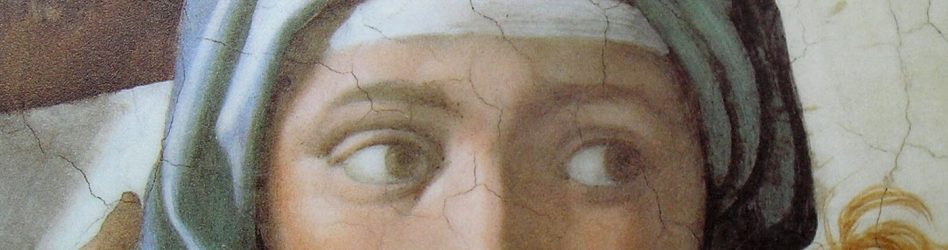
Kant´s reasoning was somewhat more complex, given his more nuanced view of mans psychological and mental powers which belong to the three faculties of sensibility, understanding and reason. His reasoning attempts to both destroy illusory metaphysics whilst at the same time leaving a space for critical metaphysics of both Nature and Morals. The Political and Ethical aspects of his reasoning propose that the hidden plan referred to is concerned with an actualisation process which is increasing our power of rationality to shape the world we live in. This actualisation process is also concerned with the Ancient Greek proclamation to “Know thyself!”. Philosophy, it can be argued, responded to the Delphic oracles proclamations which included :
“Everything created by man is destined for ruin and destruction.”
Fully actualising the potential of human psuché to the extent that rationality is not just a telos, but an actuality, must have been a part of the programs of Socrates, Plato, and Aristotle. The program of hylomorphism was then left for a number of centuries to slumber until Kant was awoken from his own dogmatic slumbers by Hume, Rousseau et al. The argument, then, is that both hylomorphic and Critical Philosophy advance the causes of the “hidden plan” significantly. But as we know, dialectical Hegelian Philosophy stopped Kantian Critical Philosophy in its tracks, and a form of dialectical scepticism branded Kantian Critical Philosophy as “dogmatic”, thus allowing scientific discussions to dominate cultural debates. The kind of sceptical questioning, for example ,of synthetic apriori propositions, allowed scientific method to become defining for science, thus questioning, for instance principle based Newtonian Natural Science. Hegelian Dialectical Philosophy itself became branded as “idealistic” by the sceptical scientists and fell into disrepute.
Wittgenstein, wrote his first work, Tractatus Logico Phliosophicus was written in a climate in which both Kantian and Hegelian Philosophy were regarded as “Continental” and “idealistic”. His work, “logical atomism” began with the propositions that “The World is all that is the case”. The World is the totality of facts not of things”. A more scientific rejection of the role of Aristotelian/Kantian principle in science and Philosophy would be difficult to find. Ethical, Religious and Metaphysical statements did not on this view have normal meaning, needing to “show” their significance.
The “picture” theory of meaning” presented in this work lacked empirical support because Wittgenstein could not present any examples of “atomic sentences”. He eventually abandoned this position for a number of reasons, moving, in Socratic fashion, away from scientific domain of investigation and toward a humanistic domain based on the Aristotelian idea of forms of life which ground the usage of language. Language , that in turn was conceived of in terms of a number of different language-games.
Wittgenstein thought of his later method as being in the spirit of Kant and as a matter of fact it did serve to bring many Aristotelian and Kantian issues into the arena of debate again (via his followers).
At approximately the same time as this was happening Campbell was theorising about Mythology. This essay was published in 1961, ten years after Wittgensteins death. Campbell points to a significant obstacle in the way of the actualisation of the “hidden plan”, namely, all accounts of man containing miraculous or supernatural events such as , virgin births, resurrections, ascensions to heaven, reincarnations etc. Christianity, for example, contains at least three of the above four illusory ideas as well as many other “miraculous” ideas reported in the Bible.
The cradle of civilisation, it is claimed, lay in the Near East and the first Mesopotamian cities, but with the emergence of Cosmopolitan Athens in Ancient Greece, a different more nuanced view of human psuché and the gods emerged in the open society that allowed a large number of non-Athenians to live in the city with limited rights. Three of the Greatest minds in the History of Philosophy were bound together in a teacher-pupil relation which resulted in not just the love of wisdom but a proliferation of intellectual disciplines founded on an array of methods, principles and sciences of different kinds designed to answer a large number of aporetic questions about our Being-in-the world and Being qua Being. The discipline of Philosophy emerged from their systematic attempts to lead examined and contemplative lives, and it carved out a view of the world built upon intellectually based methods and a number of integrated cognitive powers whose creations dwarfed that of the pure imagination and its creations, namely, mythic narratives of the gods and war-like heroes, and art-works.
Campbell points out that these creations of the imagination produced very different narratives embodying very different assumptions about the human psuché and the gods. These creations cannot, be easily integrated into a peaceful unity, into what Campbell calls a world-myth which, it is argued may be necessary for unifying a globalised ideologically fragmented world. The fact of the matter is that principles and conceptual truths are more easily universalizable than particular concrete images which in fact can be ambiguous in their meaning and therefore subject to different interpretations.
Campbell begins thus essay with the following remarks:
“It is not easy for Westerners to realise that the ideas recently developed in the West of the individual and his self-hood, his rights and his freedom, have no meaning whatsoever in the Orient. They would have meant nothing to the peoples of the early Mesopotamian, Egyptian, Chinese, or Indian Civilisations. They are in fact repugnant to the ideals, the aims and orders of life, of most of the peoples of this earth.”(Page 61)
Campbell also refers to Ancient Greek Humanism where attention was turned away from the starry heaven and towards our earthly concerns with the Good, Justice, and Truth: matters of concern for “everything created by man”. The starry heavens are as they are, in virtue of physical principles that have no obvious relation to the idea of the Good and its principles, which were major concerns for both Aristotle and Kant. We are perfectly capable of viewing both the starry heavens and the moral law within, in states of awe and wonder, and we are further, capable of seeking to understand fully the principles of both realms: the metaphysics of nature and the metaphysics of morals. Campbell, unfortunately, calls this humanistic viewpoint the “innovation” of the West. This term is regrettable because it does not capture the significance of the achievements of the Philosophical tradition from both Ancient Greece and the Enlightenment. He refers in the context of this discussion to the Tower of Babel myth and the building of the secular city that is interrupted because of the “confusion of tongues”(Page 62). The project was abandoned and the inhabitants were scattered “abroad over the face of all the earth”.
Campbell reiterates that in the East, life is not centred upon the individual who, as a matter of fact, is dominated by parents and the roles that are rigidly defined by the society in which they live. This is why Hindu wives could so easily accept immolation on their deceased husbands funeral pyre. It is also the reason why the US at the end of the second world war felt “forced” to drop atomic bombs on the civilian populations of two Japanese cities. The Americans did not understand that the Emperor of Japan had a sacred standing, being a direct descendant of the sun goddess Amaterasu. The Emperors role was rigidly defined and perhaps in his mind a God could never be defeated by mere mortals with earthly weapons. The belief in the afterlife for both the Hindu-wife and the Emperor also helps to explain what appears to the western eye to be irrational superstitious behaviour.
The Eastern mind thinks in spans of time incomprehensible to us who, firstly see a lifetime to be the primary standard by which to measure the Good, and secondly we also see more clearly the separation of the domains of Nature and Morals. For the Eastern mind when measured over hundreds of thousands of years, a human life is a mere blink of the eye and of little significance compared with the magnitude of the time of the universe and the cosmic events that are occurring in such a context. Such overwhelming spans of time transcend human thought, judgement and reason. Even the span of the gods lives in this larger context are as nothing.
Campbell claims that this concern for the individual first appeared circa 2000 BC in Mesopotamia:
“where a distinction is beginning to be made between the king as a mere human being and the god who he is now to serve.” (Page 74)
In the myths of this period, man and God were different kinds of Being, where man was the servant of God. Indeed, Campbells interpretation of the Garden of Eden Myth views mans free will as the precipitating cause of his exile from Gods Garden. God is also given a will and becomes anthropomorphised to such an extent that God can will something but later change his mind. Campbell points out that this amounts to giving God a “personality” (Page 77). Campbell also in this context, refers to an Indian Myth from 8th century BC in which we are told in the narrative that in the beginning there is only a “Self” in the form of a man. This so-called Self refers to itself in terms of “I” and becomes afraid, but reasons that because nothing else exists, there is therefore nothing to be afraid of, and the fear then dissipates. This Self then swells and splits into a male part and a female part, from which all humans and animals then originate as the narrative develops.
Plato’s dialogue The Symposium includes a narrative that is a variation on the above theme in the name of Eros: a narrative which depicts human beings living with humans and becoming wary of their strength and as a precautionary measure splitting the human being into a male and a female part and then scattering the parts so that the male and female elements land far apart from each other. The Symposium claims that Eros was not as Hesiod claims, a God, but is pictured as a barefooted figure padding about the streets of Athens searching for something (Psyche?) This pictures eros as a man in a completely human setting.
As we move closer in time to the Ancient Greek Philosophers we encounter Aeschylus portraying the immortal Titan Prometheus at war with Zeus and we find Prometheus calling Zeus a monster and claiming that he plays no significant role in his life. This is indeed prophetic and is perhaps an omen of what was to come in the future when the Philosophers begin to evaluate the role of the ideas of the Gods in our lives and emphasise rather the powers and capacities of human psuché that are used in the human mission to avoid the ruin and destruction prophesied by the oracles. Perhaps one can also claim that this moment portends our modern secular relation to Mythology and Religion within the bounds of Reason.
The Modern Tragedy, however, is that the power of Philosophy has itself become marginalised in our post-modern world: a world in which God appears to be either absent (Deus Absconditis), or dead. If this is the case and we see the disappearance of those traditions and institutions that have been inspired by Philosophy we will be left with a mere shell of humanity which, in accounting for the human psuché and its powers, will be in a constant state of conceptual confusion.