Views: 14
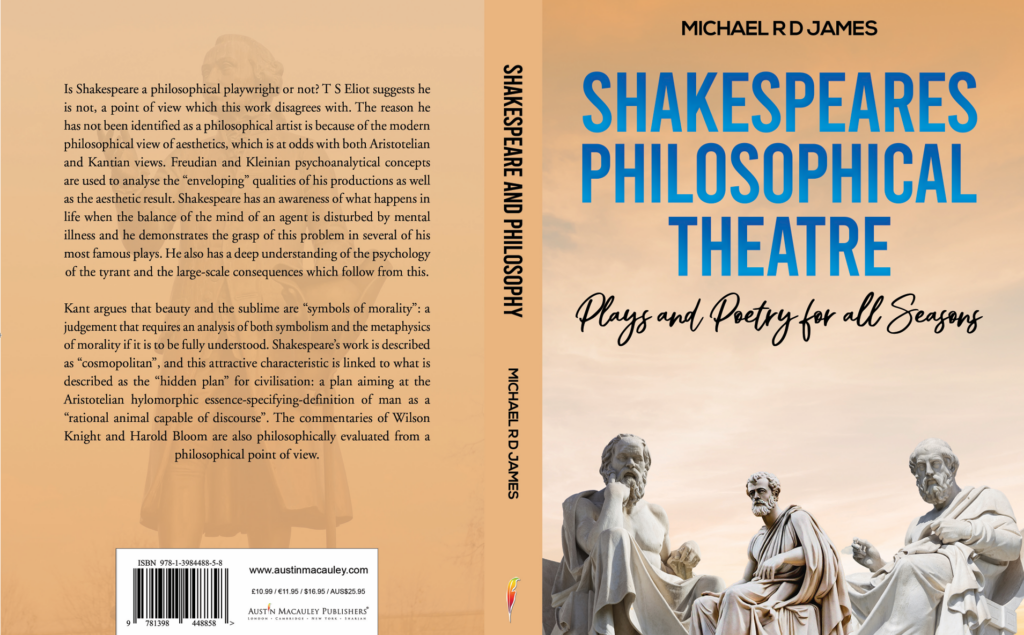
Shakespeare was a major figure of the English Renaissance: a period of History that was plagued by the tides of black death that ebbed and flowed, threatening to prematurely extinguish every living being. This disease must have periodically threatened the Elisabethan genius that embodied the spirit of Ancient Greek Poetry from the past and the Enlightenment aesthetics of Kant in the future.
Shakespeares knowledge of the troubled mind also anticipated many of the ideas Freud discussed in his later works. “All the Worlds a stage”, in which he claimed we are all actors playing our parts in a divine Delphic Tragedy that offers us the hope that catastrophe can be avoided if only we could acquire sufficient knowledge of our own minds. His productions were not in the argumentative mode as was the case with Plato’s dialogues, but resembled more the cosmopolitan scenes of the Ancient Greek Agora and its ambivalent view of Philosophy.
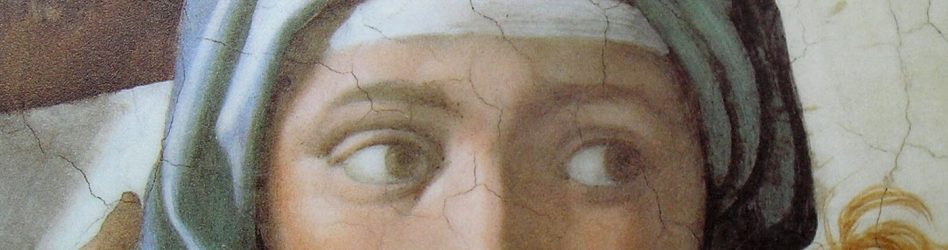
Adrian Stokes, an English Art Critic inspired by the work of Melanie Klein offers us an account of the aesthetic experience which embraces both a process of hypnotic envelopment by the work, and an attempt on the part of the appreciating subject to develop an attitude of independence toward the object we are appreciating. In his writings on Quattrocento Art, we encounter buildings where the mass effect of the stone and the sculptures of Michelangelo, transport us back to Greek art with its enigmatic oracular messages.
Shakespeare undoubtedly used these processes and attitudes in his productions, enveloping us with his incantatory poetry and scenes from his Cosmopolitan theatre of life. Uses of language and imagery evoked in his captive audience the awe and wonder the Greeks must have felt experiencing the Platonic and Aristotelian dialogues in their more restricted performances for more learned audiences.
Shakespeares answer to the Kantian question posed in his work “Anthropology from a Pragmatic Point of View”, namely, the fourth Philosophical question, “What is man?”, is given in the form of the seven stages of a mans life, ending in oblivion without teeth, eyes or taste.
Wittgenstein in his early work claimed that the “World and Life are One” and “Ethics and Aesthetics are one” and we claimed that instead of the use of argumentation Shakespeare “showed” that the world, life, ethics and aesthetics are one in the transcendental spectacles of his plays. Both Shakespeare and Michelangelo showed us the beauty, sublimity and tragedy of life and the world.
Paul Ricoeurs analysis of the symbolism of evil as confessed by an agent certainly showed the presence and importance of evil in our attempts to “live Happily”. Kants third philosophical question, “What can we hope for?”, also related to the issue of Happiness,is to be found in his work “Anthropology” and is answered by reference to a hidden plan that is working its way toward a kingdom of ends for humanity, on the condition, presumably, that we acquire sufficient knowledge about ourselves via Philosophy and Shakespearean plays.
Shakespeares History Plays obviously have moral themes depending perhaps upon the presence/absence of tragic elements in the account of “actions and events, which occur because of each other”. Macbeth may have been a historical King, but in Shakespeares rendition he becomes a tyrant in a “moral history” that meets the Greek nemesis spelled out by the “weird sisters” who, we argue, embody the spirit of the Greek Erinyes. and function as a kind of “chorus”
Shakespeare is “philosophically speaking” “putting the truth of beings to work” in his aesthetic creations. Cosmopolitanism is well illustrated in the play Anthony and Cleopatra and this apart from being a love story comparable to Romeo and Juliet also ends tragically for our cosmopolitan pair.
T S Eliot having studied the Philosophy of Bradley in the USA nevertheless viewed philosophy through the dark prism of religion and preferred Dantes work to that of Shakespeares more secular productions inspired by the pagan Ancient Greek Spirit.
The Kantian reading of the Garden of Eden myth might share some religious concerns about mans narcissism, but might also celebrate mans free choice to shape his own fate at a greater psychic distance to Yahweh, the wrathful angry God looking for a chosen people.
Dream images like all images stand in need of a context if they are to be interpreted correctly. Freud attempts to locate this context by reference to the psychological powers and susceptibilities used to produce these images. Shakespearean images are symbolic in a similar sense to the images of dreams.
Philosophy is defined as ” a profound, symbolic, logical and cultural activity: possessing a particular history, conceptual areas of exploration, and a unique methodology”. Shakespeares work is Philosophical because the symbolism and aesthetic ideas we find embodied in his works not only recall the many meanings of Being from Aristotle, but also foreshadow the Metaphysics of Nature and the metaphysics of Morals we find in Kant’s Critical Philosophy.
Shakespeare is very secular in his use of symbolism and this might have been one reason why the religious T S Eliot could not see the Philosophical depth of Shakespeares work. Rhetoric as an activity and a discipline was still alive and well during the time of Shakespeare, who could be seen to be elaborating upon the powerful rhetoric of the Phronimos from Ancient Greece.
Rhetoric, Ricoeur points out was due to diminish in in importance after Hegels influential preference for dialectical logic over the Logos of Kantian Critical Philosophy.
Metaphor was also an important linguistic tool in Shakespeares writing and was an important element in the process of elaborating upon the Ancient Greek concerns of psuché, areté, diké, alethea, phronesis and eudaimonia. Life and death, truth and treachery, light and dark, the body and the mind were all oppositions Shakespeare conjured with in the spirit of the Renaissance. This playfulness after the dark ages must have felt like the fresh air of freedom.
The awe and wonder of the Ancient Greeks for the many meanings of the sublime was not restricted to the Religion of the dark ages but looked forward to the Kantian idea of the sublime which revered all Great Religions including Ancient Egyptian Isis and the inscription at the Temple of Isis:
“I am all that is, and was, and that shall be, and no mortal hath raised the veil before my face.”
This spirit of freedom together with the Greek concern for Justice produced a Shakespearian Cosmopolitanism that Kant certainly embraced in his moral law, that practical idea of the Kingdom of Ends which was to be brought about by humanity daring to use its Reason.