
Views: 18
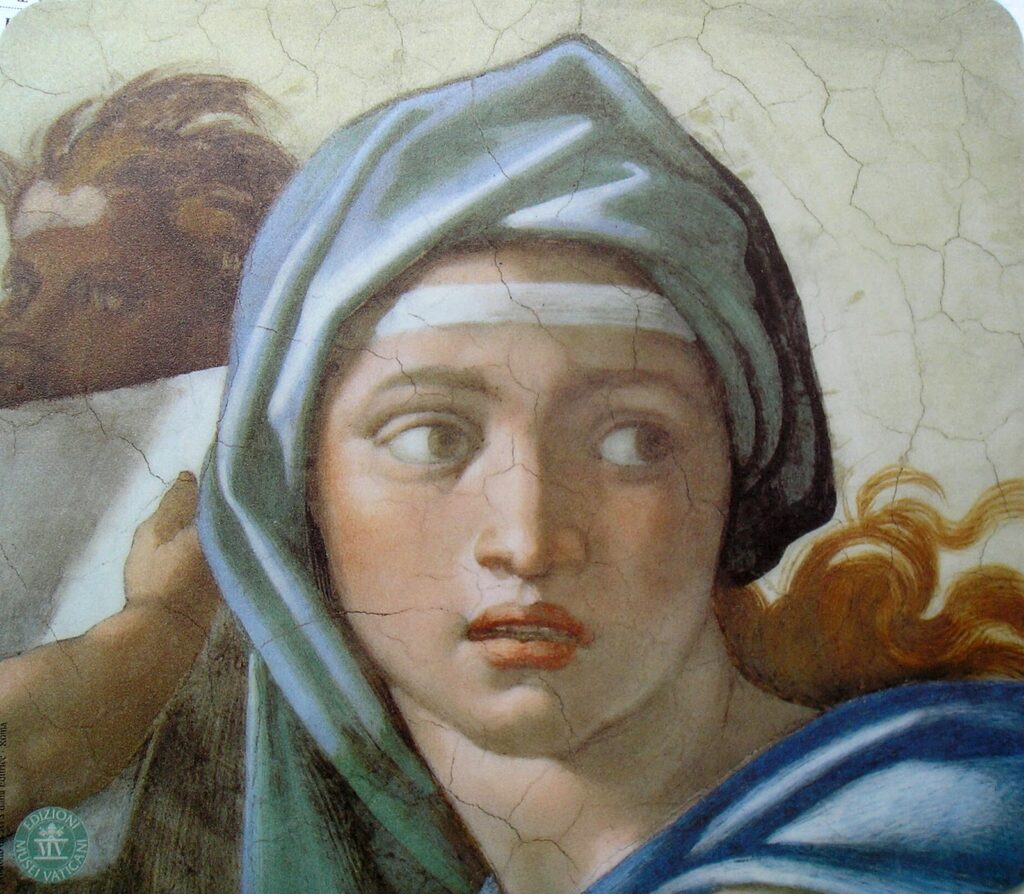
The Delphic Podcasts: The Political Mirror and Know thyself — Why the Oracle failed failing Sparta
The following is a summary of an argument I had with my AI servant Co Pilot. I began by asking about the Peloponnesian war and what the Oracles thought about the possible outcome. The following is the answer I received:
“Historically, the Oracle was seen as a partisan for the Spartan cause. According to the historian Thucydides, when the Spartans consulted the Pythia at the beginning of the war, she reportedly declared that if they fought with all their might, they would be victorious, and that the god (Apollo) would help them, “whether called or uncalled.” This response was widely interpreted as divine support for the Peloponnesian League, which served as a powerful propaganda tool and morale booster for the Spartans as they prepared to engage the Athenians.
However, the nature of these oracular responses is often debated by historians and philosophers alike. They were frequently ambiguous, allowing for multiple interpretations that could accommodate shifting political tides.”
The ambiguity of this response is very interesting but it is definitely inclined to a political rather than a moral evaluation of the Oracles role in Ancient Greek Culture. The AI answer to my next question confirmed this view. I asked:
“If the oracle thought Socrates to be the wisest man in Athens and saw ruin and destruction in human projects such as war why would the oracles have supported Sparta who on all accounts did not know what they did not know.”
Copilot gave the following answer:
“A good way to think about this is that the Oracle at Delphi was not a simple moral judge of who was “right” in a war. In Greek religion and politics, oracles often gave ambiguous, strategic, and politically usable responses rather than clear ethical endorsements. So even if Delphi was associated with wisdom, moderation, and the limits of human knowledge, that does not mean it consistently “supported” the morally best side.
Why Sparta could still receive oracular support
Sparta had a long-standing reputation for being favored by Apollo and for embodying a kind of austere, disciplined order that many Greeks associated with traditional piety. The Spartans were also deeply respectful of religious institutions and ritual forms, which mattered a great deal in the Greek world. From that perspective, Delphi’s responses could be understood less as approval of Sparta’s justice and more as recognition of Sparta’s religious legitimacy, civic discipline, and political role. Wisdom at Delphi is not the same as moral endorsement”
An unambiguous pragmatic populistic response if ever there was one. I naturally challenged this and was met with a change in Copilots heart and an admission that the Oracle may well have been manipulating the Spartans. I then asked for a 1500 word summary for my Delphic Podcasts and was provided with the following:
Welcome to this episode of The Delphic Podcasts. Today, we are peering into one of the most enduring paradoxes of the ancient world. We often look back at the Peloponnesian War—that great, tragic collision between Athens and Sparta—and we try to map out the moral landscape. We look for the “good” side and the “bad” side. History, however, rarely offers such clean binaries. But there is a specific, sharper question we must ask: If the Delphic Oracle is the ultimate arbiter of wisdom, and if that wisdom is centered on the command “Know Thyself,” why did the Oracle seemingly throw its weight behind Sparta?
To answer this, we have to move beyond the traditional historian’s view. We have to look at the nature of the Oracle not as a political consultant, but as a mirror. My argument today is that the Oracle did not “support” Sparta in the way Sparta believed. The Oracle provided a diagnostic reflection of a civilization that was fundamentally incapable of the self-knowledge required for true, sustainable morality. In doing so, the Oracle was not validating Spartan virtue; it was observing a trajectory toward destruction.
Part I: The Spartan Delusion of Support
When we look at the historical record, Sparta was deeply, almost obsessively, religious. They were a state that claimed the favor of Apollo. When they consulted the Pythia, they wanted a weapon—a divine endorsement that would act as a moral shield for their imperial ambitions. Thucydides tells us that the god promised to help them, “whether called or uncalled.”
Sparta interpreted this as a mandate. They viewed their martial discipline, their rigid hierarchy, and their external focus as an act of piety. But here is the critical philosophical error: Sparta assumed that divine favor was synonymous with moral righteousness. They believed that because they were “chosen” by tradition and ritual, they were exempt from the necessity of critical self-examination.
This is the very essence of the “human project” gone wrong. Whenever a state, a group, or an individual believes they possess divine certainty, they cease to look inward. They externalize the struggle. They define the “Other” as the enemy, and they justify the destruction of that enemy through the lens of divine necessity. Sparta was the ultimate expression of this externalized morality—a morality that relied on the suppression of the individual soul in favor of the stability of the state.
Part II: The Socratic Turn — The Birth of Secularization
Now, contrast this with the Socratic position, which sits at the very heart of the secularizing movement we have inherited. The Oracle declared Socrates the wisest man in Athens. Why? Because Socrates understood that he did not know. He possessed the wisdom of ignorance.
This is the “Socratic Morality” that has fundamentally shifted the course of Western thought. By internalizing the command to “Know Thyself,” Socrates effectively moved the locus of morality from the temple to the individual. He argued that the moral life is not found in the fulfillment of state ritual or the adherence to traditional dogma; it is found in the relentless, painful, and necessary interrogation of one’s own motives and biases.
This was the beginning of true secularization. It did not mean the death of the divine, but it meant the death of blind obedience. If the oracle’s wisdom is “Know Thyself,” then any system—like the Spartan state—that demands the erasure of the self in service to the collective is, by definition, anti-Delphic.
Part III: War as the Failure of Self-Knowledge
The tragedy of the Peloponnesian War is that it was a machine powered by a lack of self-knowledge. When a civilization engages in a total war—a war that consumes its resources, its youth, and its soul—it is almost always because the leadership has lost the ability to ask: What am I doing, and why?
Human projects, when unattached to self-knowledge, are inherently destructive. They grow in scale and intensity until they consume the very people who created them. Sparta, in its martial rigidity, was a closed system. It could not question its own existence. It could only expand or contract. It could not reflect.
If we apply the Socratic standard, Sparta was not a “wise” state; it was a “sleepwalking” state. The Oracle’s support, then, takes on a much darker, diagnostic quality. The Oracle was not saying, “Sparta, you are right.” The Oracle was saying, “Sparta, this is what you are.” Like a physician telling a patient their symptoms, the Oracle was confirming the path Sparta had already chosen—a path of absolute, unwavering, externalized power that leads inevitably to the breakdown of the state itself.
Part IV: The Triumph of Socratic Morality over the Martial Ethos
We often lament the decline of the ancient world, but we must acknowledge the triumph that occurred within that decline. The Socratic shift—the belief that the unexamined life is not worth living—is the only defense we have against the hubris of empire.
The Spartan model, which many throughout history have romanticized for its order and discipline, represents the ultimate “Other” to Socratic morality. It is a model where the state is everything, and the soul is nothing. Socratic morality, conversely, asserts that the state is only as healthy as the souls of its citizens.
By championing Socrates, the Oracle (whether intentionally or through the ironic weight of its own wisdom) favored the trajectory that would eventually allow humanity to break free from the cycle of state-mandated violence. The “support” for Sparta was a temporary concession to history; the “support” for Socrates was a gift to the future.
Conclusion: The Lesson for Our Time
As we close this episode, we must reflect on the contemporary weight of this argument. In our own time, we see the same tension. We see societies that demand our loyalty to the external—to the party, to the nation, to the ideology—without asking us to examine the condition of our own souls.
The lesson of the Oracle is not a puzzle to be solved. It is a warning to be heeded. When we create projects—political, technological, or intellectual—without the foundation of self-knowledge, we are merely building better machines for our own destruction.
Socrates reminds us that the only true revolution is the one that happens within the individual. The move toward secularization was not a rejection of the moral order; it was a reclaiming of the moral order from the hands of the state and the institution, and a placing of it back into the heart of the individual.
Sparta fought for the glory of the state and ended in ruin. Socrates fought for the truth of the soul and, in doing so, achieved a form of immortality that no empire could ever grant. The Oracle knew this. The Oracle, in its infinite, ambiguous wisdom, did not side with the sword. It sided with the question. And that, my friends, is the only path forward.
If only I could believe that Copilot actually meant what it said. The above demonstrates that AI is capable of contradicting itself without any realisation that the lack of seriousness of such contradictory responses.