Views: 8
Philosophy, Politics, Education, Ethics, Psychology, Religion, Psychoanalysis, Aesthetics, Humanism, The Arts, Ancient Greek Philosophy, Enlightenment Philosophy. A site dedicated to the humanistic art of lecturing and the synthesis of Aristotelian, Kantian, and Wittgensteinian Philosophy: The Pre-Socratics, Socrates, Plato, The scholastics, Descartes, Spinoza, Hobbes, Hume, Heidegger, Freud, Arendt, Sartre, Merleau-Ponty, Ricoeur, Jaynes, Cavell, O Shaughnessy, Shields, Lear, S. Gardner, Korsgaard, P.M.S. Hacker, G.E.M. Anscombe
Views: 8
Views: 11
Views: 65
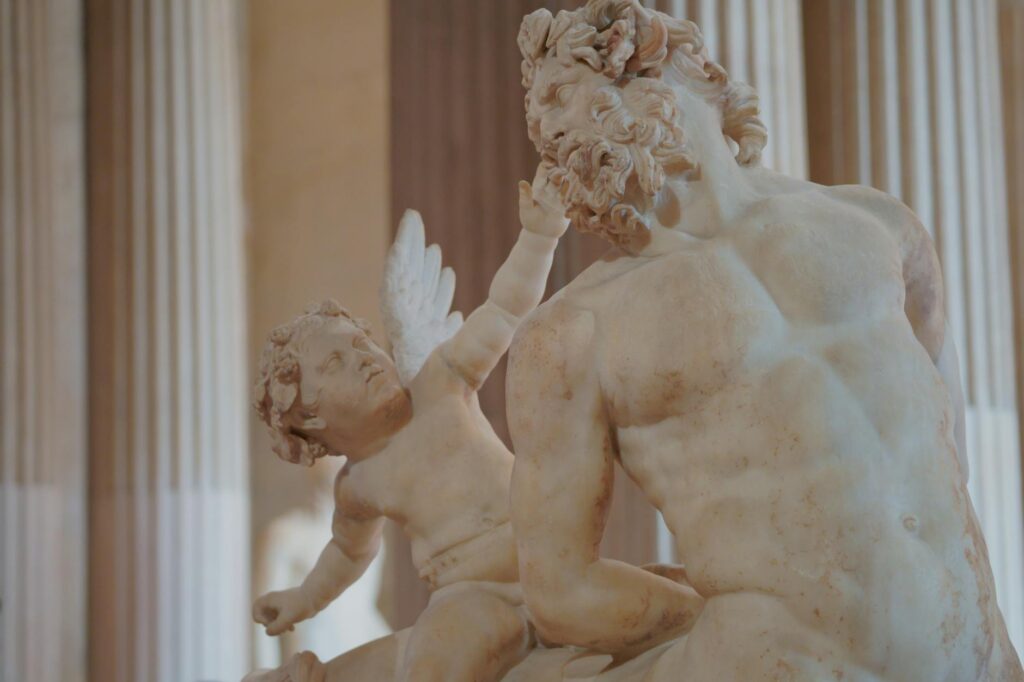
Campbell claims that Zoroastrianism has not left a great heritage possibly because of the :
“ravages of Alexandra the Great(331BC) and then, after painful reconstruction of the zealots of Islam.” (Page 201)
The Persian work, the Bundahish(“The Book of Creation”)was written between the years of 226-881AD, and the resultant creation contained both earlier and later content. The assumption of two primeval spirits, one better and one worse, is essentially dualistic and dialectical, leaving us with a bipolar attitude toward the Divine. In the context of this debate it also ought to be pointed out that Greek Mythology had its two Freudian Giants, namely Eros and Thanatos, working toward Ananke (fate), thereby essentially resolving a potential dialectical opposition with a Good telos. Greek Philosophy built upon this foundation by ackowledging a free will in relation to the concepts of areté(doing and saying the right thing in the right way at the right time) and diké(justice) both of which regulated by arché (principle).The matrix of Greek Mythology and Greek Philosophy provided the conditions necessary for the emergence of the Great Trio of Philosophers, Socrates, Plato, and Aristotle, all of whom contributed to the creation of the meta-Discipline of Philosophy. The task of this discipline was to discover the myriad of principles associated with the Aristotelian Theoretical, Practical and Productive Sciences. Aristotle in his work “Metaphysics” (The study of First Principles) focussed on what he called “first Philosophy” which used the principles of noncontradiction and sufficient reason to explore the aporetic questions relating to Being qua Being..
There is in Persian Mythology, Campbell claims, a creative narrative relating to trees, animals and humans. Ahura Mazda, the Lord of the Light, upon seeing man said:
“You are Man, the ancestry of the world, created perfect in devotion. Perform the duties of the law, think good thoughts, speak good words, do good deeds and do not worship demons.” (Campbell, Page 205)
An antagonistic spirit caused the first two humans, who cannibalised their children, to quarrel but it is important to recognise that in this mythology, evil is conceived of as antecedent to the fall of Man, in direct contrast to the Biblical account in which a flaw in mans character is assumed, manifesting itself in disobedience in relation to the commandments of God. The Greek Philosophers thanks to thinkers like Anaxagoras, did not, like the Israeli prophets, see any relation betwee natural catastrophes such as volcanic explosions, floods or large meteor strikes and man-made catastrophes due to mans ill-will or ignorance. Anaxagoras, we recall, claimed that the moon, at the time conceved of as a divine entity, was constituted of material substance, and as such, had no influence upon the affairs of men. Campbell suggests that this problem of relating the conditions of the external world to the conditions of the human psuché, was not a serious problem for the Greeks, whose polytheistic pantheon could embrace all the nuances of physical and psychical existence. Believing in monotheism as the Jews and the Christians did, left them facing the problem of evil. Where did it originate? In God or in man? We know the choice was made to postulate that the being of man was fundamentally flawed.
The narrative of the Bundahish speaks of heaven, hell and resurrection in imaginatively dramatic terms, and also refers to a great meteor falling upon the earth, killing the serpent-divinity and purifying hell of its stench. Turning to man-made catastrophes, Cambell refers to the “strategies” of the Assyrian dynasty which included massacring entire populations or enslaving them. This occurred during the “Persian Period”(539-331 BC) which was largely a time for man-made ruin and destruction:
“Populations were being tossed from east the west, west to east, north to south and south to north, until, not a vestige of the earlier ground-in rooted sense of a national continuity remained.”(Page 214)
He elaborates upon the historical consequences for the period:
“The world-historical role of the Kings of Assyria can be described, therefore, as the erasure of the past and the creation of a thoroughly mixed, internationalised, interracialised Near Eastern Population that has remained essentially that ever since.” (Page 214)
It is fascinating to read about these tumultous upheavals, and the cosmopolitan consequences, as well as the total annihilation of the Assyrian Peoples. This pattern of annihilation and servitude was finally broken by Cyrus the Great, King of Kings, when a period of “restoration” began: a period that included restoring the people of Judah to Jerusalem. Cyrus restored Persian mastery of the region after overthrowing the Greeks. The Jews, in admiration, claimed that Yahweh himself spoke to Cyrus:
“I form light and create darkness, I make weal and create woe, I am Yahweh, who do all of these things.”(Campell, Page 216)
After a period of intensive warfare Darius ascended the throne to become the King of Kings, ruling from 521-486BC. It is said that in status he rivalled both Buddha(563-483BC) and Confucius(551-478 BC). Campbell points out that it was Oswald Spengler who claimed that the turmoil of this period was not caused by geographically situated nations but rather various sects and their churches:
“Such a group, as I have already said, is not a geographical nation but a church, a sect, the company in possession of a magical “treasure”;and the functioning of its treasure is conditioned by certain fairy-tale laws, which are the statutes of the group. Membership, therefore, is not a matter of either time or place, but of the knowledge and execution of the statutes, which are at once secular and religious, revealed, not invented by man; and categorical, not subject to review. When obeyed, they produce boons beyond anything the world has ever known—fairy-tale boons; however, when violated, even accidentally, they produce a magical catastrophe against which the force and will of the individual–or even of the now unfortunate group of which he is an organ–is as nought. Hence, finally, the weal and woe, virtue and value of all of each lie not in creative individual thought and effort, but in participation in the customs of the group: so that as far as the principle of free will is concerned, which is generally argued for in this culture, its effect is only to make the individual responsible for his decision either to obey or disobey. It is not his province to decide what is good and what bad.”(Page 223)
It is precisely at the inflection point of free will and responsibility that the Greeks saw the importance of knowledge (epistemé), and especially knowledge of oneself. Epistemé and arché form a synthesis which allow us insight into The Form of the Good and the Form of Truth (aletheia). For the Ancient Greek Philosopher, like Aristotle, the individual is embedded in his family constellation insofar as responsibilities are concerned, and to that extent, is not a completely free agent. The family can provide more than individuals without any social connection, but, as Socrates predicted, when groups grow large, desires multiply, desires which can only be fulfilled by being embedded in larger groups where responsibilities too increase in number. The Village is initially formed of a constellation of families and villages too can form the constellation of the polis. In such large constellations of people and institutions knowledge of areté (doing and saying the right thing in the right way at the right time) and diké (justice–getting what one deserves), become important values, and manifest powers of mind that are not confined to obeying a divinity or King of Kings. This knowledge embraced by the Greeks in relation to the goods of the body, the goods of the external world, and the goods of the soul, was not by any means an individual affair, but rather a universal and necessary endeavour resting on principles (arché). Here we need to undrstand what Socrates meant when he claimed that we need to search for justice and areté in the Polis, where the soul is writ large, and because of this fact requires a form of thinking that relates to the particular via universals and principles. Knowledge in this wider context, then, becomes the necessary condition of using ones will to achieve and appreciate the “Forms” of “The Good”, “The True” and “The Beautiful”. Eros, of course , was part of the Ancient Pantheon of Gods(Prior to the pantheon led by Zeus), forces and demiurges,and is present in all forms of life which, as Spinoza claims strives to maintain itself in its existence. Campbell claims that in the Greek Polis of Pericles, Eros becomes:
“the deity whose presence was the best support of law as well as life.” (Page 227)
This position, however, was specifically rejected by Diotima, the teacher of Socrates who we know so little about, and also by Socrates himself, as articulated in his speech in the dialogue, “The Symposium”. The Symposium pictures Eros with very human parents who conceive him during a drinking party. These parents are ,however, not individuals, but representative of the general characteristics of Poverty and Resourcefullness, and Eros is pictured as a poor figure padding barefoot through the streets of Athens in search of something not specifie,d but related to the desire each of us possesses, to find a soul-mate ( in Greek mythology both soul mates were united but split apart because of the fear of the gods that such a united entity would be too powerful)
This is a Freudian image of love in which once this soul mate has been found there is considerable fear that the soul-mate will be lost. Freud, in this context, charts the emotions of mourning and melancholia, locating the presence of the death instinct in the latter. Such imaginative narratives were of course sublimated by both Plato and Aristotle, who placed the “Forms”(principles) at the cente of Rationality, thereby replacing divinities with something law-like, that is a condition of all forms of activity (natural and human). In other words, love is not a God for the Philosophers, but rather a social means enabling man to overcome his natural anatagonism toward his neighbours and strangers, thereby facilitating communal forms of existence larger than the family. Love, therefore, may be more a function of mans “Spirit” than his rationality, which is in its turn connected to thought defined in terms of thinking about thinking, rather than our typically human form of thought which must think something about something. Freud points out in the context of this discussion, that marriage is the institution which formalises the end of our search for a soul-mate, but society places sometimes artificial regulations upon whom one may, or may not marry, thus causing a general sense of discontentment with ones civilisation.
The Bible contains passages claiming that God is Love and the two commandments of the New Testament are:
“Love God above all”
and
“Love thy neighbour as thyself”
If God is love, then Noos, that divine part of mans mind must also be a source of love, a source of The Good. Insofar as Kant and the Enlightenment were concerned, the first commandment requires more articulation, because, for Kant, it is the idea of freedom of the will that is a fundamental idea, perhaps more important than the idea of God, which Kant embraces strictly in accordance with his critical Philosophy, and not in the spirit of blind worship. Campbell quotes the speech of Agathon from the Symposium:
“all serve him of their own free will, and where there is love as well as obedience, there, as the laws which are the lords of the city, say, is justice.”
The Symposium too, had its Enlightened thinker, Socrates, present, questioning the premises of Agathons speech, attempting to make space for Platos Theory of Forms. Later, Aristotle would see in Eros the spirit that can give rise to excesses which the Principle of the Golden Mean is meant to regulate with the help of the human power of rationality. Aristotle, however, also refers to Eros in his work on Metaphysics as being involved in the motion of the cosmos that moves regularly, he claims, for the love of God, the unmoved mover. It appears, then, that thought and desire are fused into one in the Philosophical idea of God, but separated in huan psuché. Insofar as Eros is operating in the Instincts, it resembles Platonic Spirit, which can be difficult to control in human life. Control of the instincts, for Freud, requires various powers such as Consciousness, Repression, Identification, and Sublimation. Once under control we are presented, by Aristotle with a vicissitude of Eros, namely friendship, a milder, less impulsive, more rational, form of human relationship between men living in a polis. So Eros is not in itself a divinity but rather an important counterweight to the influence of Thanatos as well as a human power that requires integration with other powers of mind, for example, practical rationality in the form of areté, used by the Phronimos to provide laws for the polis.. The Will, solely influenced by Eros(the “melter of limbs”) is not free but rather, for Aristotle, Kant, and Freud, to some extent in servitude. In the Symposium, Eros is also associated with an original loss of ones “other half”, which motivates a sometimes lifelong search for the lost loved-half, thereby providing us with a melancholic view of what has been lost and its possible restoration. In such contexts, Freud speaks of the importance of the Agency of the Ego and the Reality Principle which assists us in a final acceptance of the loss of a loved object, in the spirit of discontentment. Such is the power of the pleasure-pain principle in the life of human psuché. Friendship, then, on Freudian theory may well involve the defence mechanisms of both identification and sublimation, resulting in the Aristotelian telos of treatng the friend as en end-in-itself, wishing everything for the friend that one wishes for oneself.
Sublimation is an important element of the learning process of creative artists: one in which instinctive impulses are sublimated in the process of the learning of ones Art. Campbell notes in this respect that Greek Art and Hindu Art differed in their derivations:
“Greek Art was derived from experiences of the eye; Hindu from those of the circulation of the blood.” (Page 229)
This Hindu preoccupation with inner processes would have been puzzling for the Greeks for whom the aesthetic journey began with the love of the beauty of the body, ascended to love of the beauties of the soul, and thence to the love of the beauty of the laws and institutions of the polis, culminating in a love for the beauty of every kind of knowledge which included a love for Philosophy. The experiences of the senses were, of course of singular importance for Greek artists, as is evidenced by their construction of beautiful temples and sculptures of Appollonian nudes. Campbell points to Hesiod’s Theogony in defence of his claim that Eros is the god of Love, and a member of the four original deities; the other three being Chaos, Gaea (mother earth) and Tartarus (the pit of hades). Hesiod clearly attributes the characteristic of immortality to Eros but also, paradoxically, a power that can overcome the rational powes of intelligence and planning. Campbell acknowledges that Eros does not appear in the writings of Homer because he belongs t the older pantheon of Greek deities. According to Hesiod, Eros is the son of Aphrodite but there are a number of different accounts of his parentage, including the anthromorphic account from the Symposium which claims that he was conceived at a drinking party by a father called Resourcefulness and a Mother called Poverty.
Campbell also claims that Greek Mythology distinguishes itself by a shift on the value-scale from the impersonal to the personal—the norms of the individual, he claims, were conceived to be more important than the norms of the group (Page 136). This claim, however, may ignore the extent to which the norms of the group were consciously and intentionally formed by the process of sublimating without repressing the norms of the individual. The common element of the norms of the individual and the norms of the group is arché, (principle), e.g. the freedom to live as one wishes on the condition that there is respect for others and ends-in-themselves. This would be part of essence of areté and diké, so important to Greek life.
Eros, if not a God, must, then, on the Philosophers view be some sort of principle that in the best case cooperates actively with the rational powers of human psuché, but it is the human pantheon of human rational powers that best assists in the building of the character of the individual in accordance with the universal criteria for “The Good.” Whether it is useful to characterise these matters as a move on the value scale from group norms to individual norms, is, of course, questionable.
Views: 154

Campbell, in his work “Occidental Mythology”(London, Souvenir Press 2001) noted that the Age of Heros and Gods extended from 1520-500 BC, and this Era was succeeded by the Age of the Great Classics which, in turn, extended from 539 BC to 500 AD. Campbell also notes in this work the fundamental differences that exist in Oriental Mythology when compared to Occidental Mythology. In the former, Campbell notes that:
“Prayers, chants, images, temples, gods, sages, divinities and cosmologies, are but ferries to a shore of experience beyond the categories of thought, to be abandoned on arrival.” (Page 3)
Man and God, in this system, are not opposites but transcendentally identical entities. Occidental Mythology maintains that man has not the power for such an experience but can only experience the” divine within himself”. There is, Campbell argues, a movement between The Book of Job in which man abandons his human judgement in favour of that of God, and the competing mythology of the Greeks, who dare to stand independent and free with their knowledge of themselves and their world, and who also dare to judge the characters of their Gods: thus initiating a humanistic tradition that was continued in European Mythology(Greek, Roman, Celtic and German.) In these systems, Logos as the Word of God, and the rationality of human psuché, are contrasted, and give rise to very different views of God and Man, and their relation. In his account of the Cultural development of Man Campbell notes that in ca 7500BC in the Near East Region of Asia Minor, Syria, Northern Iraq and Iran:
“The arts of agriculture and stockbreeding were developed…..men now became substantial tillers of the earth. Self sustaining villages appeared and their number steadily increasing, spread in a broad band eastward and westward, arriving simultaneously at both oceans about 2500 BC. Meanwhile, in the developed Zone of origin, the nuclear Near East, a second epochal mutation occurred ca 3500BC when in the river land of Mesopotamia the fundamental arts of all high civilisation were invented:writing, mathematics, monumental architecture, systematic scentific observation (of the heavens), temple worship and the kingly art of government.” (Pages 6-7)
Aristotle’s political view of man, the rational social animal, is in accord with the above quote. His idea of the self-sufficiency of the village provided a social framework for the family to meet more complex needs which would then, in turn, develop into the need for the village to unite with other villages and form a polis which demanded that the art of government become more organised and more complex, and perhaps demanded the invention of the other arts and sciences as well. Thousands of years of the practice of these arts and sciences take us up to the date of 1200BC, the date Julian Jaynes, the Princeton Psychologist, claims the power of Consciousness emerged as a broad social phenomenon.
Language, up until this point in time was, Jaynes maintains, bilaterally located in the brain. Jaynes further controversially maintained that the voices of gods and Kings were transmitted between the hemispheres in te form of commands: these gods and Kings themselves may, or may not, have possessed the power of consciousness, which according to the Delphic oracle demanded of man that he know himself if ruin and destruction was to be avoided. Jaynes’ hypothesis builds upon brain research and the discovery that the right hemisphere also possesses a capacity to recognise language.
Campbell notes that around the date 1250BC in the Occident:
“The old cosmologies and mythologies of the goddess other were radically transformed, reinterpreted, and in large measure even suppressed by those suddenly intrusive patriarchial warrior tribesmen whose traditions have come down to us dually in the Old and New Testaments and the myths of Greece.” (Page 7)
We have pointed out previously, in the context of the above debate, that Greek mythology had possessed in turns the female figures/furies of the Erinyes, the Oracles, who tended to be female, and the Goddesses of the Zeus Pantheon. This suggests a significant appreciation of the role of the female in what Ricoeur called “the realm of the sacred”.
Campbell, in his work “The Hero with a thousand faces” develops the theme of the goddess via the thought of Melanie Klein contained in her work, “The Psychoanalysis of Children” Klein, for example, notes that if the infant is deprived, for some reason of the breast, its fury can become quite alarming for bystanders:
“These appear as reactions to, and spontaneous defences against the body-destructive fantasies that assail the child when it is deprived of the mothers breast.The infant reacts with a temper tantrum and the fantasy that goes with the temper tantrum is to tear everything out of the mothers body……The child then fears retaliation for these impulses, i.e. that everything will be scooped out of its inside. Anxieties for the integrity of its body, fantasies of restitution, a silent, deep requirement for indestructibility and protection against the “bad” forces from within and without, begin to direct the shaping of the psyche, and these remain as determining factors in the later neurotic, and even normal life activities, spiritual efforts, religious beliefs, and ritual practices of the adult.” (Page 149)
Campbell points to the medicine men of primitive tribes as emerging from such body-destructive fantasies. The medicine man attempts to restore the integrity of the body for the imagination. Childhood fantasies do not manifest themeselves merely in the rituals of primitive peoples, but also in their myths. These manifestations occur in many forms including that of immortality and the separation of the soul and the body.
The Hero, Campbell argues, seeks intercourse with the gods and goddesses and the Imperishable Being that transcends them both. In the Eastern Mythologies this experience of immortality is not tied to the separation of the soul and the body but rsther to an experience of the immortal as a presence in the moment.
Having found what he was searching for, the hero is then destined to return to the kingdom of humanity with his message which even Buddha doubted could be communicated. What is the message which is so difficult to understand? Campbell suggests the following:
“The realm of the gods is a forgotten dimension of the world we know. And the explanation of that dimension, either willingly or unwillngly, is the whole sense of the deed of the hero. The values and distinctions that in normal life seem important disappear with the terrifying assimilation of the self into what formerly was only otherness.” (Page 188)
Both Plato and Buddha ask whether the hero, having experienced the world of forms, can return to humanity, without either danger to themselves, or the frustration of trying to communicate a message that transcends common sense. Hinduism speaks, for example, of the battlefield:
“The battlefield is symbolic of the field of life where every creature lives on the death of another…The goal of the myth is to dispel the need for such life ignorance by effecting a reconciliation of the individual consciousness with the universal will. And this is effected through a realisation of the true relationship of the passing phenomena of time to the imperishable life that lives and dies in all. ..Man in the world of action loses his centering in the principle of eternity if he is anxious about the outcome of his deeds but resting them and their fruits on the knees of the living God he is released by them, as by a sacrifice, from the bondages of the sea of death.”(Pages 205-206)
This reminds us of the the message fro the Bhagavad Gita:
“I am death the destroyer of worlds”
uttered in the name of the life principle (eros) which the Ancient Greeks struggled so valiantly to comprehend. The search of Philosophy for the Eternal Forms or Metaphysics (Aristotle’s first principles) is neither mythological, biographical, historical or scientific. Campbell laments:
“Whenever the poetry of myth is interpreted as biography, history or science, it is killed. The living imges become only remote facts of a distant time or sky. Furthermore, it is never difficult to demonstrate that as science or history, mythology is absurd. When a civilisation begins to reinterpret its mythology in this way, the life goes out of it, temples become museums, and the links between the two perspectives is dissolved. Such a blight has certainly descended on the Bible and on a great part of the Christian Cult. To bring the images back to life, one has to seek, not interesting applications to modern affairs, but illuminating hints from the inspired past. When these are found, vast areas of half-dead iconography disclose again their permanently human meaning.”(Page 213)
Both Mythology and Philosophy, in their different ways concern themselves with the wisdom, forms and principles from the past. Each religion in its different way also contains the transcendental experiences typical of the “realm of the sacred”. Campbell, like TS Eliot is a Catholic. He describes the Christian experience of “Holy Saturday”(The day between the death and resurrection of Christ):
“… the priest puts on a purple cope and, preceded by the processional cross, the candelabra and the lighted blessed candle, goes to the baptismal font with his ministers and the clergy, while the following tract is sung: “As the hart panteth after the fountains of water, so my soul panteth after thee, O God! When shall I come and appear before the face of God? My tears have been my bread day and night, whie they say to me daily:Where is thy God?”(Page 214)
This melancholic lament recalls the message Jaynes refers to in his explorations of the existence of God during the period of the dawn of Consciousness: the message, namely, of a Deus Absconditis which has been crassly and popularly translated by Nietzsche into the crass message of God being dead. It is, Jaynes argues, we who bear the responsibility for both the historically experienced presence of God and his/her absence. The task of mythology, more than Philosophy, is to restore this archaic experience of transcendence in our lives. Modern Catholicism, of course, is imbued with the spirit of Romanticism as the above experience of Holy Saturday clearly manifests. The Priest-King or Grail-King is the Romantic hero that symbolises the tragedy of the life of Christ. In this Holy Saturday ceremony, the familiar waters of transformation is blessed in the hope that the Holy Ghost will “cleanse” the water of all traces of “Satan”. Water is the sacred substance of baptism which John used to baptise Jesus and provide us all with the experience of being born again, washing away original sin in the human form of psuché.
In a section entitled “From Psychology to Metaphysics”, Campbell notes that the symbols of mythology resemble the elements of dreams and he also notes that the psuchoanalysts( Freud, Jung, Stekel, Rank, Abraham, Klein, Roheim, etc) have provided us “with a store of common principles” (Page 219) by which to interpret both types of phenomena. Of course, the scientific view of the world as “the totality of facts”, stands in the way of such interpretations, construing them as “false”, because subjective, as if the individual element of our experience needed to be cancelled if the scientific form of “The Truth” was to prevail.
There is no doubt, however, that the Transcendental form of reasoning in the analogies found in Kant’s Prolegomena (used by Campbell in his work “The Outer Reaches of Inner Space”) are in a sense “relational truths”. Campbell argues that transcendental analogy provides us with some access to the “realm of the sacred”, or what Campbell refers to as “the morphogenetic field”.
Campbell sees a close resemblance between the phenomena of dreams and the experiences related in myths. One crucial difference is that in the case of myths the elements are consciously chosen for the purposes of communicating what is transcendent. In that respect myths are a more structured form of experience designed to manifest the “vital energies of the whole human psyche”. These elements:
“Link the unconscious to the fields of practical action, not irrationally, in the manner of a neurotic projection, but in such a fashion as to permit a mature and sobering, practical comprhension of the fact-world, to play back, as a stern control, into the realms of infantile wish and fear.” (Page 220)
Myth, that is, are:
“controlled and intended statements of certain spiritual principles which have remained constant throughout the course of human history as the form and nervous structure of the human physique itself.” (Page 221)
One of the keys to understanding the divine power within is given to us by Aristotle’s power of “noos”, the divine part of the human form of psuche which can be accessed by the so-called great-souled-beings (Phronimos), who are able to use pracitcal rationality to both know themselves and avoid the ruin and destruction predicted by the Oracles. Campbell finds this idea well expressed in the Gnostic Gospel of Thomas:
“The Kingdom of God is within You”
Views: 114
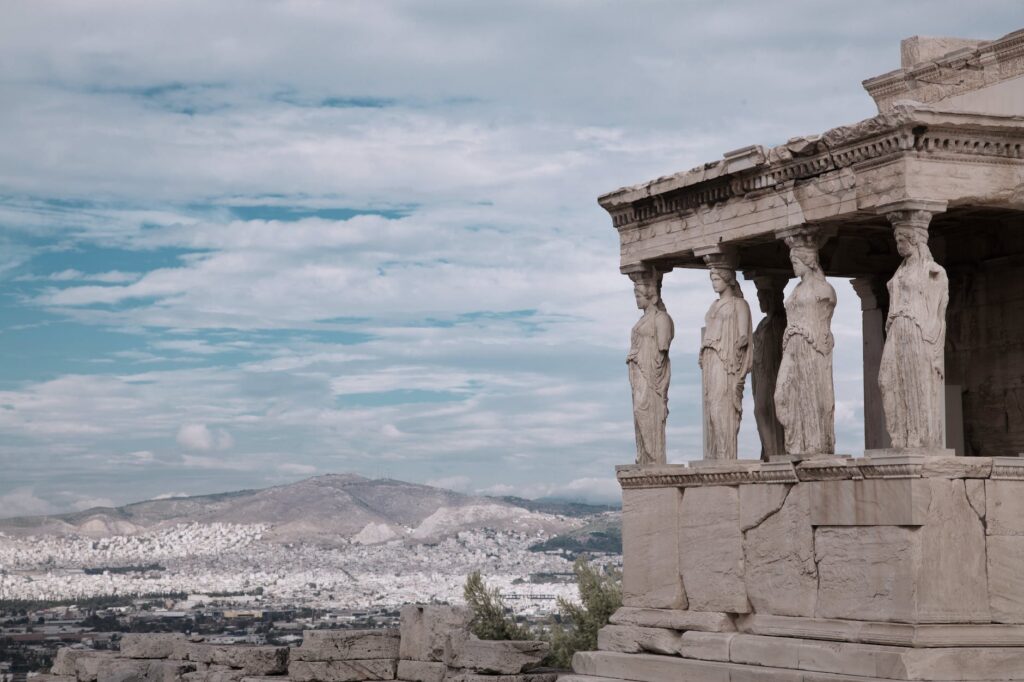
Creation myths often speak of a first created Being that is androgynous , e.g. Adam, Eros, Hermophrodite, Awanawilona,(Pueblo divinity), Tiresias, Tai, Yuan, etc. The genders of male and female are construed as opposites and this in turn demands a dialectical form of description/argumentation because, when apprehended as opposites, it appears as if one opposition term is the negation of the other.
Campbell contrasts the Buddhist position related to Peace in the World with the World Redeemer of Christianity, namely Jesus, and he also notes that Christianity is associated with a partisanship in which the laws of De Civitate Dei appear to apply to a chosen group of people, and this has the military consequence that holy wars are permitted against all the non-chosen “barbarians”. He supports his argumentation by noting that Christian Nation States have a history of “colonial barbarity” and “internecine strife”(Page 134). Marching under the flag of the cross, Campbell argues, is not, however in accordance with the democratic symbol of the cross which is perhaps connected to the wider theme that “All Men are Brothers”. Campbell, proclaims in the context of thisdiscussion that it is to the Eastern Religions we must turn for an account of the experience of the “Transcendental Everlasting”:
“Those who know, not only that the Everlasting lives within them but that they, and all things, really are the Everlastng, dwell in the groves of the wish fulfilling trees, drink the brew of immortality, and listen everywhere to the unheard music of eternal concord. These are the immortals. The Taoist landscape paintngs of China and Japan depict supremely the heavenliness of this terrestrial state.” (Page 142)
Given that the transcendental quality of Being is in a sense beyond thought and beyond speech, it is difficult to contest the picture we have been provided with above. The Philosopher Spinoza is usually referred to as the Philosopher of the Infinite. Much of his work has a hylomorphic character, but he refers not to the infinity of forms but rather to the infinity of modes of God or Substance. God or Substance, for Spinoza, is only accessible by human forms of psuché via the modes of thought and extension, two modes of a possible infinite number of modes. The mode of thought, for Spinoza, is primarily composed of the idea of the object of the body which is also part of the mode of extension, which in its turn is part of the idea of psuché. On this theme, Spinoza claims in his work “Spinozas ethics” in a section entitled “Nature and Origin of the Mind”:
“The idea which constitutes the formal being of the human mind is the idea of the body, which is composed of many individuals, each composed of many parts……Therefore the idea of the human body is composed of the many ideas of the component parts.”(Translated Boyle, A.,London, Aldine Press, 1910. Page 53)
It is clear that the ideas of the mind are not enclosed within their own domain but rather reach out to the external world, and in this process perception is an important power of the body/mind:
“All modes in which any body is affected follow from the nature of the body affected, and at the same time from the nature of the affecting body. Wherefore the idea of them must involve necessarily the nature of each body. Therefore the idea of each mode in which the human body is affected by an external body involves the nature of the human body and that of the external body….Hence it follows in the first place that the human mind can perceive the nature of many bodies at the same time as the nature of its own body. It follows in the second place that the ideas which we have of external bodies indicate rather the disposition of our body than the nature of its own body.” (Page 53)
Kant would subscribe to much of the content in the above quotes and this may not be surprising given that both Philosophers espouse forms of rationalism similar to that of Aristotle. Spinoza believes his Work “Ethics” possesses a mathematical/geometrical structure of arguments which constitute “proofs”. This, of course, is in contrast to the methodologies of both Aristotle and Kant who both wrote in normal academic prose. Spinoza, in this work, also provides us with accounts of the powers of imagination and memory, which both Aristotle and Kant would largely ascribe to. Imagination, Spinoza argues:
“Again, to retain the usual phraseology, the modification of the human body, the ideas of which represent to us external bodies, as if they were present, we shall call the images of things, although they do not recall the figures of things, and when the mind regards bodies in this manner we say it imagines them…And here, so that I may begin to point out where lies error, I would have you note that the imaginations of the mind, regarded in themselves, contain no error, or that the mind does not err from that which it imagines, but only insofar as it is considered as wanting the idea, which cuts off the existence of those things which it imagines, as present to itself. For, if the mind while it imagined things not existing as present to itself, knew at the same time that these things did not in truth exist, it would attribute this power of imagination to an advantage of its nature, not a defect, more especally if this faculty of imagining depends on its own nature alone, that is,if the mind’s faculty of imagining be free.” (Page 55)
Spinoza characterises memory in the following terms:
“If the human body has once been affected at the same time by two or more bodies, when the mind remembers any one of them it will straightway remember the others…..For it is nothing else than a certain concatenation of ideas invoking the nature of things which are outside the human body, and this takes place in the mind according to the order and concatenation of the modifications of the human body.” Pages 55-56)
Spinoza then adds the following remark:
“the mind and the body, are one and the same individual.”
This is an important claim given the historical Cartesian penchant for opposing thought and extension as two different substances, a position modern science largely accepted and adopted in relation to giving an account of psuché. Cartesian dialectical reflection is also involved in the conflict of religions where the central idea appears to be that your God is not my God, not the real God. Indeed, for Spinozas understanding real oppositions such as male and female require adequate ideas for both forms of human psuché which we perceive clearly and distnctly in relation to their logos. Spinoza elaborates upon this theme in the following manner:
“I say expressly that the mind has no adequate, but only confused knowledge of itself, of its body, and of external bodies, when it perceives a thing in the common order of nature, that is, whenever it is determied externally, that is, by fortuitous circumstances, to contemplate this or that, and not when it is determined internally, that is by the fact that it regards many things at once, to understand their agreements, differences, and oppositions , one to another. For whenever it is disposed in this or any other way from within , then it regards things clearly and distinctly.” (Page 62)
The Philosophical conception of science embraced by both Aristotle and Kant includes that of theory which “regrds many things at once” in relation to their “agreements, differences and oppositions”. Philosophical science, in other words, provides us with adequate ideas of the genre and species of psuché, to take one example from one domain of science.
Insofar as psuché is concerned, Spinoza argues that that our idea of this is “very inadequate”:
“We have only a very inadequate kowledge of the duration of our body.The duration of our body does not depend on its essence, nor even on the absolute nature of God; but it is determined for existng and acting in a certain determined ratio by other causes, and these by others, and so on to infinity. Therefore the duration of our body depends on the common order of nature, and the disposition of things. But there is in God an adeqaute knowledge of the reason why things are disposed in any particular way, insofar as he has ideas of all things and not insofar as he has only knowledge of the human body. Wherefore the knowledge of the duration of our body is very inadequate in God insofar as he is considered as constituting only the nature of the human mind, that is, this knowledge is very inadequate in our mind.” (Pages 62-63)
This, of course, is an issue touched upon by the Kantian notion of noumenal reality which includes not only the inadequate idea we have of the external world but also the inadequate idea we have of our bodies as well. Kant, of course, beieves that we can have an adequate idea of the freedom of our mental powers to influence our wills and our actions. Spinoza, disagrees claiming that:
“men are mistaken in thinking themselves free.”(Page 64)
Spinoza believes this proposition, on the grounds that the primary idea of the mind is the inadequate idea of the body which is subject to a large number of causes stretching back to infinity. Spinoza goes on to claim that those that say that:
“human actions depend on the will” (Page 64)
do not understand exactly what they are saying. The question to raise in the context of this discussion is: given the fact that God constitutes our mind and our minds therefore possess a divine element or divine ideas, does this mean that freedom, if it exists, is god-given or not? Kant, we know, argues that freedom is causa sui—cause of itself– and this may imply that this is the divine element of ur constitution and the reason why we needed to be commanded in the Garden of Eden by God not to eat from the tree of the kowledge of good and evil and perhaps it is also why we need to be commanded to love our neighbours and God above all. If, however, this is the case, then our lack of knowledge of the causes that produced a constitution possessing the ideas of God and freedom is irrelevant
Some religions such as Buddhism claim that our life is a journey with a beginning and end on a noble pathway. Buddhism has been construed as an Enlightened religion because of its view of the importance of knowledge of the external world and the mind. The external physical world is conceived of in terms of what is described as the “sermon of the inanimate” which the Philosopher Thales expressed in his proclamation that “all things are full of Gods”. Campbell claimes to see this spirit in the Taoist Tea ceremonies. He also refers in this context to the myths of the Apaches and some African mythologies which proclaim that the rocks, fire, and water, are all alive like the plants. This may be a category mistake insofar as thought is concerned for both hylomorphic and critical Philosophy.
The issue of gods and goddesses, the divine opposites, is an important issue for Campbell who claims in this context that:
“For in the language of the divine pictures, the world of time is the great mother-womb. The life therein, begotten by the father, is compounded of her darkness and his light. We are conceived in her and dwell removed from the father, but when we pass from the womb of time at death (which is our birth to eternity) we are given into his hands. The wise realise, even within this womb, that they have come from and are returning to the father:while the very wise know that she and he are in substance one.”(Page 144)
Campbell continues:
“The union of the two is productive of the world, in which all things are at once temporal and eternal, created in the image of this self-knowing, male, female, God.”(Page 145)
We are created in the image of God and this theme of the opposites occupies Campbells attention at the level of the “opposites” of the male thunderbolt symbol and the female symbol of the bell which provides us with the melancholic sound of eternity. The bell summons us to take the noble path to the end, with the understanding that upon reaching the end we know it to be the beginning: opposites become one, including those most puzzling opposites of good and evil. It is at this point thatCampbell cites from the Upanishads whose claim is that when the hero takes the noble path to Brahman all opposites unite, including good and evil into one God, one Substance.