Views: 652

Campbell addresses the problem of beauty in the following manner:
“And with respect to the problem of beauty—is this beauty intended? Or is it something that is the natural expression of a beautiful spirit? Is the beauty of the birds song intentional? In what sense is it intentional? Or is it the expression of the bird, the beauty of the birds spirit you might say? I think that way very often about this art. To what degree was the intention of the artist what we would call “aesthetic” or to what degree expressive? And to what degree is the art something that they had simply learned to do that way? When a spider makes a beautiful web, the beauty comes out of the spiders nature. Its instinctive beauty. How much of the beauty of our own lives is about the beauty of being alive? How much of it is conscious and intentional? That is the big question. ” (page 100)
The art being referred to in the above quote is the art of the cave painting, painted during a time when humans did not live in settlements and during a time when death, or “passing through the dark gates” was probably experienced on a regular basis in a relatively small group struggling every day to meet their most basic needs. The “Either/Or” structure alluded to in the above quote appears to eliminate the possibility that both the premise “The bird song is intentional” and the premise “The bird song is expressive of its spirit.”, could both be true. There are of course difficulties with both premises. Animals are beings not capable of discourse and they therefore do not possess the capacity to see that one and the same act can fall under , for example, four different descriptions.
To take the example discussed by Elisabeth Anscombe in her work “Intention”, the bodily action of moving ones arm up and down is done with the intention of operating the pump, with the intention of pumping the water into the house, and with the intention of poisoning the inhabitants of the house. The first description is of the physical action performed by an agents body and it is a condition of the second and both are a condition of the third and so on. “Poisoning the inhabitants of the house” is then an answer to the questions “Why are you moving your arm up and down?, Why are you operating the pump?, Why are you pumping water into the house? The operating of the pump is the reason for moving the arm up and down, and the pumping of the water into the house is the reason for operating the pump and the poisoning of the inhabitants of the house is the reason for pumping the water into the house. Human Instrumental action is rational and dependent upon knowledge that a totality of conditions is necessary for a desired outcome.
Animals, not being capable of discourse (logos) cannot be said to understand that anything they do falls under a decription, but they are capable of purposive behaviour such as hunting, which may involve being in some sense instinctively aware of the conditions necessry for catching the prey. The bird song, similarly, may be one condition for attracting a mate and it would not be very difficult to assert that the bird in some sense is instinctively aware that there is a relation between what it is doing and the possible consequence of attracting a mate. Given these facts it would not be difficult to assert that both premises must be true. There is also no doubt that the bird in singing is naturally expressive of its spirit: the bird is, according to Spinoza, endeavouring to persist in its existence.
O Shaughnessy’s account of “Life” (psuché) in his work “The Will: A dual Aspect Theory”, contains a notion of the will which refers to the ideas of “an impulsive urge to act” and “striving” , and he cites Freud’s theory of the instincts and the ego against a background of firstly: that the first idea of the ego is the body, and secondly, that the sensations of pleasure are differently located throughout the different stages of development of a body that has a long childhood, a longe period of dependency upon its parents. O Shaughnessy’s essentially hylomorphic position thus links the expression of a bird song with the intention of attracting a mate.
Aristotle pointed out in his work “History of Animals” that bird songs as distinguished from shorter bird calls, are learned, and whilst it would be associated with the pleasure/pain of survival, it would nevertheless lack the logos of speech. The consequence of this claim is that human intentional action would be a more complex phenomenon that that of the simpler animals like birds. In accordance with Aristotel’s methodology of the biological investigation of forms of life, thie science of Biology is in agreement that there is a firm associative-relation between the expression of the song and the pleasurable activity of attracting a mate. This is in accordance with Anscombes criterion that an intentional action is one in which a certain sense of the question “Why?” has application. Given, however, O Shaughnessy’s claim that animals are tethered to their environment, and are not therefore as future oriented as human beings, (who can readily represent absent objects through their language), we would not expect to find an embedded sequence of conditions of the kind we find in Anscombes example of poisoning the inhabitants of a house, which is the end of the plot of a story containing relatively abstract objects located in the future.
With more complex animals than birds, however, the intentional action of hunting may well contain a large number of enveloped conditions causally related to each other and to the end of the sequence, which may end in success or failure. The articulation of these enveloped conditions would also, for example, be expressive of the “spirit” of the hunter, a big cat, for example.
The cave painting therefore, can be both viewed as an expression of the spirit of human psuché and an intentional action whose ultimate telos is not entirely clear as yet given the location of the phenomenon in the long distant past. One can of course investigate the cave paintings of contemporary primitive tribes but the time lapse between the two sets of phenomena makes it very difficult to arrive at any categorical claims.
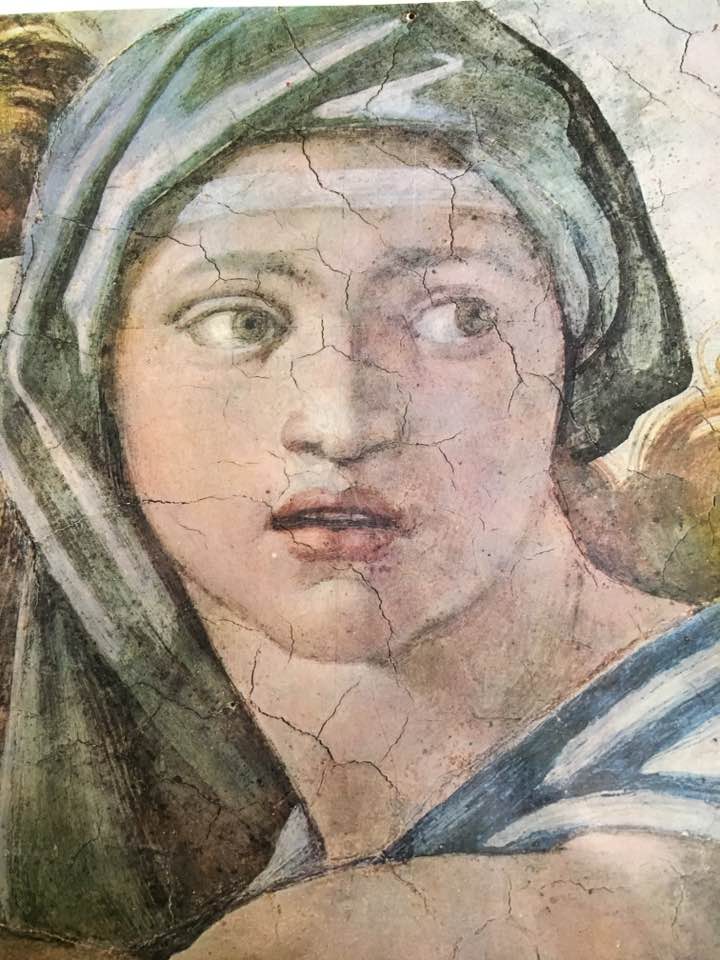
When, however, we move to art objects produced by artists living in larger less primitive societies in which the needs being met are more complex, the nature of the “striving” also becomes more complex, especially given the presence of cultural activities such as story-telling and Philosophical argumentation about the “forms” of phenomena encountered in relation to both the Metaphysics of Man and the Metaphysics of Nature. Indeed, the primary point of the striving in such complex communities perhaps ceases to be survival, but rather the quality and the length of the life that is being lived. There is, however a discernible link between the experience of the cave painting and the paintings in the vault of the Sistine chapel. Campbell, in the context of this discussion sees fundamental similarities in relation to the cave painting and the interior of a modern cathedral which contains an array of intentional objects designed specifically for spiritual purposes.
Perhaps both phenomena invoke responses that are more akin to the experience of awe and wonder characteristic of the sublime, rather than the experience of pleasure associated with the experience of beauty. Campbell elaborates upon the experience one has in walking into a modern cathedral:
“a temple is a landscape of the soul. When you walk into a Cathedral, you move into a world of spiritual images. It is the mother womb of your spiritual life—mother church. All the forms around are significant of spiritual value. Now, in a Cathedral the imagery is in anthropomorphic form. God and Jesus and the Saints are all in human form. And in the caves the images are in animal form. But it is the same thing believe me. The form is secondary. The message is wht is important.”(Page 101)
Campbell argues that the cave-paintings were used to educate young hunters which is a plausible hypothesis, given the cirumstances. If so, the painting would have had an instrumental significance–serving an interest—which runs contrary to the Kantian account of the experience of beauty. This experience, Kant maintains, is not instrumental but rather associated with a categorical disinterested form of pleasure that is in turn related to the harmony of the faculties of the imagination and understanding. The fact that we know so little about the life of these primitive peoples does, however, suggest that we hesitate before categorising the experience of those associated with the cave paintings as “beautiful”.
Campbell is surely correct in his claim that our bodies are esentially the same as they were during the era of Cro-Magnin man, but we ought also to point out that the human form of life has significantly altered in this period of 40,000 years. During this period there has occurred the transition from the nomadic to the more settled form of life in larger communities with a greater diversity of purposes and aims. Survival needs were more easily met in these larger communities (longevity increases). The agenda of man then changes from mere survival to the quality of life, owing to the increase in the complexity of institutions (the law, education, etc) and the range of human powers which needed to be developed in relation to them.
These powers, for example, being capable of discourse and reasoning, were essence-defining powers for Aristotle and both contributed to creation of the sciences and the arts, which have proliferated significantly over the last 2500 years. We call this settled form of life “civilisation” and whilst it has had its critics over the centuries, it appears that it is the best means we as human forms of life have for achieving the quality of life the Ancient Greeks referred to via the term “eudaimonia” (good spirited flourishing life).
An Aristotelian self-actualisation process is needed not just for the development of what Freud would call a strong personal ego but also in order to avoid the extreme forms of life connected to striving after Wealth and Honour without due respect for the Principle of the Golden Mean. What Aristotle did not comment upon in his investigations of human Psuché, is the long childhood or period of dependency we humans experience. Campbell notes that that he is familiar with men who need psychoanalytical treatment to assist in breaking the chains of this dependency upon their fathers (Page 102)
It is not clear whether the phenomenon of discontentment with our civilisations has increased with the disappearance of the formative influences of religion, mythology and art, but Campbell does insist that we need, and are in search of a planetary mythology. He evaluates modern movies as one means of replacing initiation rituals for the youth into society, and notes that the stories or plots of the movies we encounter, are not created responsibly with a concern for the experience of Transcendence. He believes that the lack of effective initiation rituals has had the consequence that many male youths join gangs which have a problematic relation to the laws and morals of society. Females, he argues, are not affected as much because the biological changes to their body, for example, menstruation, are in themselves dramatic signals fo what their future role in society is going to be. Campbell elaborates upon this point:
“..the boy does not have a happening of this kind, so he has to be turned into a man and voluntarily become a servant of something greater than himself.” (Page 104)
Campbell also notes that in primitive societies ungovernable children who refused to participate cooperatively in relation to initiation rites, might be killed, and this partly reflected a different attitude to death than we moderns have, and partly an undeveloped respect for the dignity of each living human being as an end-in-themselves which has become our heritage from the Ancient Greeks. Campbell claims that it is the artist alone who attempts to shoulder the cultural burden of assuming the history and responsibility of mythology and the various rituals that were once so important to us. Campbell characterises the artist thus:
“There is an old romantic idea in German, das Vol dichtet, which says that the ideas and poetry of the traditional cultures come out of the folk. They do not. They come out of an elite experience, the experience of people particularly gifted whose ears are open to the song of the universe. These people speak to the folk, and there is an answer from the folk, which is then received as an interaction.. But the first impulse in the shaping of a folk tradition comes from above, not from below.” (Page 107)
T S Eliot, one of Campbell’s favourite poets, was writing poetry whilst personally struggling as a Christian with this problem of the disappearance of rituals that included the disappearance of the awe and wonder connected with the experience of the sublime transcendence related to the Metaphysics of Nature and the Metaphysics of Man. Campbells idea of the song of the universe can be combined with Eliots idea of the dance being at the “still point of the turning world”, but neither of these ideas seem to address our metaphysical concerns. The “song” of the universe is obviously a metaphor, but it is interesting in that it links in an interesting fashion the Metaphysics of Man with the Metaphysics of Nature, which perhaps Eliots notion of “the dance” does not. The link the idea of the song establishes is with the idea of the “Music of the spheres”, and also with the idea of the sound “Aum” that we find in Eastern mysticism.
The fundamental form of Aristotelian “Prime matter” may well be energy as such, but sound waves are one manifestation of energy. Light waves are obviously another fundamental mode of energy which may be more closely related to the conditions of life as such, relating to the temperature conditions for the body and the sense data communicated to the organ of the eye. That sense data as such is essentially two- dimensional according to O Shaughnessy, and the interesting question that needs to be asked is how a three dimensional “model” of the world comes to manifest itself in our thoughts. The most obvious candidate is that this three dimensional understanding occurs in the sensory motor spehere via the use of a body-image which is mobilised in intentional action.
Music, defined as “sound pleasurably organised in time” is, no doubt, an interesting phenomenon in both primitive and civilised societies (even if not all primitive societies possessed musical instruments), especially in relation to dance, where the aim of the activity was to induce a changed state of consciousness that transcends our everyday states.
Campbell introduces an idea of elitism into the debate but fails to note that there are many different kinds of elitism. Some kinds would be frowned upon by the Ancient Philosophers, for example, the elite of the powerful, or the elite of the wealthy oligarchs whose major motivation was to benefit themselves or their particular group within society. The elites of the gifted or the educated, on the other hand, would appear to be more in line with the agenda of these Philosophers. Many Greek stories have as their theme the hubris of individuals who lead themselves and everyone around them onto paths of ruin and destruction. These Philosophers understood that not everyone was in tune with the “song of the universe” or “music of the spheres”. The possession and understanding of higher mental powers such as understanding, judgement and reasoning would seem to be necessary to fully accept the responsibility of continuing the heritage we have recieved from both mythology and religion and this requires an understanding of both Aristotelian Hylomorphic and Kantian Critical theorising. Given Campbells claim that a shaman or seer is a being who has undergone an overwhleming psychological experience perhaps Freudian theory is also relevant to this discussion:
“The shaman is a person, male or female who, in his late childhood or early youth has an overwhelming psychological experience that turns him totally inward. Its a kind of schizophrenic crack-up. The whole unconscious opens up and the shaman falls into it. The shaman experience has been described many, many times. It occurs all the way from Siberia right through the Americas down to Tierra del Fuego.”( Page 107)
We find ourselves once again on the territory of an earlier discussion relating to mystics and their ability to swim rather than sink into a psychosis-like mental state. The differentiation between the mental state of the mystic and the mentally ill patient would seem certainly to require Freudian theory for a full articulation. The difference would seem to reside in the extent to which the unconscious material which erupts into consciousness does so in a cathartic fashion, thus strengthening the individuals ability to experience the associated desires and fears in a spirit of areté (in the right way and at the right time).
The bushmen of the Khalahari are still to be found dancing all night around their women until the overwhelming psychological experience causes an individual to collapse at the peak of a frenzy. The individual concerned reports his experiences, and as a result is regarded as a shaman. Campbell notes that whipping a whole group into a frenzy often occurs in wartime situations immediately before battle.
It ought also to be noted in this context that such an overwhelming psychological experience is viewed negatively by both Christianity and Medicine. In the former case the suspicion is that the individual has been possessed by an evil spirit and in the latter case the individual is daignosed with a mental illness and sedated with medicine. Nietzsche, Campbell notes, warns us about not taking the phenomenon more seriously:
“Be careful in casting out the devils, you cast out the best thing thats in you.” (Page 110)
Julian Jaynes in his work on the Origins of Consciousness is also however hesitant about the medical response to frenzied hallucinatory behaviour, believing that what we are experiencing might be cathartic. If this were so, then we ought to see the patient taking possession of the state rather than the state overwhelming him. This, however, does not appear to occur if the hallucinatory frenzy is allowed to run its course. Perhaps some specific technique of embedding these experiences in a linguistic and cognitive framework is required if the experience is to become fully cathartic.